Imagine being able to see the invisible connections that keep your cells healthy. That's what scientists in Japan just pulled off. They found a clever new way to observe super tiny atomic bonds that are usually too unstable to study.
These special bonds involve elements called chalcogens, like sulfur, selenium, and tellurium. Think of them as oxygen's cousins on the periodic table. Sulfur, for instance, is a big deal in your body, helping keep cells balanced and healthy.
Recently, researchers started to suspect that the heavier chalcogens, like selenium and tellurium, might also be secretly important for cell health. The problem? Molecules with different chalcogen atoms chained together are super unstable. They fall apart before you can even get a good look.
We're a new kind of news feed.
Regular news is designed to drain you. We're a non-profit built to restore you. Every story we publish is scored for impact, progress, and hope.
Start Your News DetoxThat's where a team at Kyoto University stepped in. Led by Kazuma Murakami, they wanted to know how these tiny atomic changes impact our biology. Traditional methods just couldn't show these delicate bonds directly. So, they invented a whole new approach.
Watching the Invisible Happen
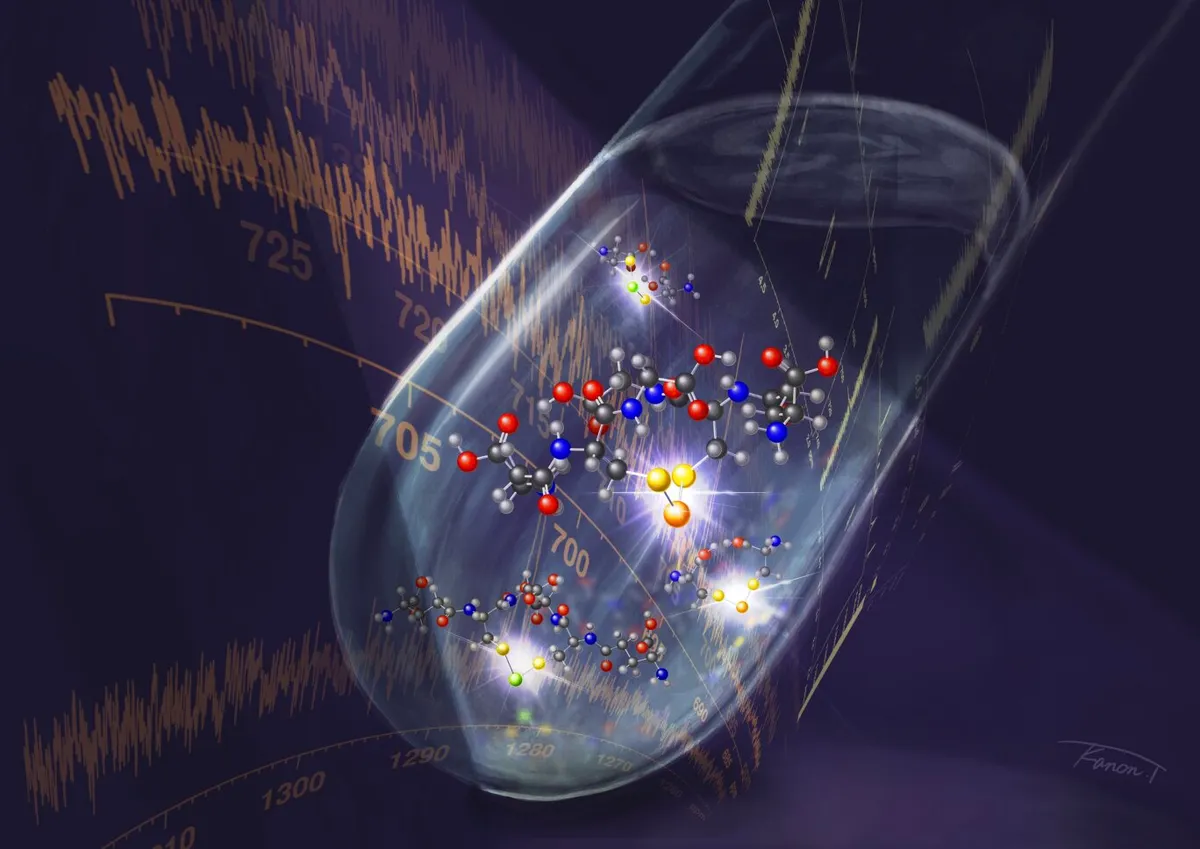
Here's the cool part: they didn't just try to find these molecules; they made them right there in the lab, in real-time. They dropped selenium or tellurium atoms into a water solution with a key cell molecule called glutathione-cystine. Then, they used a special kind of atomic imaging, called NMR spectroscopy, to watch the whole thing unfold.
This allowed them to directly observe these unstable, mixed-chalcogen bonds forming and reacting. They even found that these new compounds are seriously good at balancing cell chemistry, like tiny bodyguards protecting cells from damage.
Murakami explained that this is the first time anyone has directly seen these specific "heterochalcogen" bonds in action within a living system using this imaging technique. It's like finally getting to peek behind the curtain at a microscopic magic show.
This isn't just a lab trick. Being able to see these bonds could help design new medicines. Think new ways to fight diseases linked to cell stress or even controlled cell death. It's a huge step toward understanding the tiny chemical dance that keeps us alive.
The team isn't stopping there. They're already planning to use this method to explore even more complex biological molecules. Who knows what other hidden connections they'll uncover next!