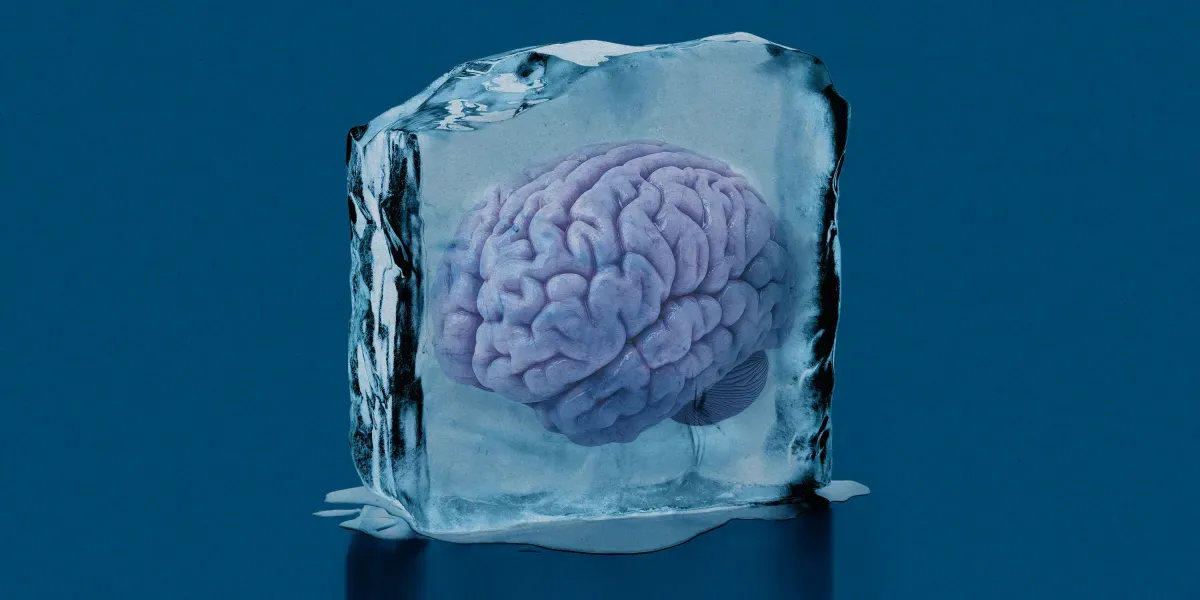
Imagine asking a friend to freeze your brain after you die, then have him study it years later. That’s exactly what happened with researcher L. Stephen Coles.
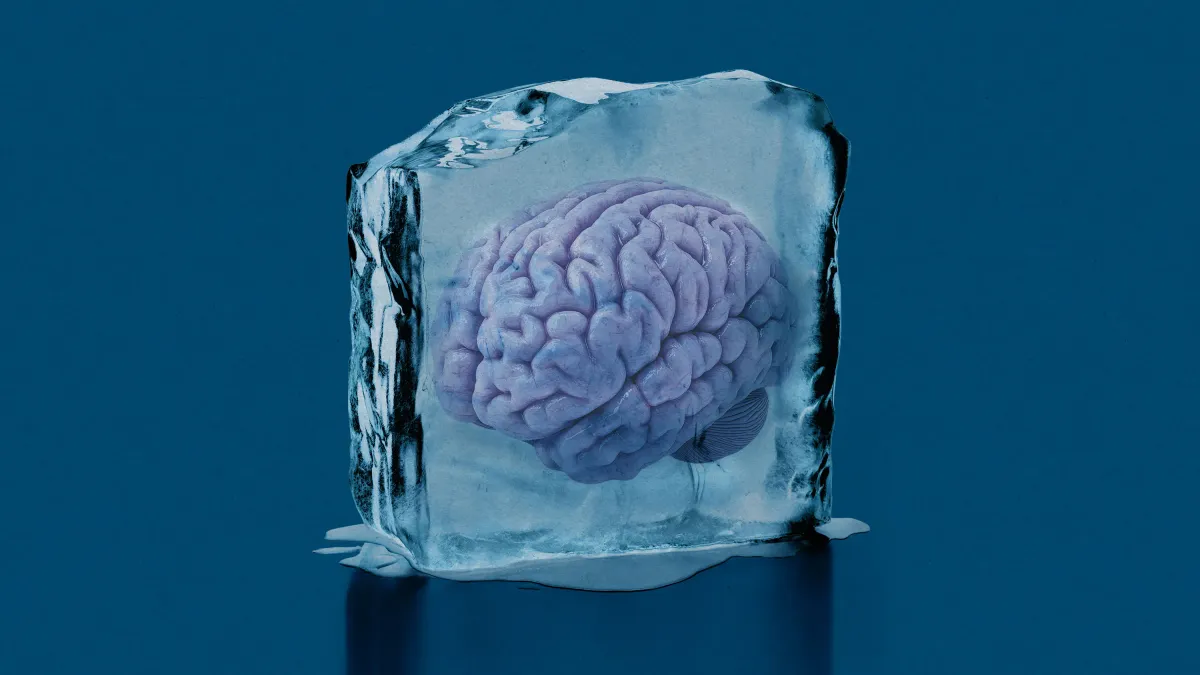
Coles, who studied aging, had his brain cryopreserved — essentially put on ice at -146 degrees Celsius — over a decade ago. His big question: Would the extreme cold crack it? He tasked his friend, cryobiologist Greg Fahy, to find out.
A Brain on Ice
After Coles passed away in 2014, his brain was carefully preserved. Recently, Fahy analyzed samples from it. His verdict? Coles’s brain is “astonishingly well preserved.”
We're a new kind of news feed.
Regular news is designed to drain you. We're a non-profit built to restore you. Every story we publish is scored for impact, progress, and hope.
Start Your News DetoxFahy, a chief scientific officer at Intervene Immune, found that every tiny detail in the brain samples was still visible. This is a huge deal, and it makes Fahy hopeful that one day, such a brain could be reanimated. Other experts, like John Bischof from the University of Minnesota, are more cautious, simply saying, “This brain is not alive.”
Still, Fahy’s work opens up new avenues for neuroscientists. While bringing people back from cryopreservation might still be science fiction, using this tech to preserve organs for transplants is a much closer reality.
Coles chose this path after he died from pancreatic cancer. His body was cooled, then his head was removed. His brain was then filled with special chemicals to stop it from freezing, taken out of his skull, and cooled to that super-cold -146 °C.
Hundreds of people have stored their brains or bodies this way. Alcor, a facility in Arizona, currently holds 259 individuals. But scientists have known very little about what actually happens to these brains. Coles wanted to change that.
He specifically wondered about cracking. Organs often crack when cooled quickly to liquid nitrogen temperatures (-196 °C). The slightly warmer temps used for his brain made cracking less likely. Fahy was there when the samples were taken, stored in liquid nitrogen for his future research.
Cells That Bounce Back
Years later, Fahy examined the biopsies. He wanted to see how the protective chemicals, which can be toxic, affected the brain cells. Previous research showed these chemicals could squash cells.
This is one of the biggest challenges in cryobiology. Freezing eggs and embryos is common, but preserving whole organs is way harder. Larger objects don't cool evenly, can form ice crystals, and yes, can still crack.
But Fahy found something pretty wild: when he rewarmed and rehydrated Coles's brain cells, their structure seemed to recover. He even showed it on a video call, demonstrating how the cells changed shape and then bounced back.
He believes the tissue structure is mostly intact. Fahy shared his results, saying, “There’s nothing we don’t see.” He thinks the cryo approach can preserve everything. As for cracks, he was told none were seen during the initial preservation, though photos were lost. Later photos show the brain covered in frost, making it impossible to tell for sure.
Fahy's team then “fixed” the samples to stop decay, which also kills the tissue. But he thinks his results mean small pieces of brain tissue could be preserved and reanimated. This could give scientists a whole new way to study how brains work. German scientists recently revived brain slices stored at -196 °C, and they showed electrical activity after warming! Imagine the insights we could gain from human brain samples if they could do the same.
Shannon Tessier, a cryobiologist at Massachusetts General Hospital, says brain cryopreservation “can capture a little bit more of the complexities of the brain.” And Matthew Powell-Palm from Texas A&M notes Fahy's paper shows large tissues can be frozen without forming too much damaging ice.
Many scientists are also working on preserving organs for transplantation. Organs are currently in short supply because they go bad within hours. Cryopreservation could extend that time, meaning more organs could be used, better matches found, and maybe even help recipients avoid a lifetime of immunosuppressant drugs. They’re getting close, too, with successful organ transplants in cryopreserved rabbits and rats. Bischof believes they are “at the cusp of human-scale organ cryopreservation.”
For brains, Coles's hope for reanimation is a much bigger leap. It means restoring full brain function.
Fahy admits that while the brain samples structurally recovered, there’s no proof the cells could be brought back to life with electrical activity. “Restoring it to function… that’s a whole other story,” he says. Still, he believes successful brain cryopreservation is “the gateway to human suspended animation.” Think interstellar travel or “medical time travel” where people wait for future cures. That would be seriously cool.
Alcor's Nick Llewellyn, however, thinks the chances of full reanimation are “pretty low,” calling the needed tech “practically unfathomable.” Tessier agrees, noting current preservation methods aren't proven for reanimation. It’s “quite a jump of faith and hope that’s not based on science.” And as Powell-Palm puts it, “There are so many ways in which those neurons could be toast.” So, while the structural preservation is a big win, turning it into a living, thinking brain is still far, far off.