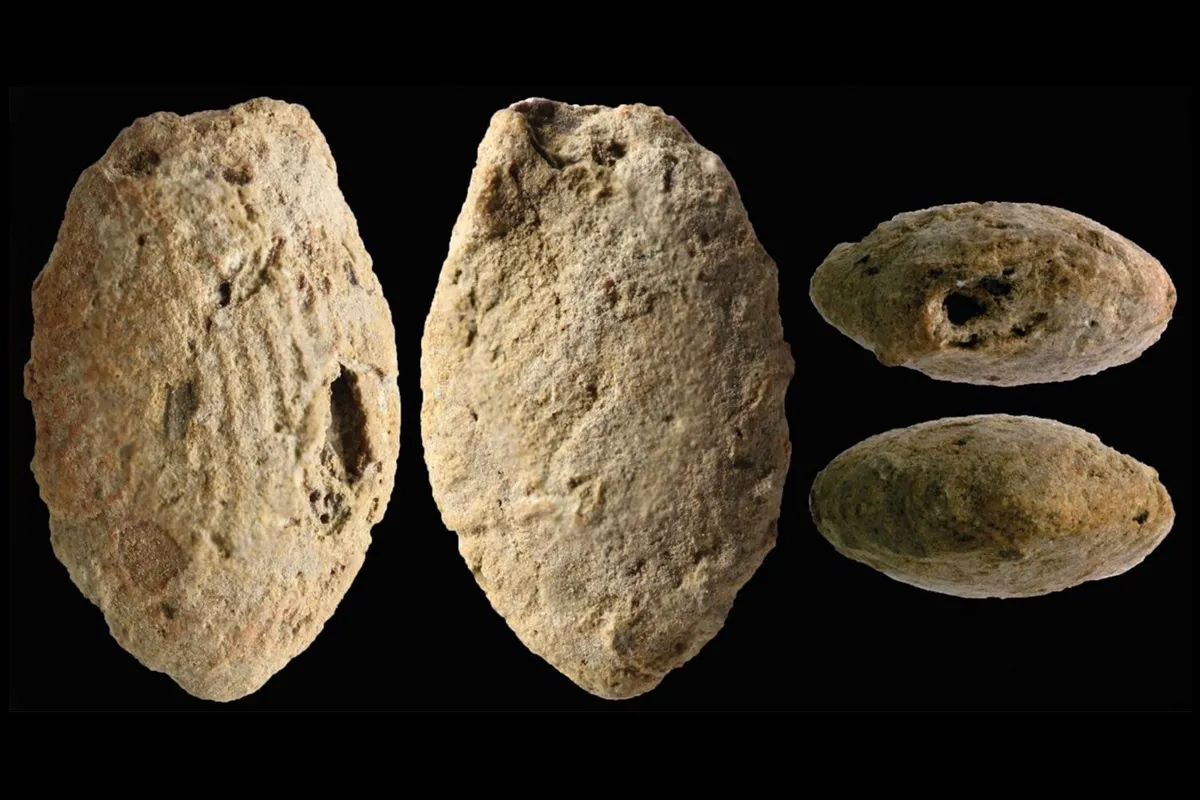
Archaeologists in Israel have found clay beads and pendants made by hunter-gatherers 15,000 years ago. These artifacts show that people in this region used clay for symbolic reasons much earlier than previously thought. This discovery changes how we understand the link between clay, symbols, and the start of settled life.
Laurent Davin, an archaeologist at the Hebrew University of Jerusalem, led the study. He said this finding completely changes how we see the relationship between clay, symbols, and the start of settled life.
Ancient Clay Ornaments and Children's Prints
The 142 ornaments were found at four Natufian culture sites: el-Wad, Nahal Oren, Hayonim, and Eynan-Mallaha. These sites span three thousand years. People living there shaped small beads by hand into cylinders, disks, and ellipses.
We're a new kind of news feed.
Regular news is designed to drain you. We're a non-profit built to restore you. Every story we publish is scored for impact, progress, and hope.
Start Your News DetoxThe Natufians were a Mesolithic culture that appeared about 15,000 years ago. They were known for settling in one place, using tools like mortars and sickles, and making art from bone and stone.
Some beads had traces of plant fiber, suggesting they were worn on strings. Many were decorated with red ochre using a technique called engobe. This is a thin layer of liquid clay smoothed onto the surface. This is the earliest known use of this coloring method worldwide.
The clay ornaments have fingerprints, palm prints, and fingertip marks. Some of these marks seem to have been made by children. For example, researchers believe a child pinched one elliptical bead when the wet clay was pressed onto a thread. This suggests children were also involved in making these items, not just watching.
Before this, experts thought clay was not used for ornaments by Natufian groups during this time. Only five clay beads from this era were known. However, the large number and variety of beads and pendants suggest that clay was used for visual communication long before it was used for bowls or jars.
The Dawn of Village Life and Symbolic Plants
The Natufians were among the first cultures to settle in one place. Davin noted that becoming villagers changed their view of the world, their environment, and their identity. This also changed how they expressed themselves.
Researchers found 19 bead shapes in the collection. Some shapes look like foods the Natufians gathered and ate, such as barley, lentils, peas, and flax. These foods later became key to agriculture.
Davin explained that these new shapes, appearing at the start of village life when wild plants were gathered, suggest plants were important in the symbolic world of early villagers. He added that plants, especially those later domesticated, played a growing role in shaping the identity of early villagers. This suggests that the origins of the Neolithic transition lie in the Natufian culture's sedentary lifestyle.
French archaeologist Jacques Cauvin suggested that a shift in human thought came before the move to farming. Davin said this idea proposes that a spiritual change led Neolithic communities to see themselves as separate from nature. This then made them believe they could control it.
Last year, Davin co-authored a study on a clay figurine found in northern Israel. The figurine shows a woman with a goose on her back. It was found at a Natufian village site where people hunted gazelles, wove, and collected flint and limestone.
Leore Grosman, an archaeologist at the Hebrew University of Jerusalem, also worked on both studies. She said the figurine showed that a settled lifestyle led to big changes in social structures. These changes then led to major shifts in storytelling, symbolic expression, and art.
Deep Dive & References
This discovery completely changes how we understand the relationship between clay, symbolism and the emergence of settled life - Science Advances, 2026 Figurine of woman with goose offers peek into prehistoric beliefs - PNAS, 2025