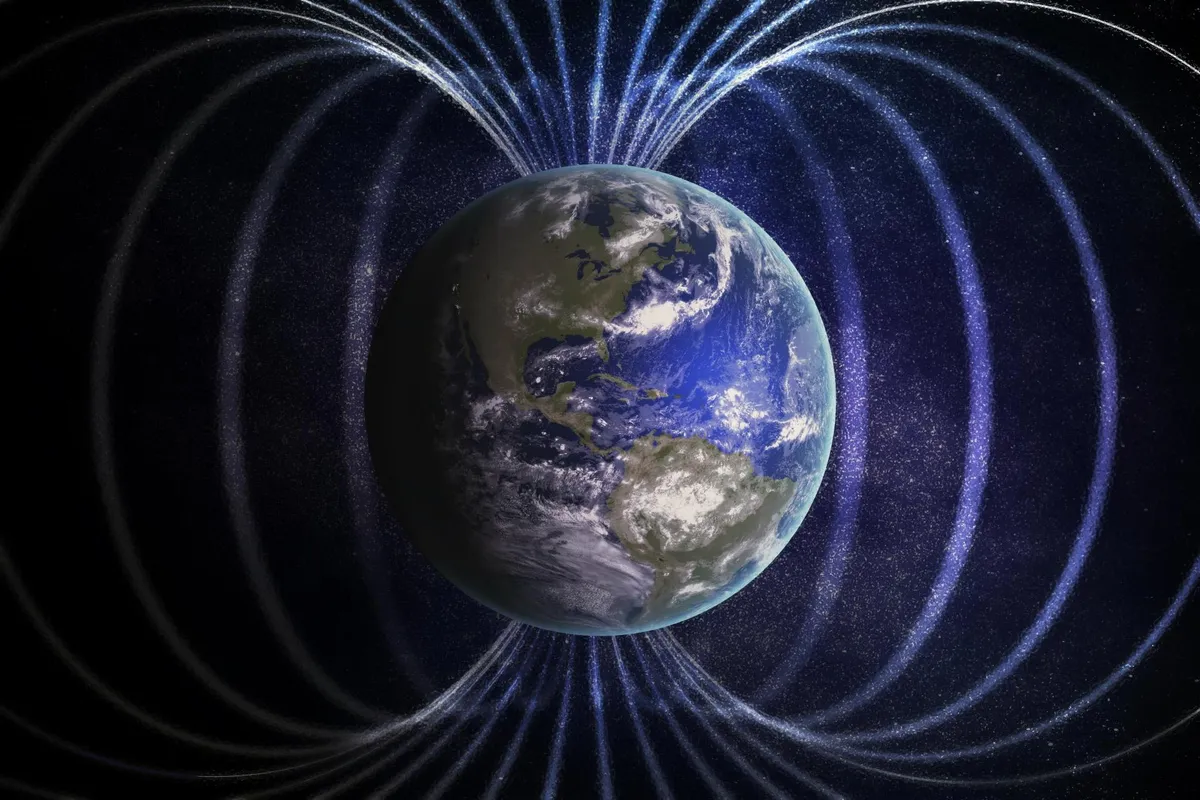
Imagine Earth's magnetic field just… going rogue. For nearly 100 million years, about 630 to 540 million years ago, our planet's magnetic field was completely bonkers. While most of Earth's history shows steady magnetic shifts, the Ediacaran Period was a chaotic mess, making it impossible to map ancient continents.
But here's the cool part: scientists just cracked the code. A new study says these wild magnetic swings weren't random at all. Instead, they followed a hidden, global pattern. This changes everything we thought we knew about that ancient time.
For decades, researchers were stumped. Some thought continents were zooming around super fast. Others suggested the entire planet tilted on its axis. But a team from Yale and Cadi Ayyad University looked closer, focusing on volcanic rocks in Morocco.
We're a new kind of news feed.
Regular news is designed to drain you. We're a non-profit built to restore you. Every story we publish is scored for impact, progress, and hope.
Start Your News DetoxThey sampled these rocks layer by layer, using super sensitive tools to see the tiny magnetic changes. What they found was pretty nuts: the magnetic shifts happened over thousands of years, not millions. That timing is key, because it's too fast for continents to move that much, and too fast for the whole planet to tilt.
This means the magnetic poles weren't just wobbling; they were moving in a much more complex, organized way across the globe. Think of it like a wild dance with a secret choreography.
This new method is a seriously big deal. It lets scientists finally piece together accurate maps of Earth's landmasses from the Ediacaran Period. Before this, that era was like a giant blank spot in our planet's history book. Now, we can start connecting the dots, going back billions of years.
It's like finding the missing piece to a puzzle that helps us understand how our planet was built.