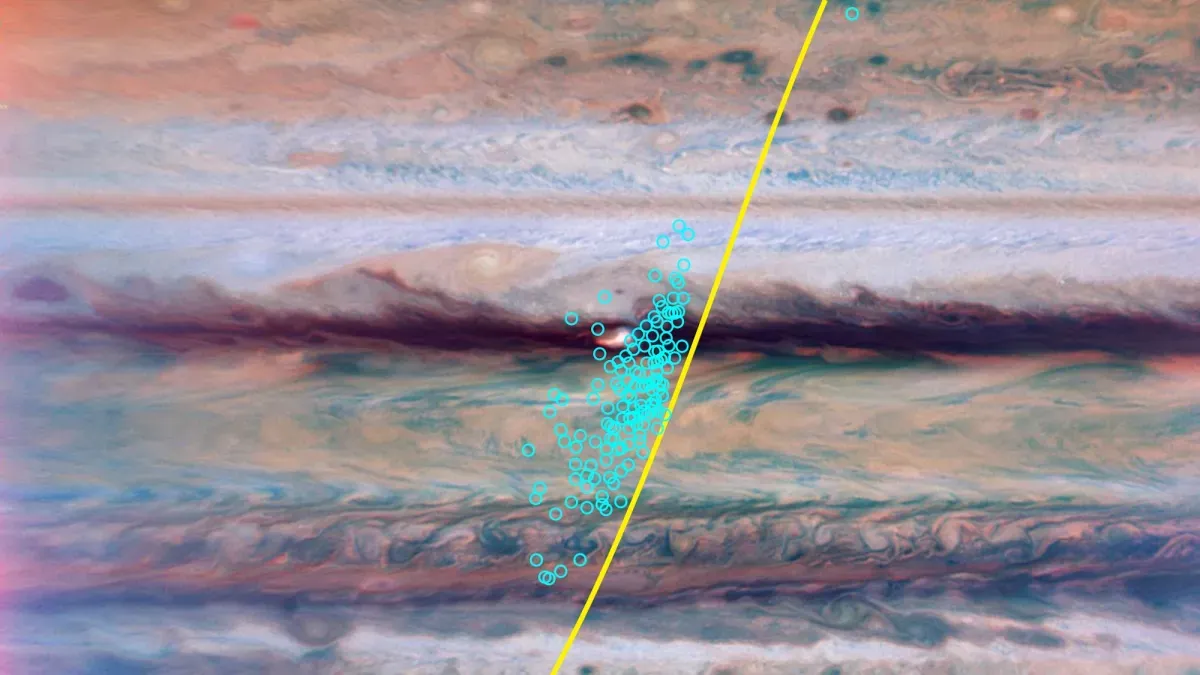
Turns out, Earth's lightning is kind of… cute. New observations show Jupiter's lightning bolts are up to 100 times more powerful than anything we see down here. Seriously, it makes our biggest storms look like tiny sparks.
This isn't just a little boost. We're talking about flashes that dwarf anything on Earth. Scientists are still trying to figure out all the details, but the data from NASA's Juno spacecraft is pretty wild. It's giving us the best look yet at the gas giant's super-sized storms.
Jupiter is known for its massive weather systems. Some of them are bigger than Earth itself and can rage for centuries. Take the Great Red Spot — it's over 10,000 miles wide and has been churning out lightning for more than 200 years. So, it makes sense that its lightning would be on another level.
We're a new kind of news feed.
Regular news is designed to drain you. We're a non-profit built to restore you. Every story we publish is scored for impact, progress, and hope.
Start Your News DetoxPrevious missions saw Jupiter's lightning, but mostly on the dark side of the planet. This left a big question: was all Jupiter's lightning super strong, or did it have smaller flashes too? Juno, which has been orbiting Jupiter since 2016, is finally getting answers.
Peeking into Jupiter's Electric Heart
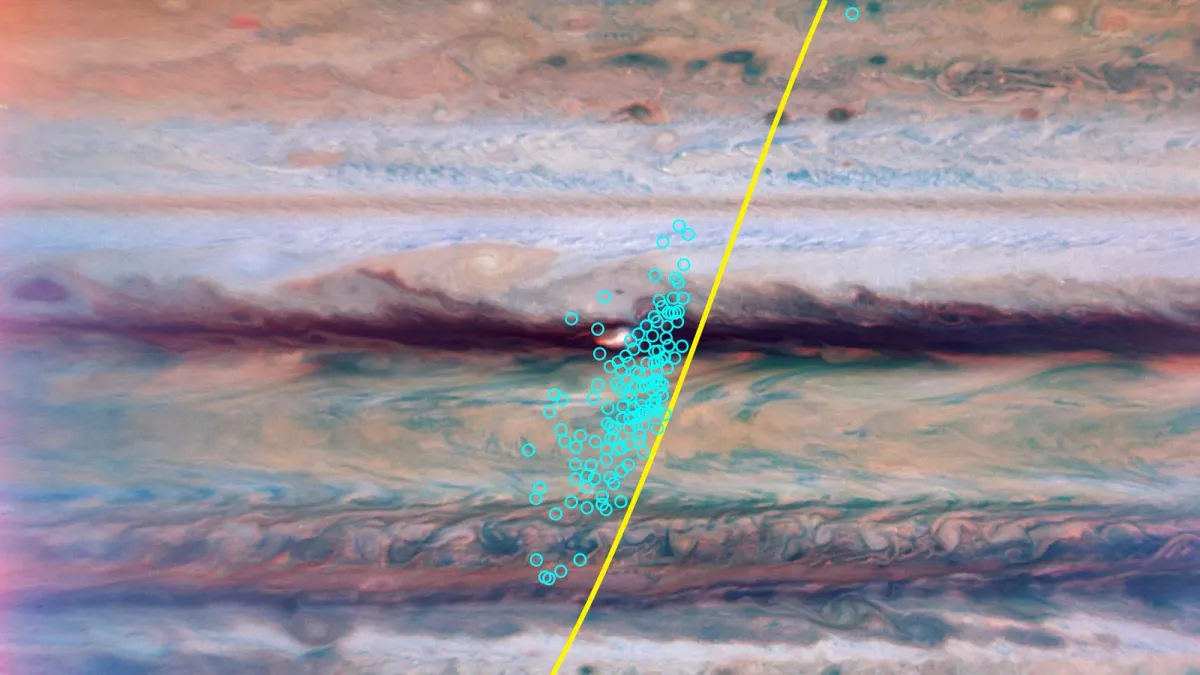
Juno uses a special tool called a microwave radiometer. It listens for the radio signals that lightning gives off. This helps scientists detect bolts even when they're hidden deep in the clouds. During a calm period in Jupiter's North Equatorial Belt in 2021 and 2022, researchers got a clear shot at some individual storms.
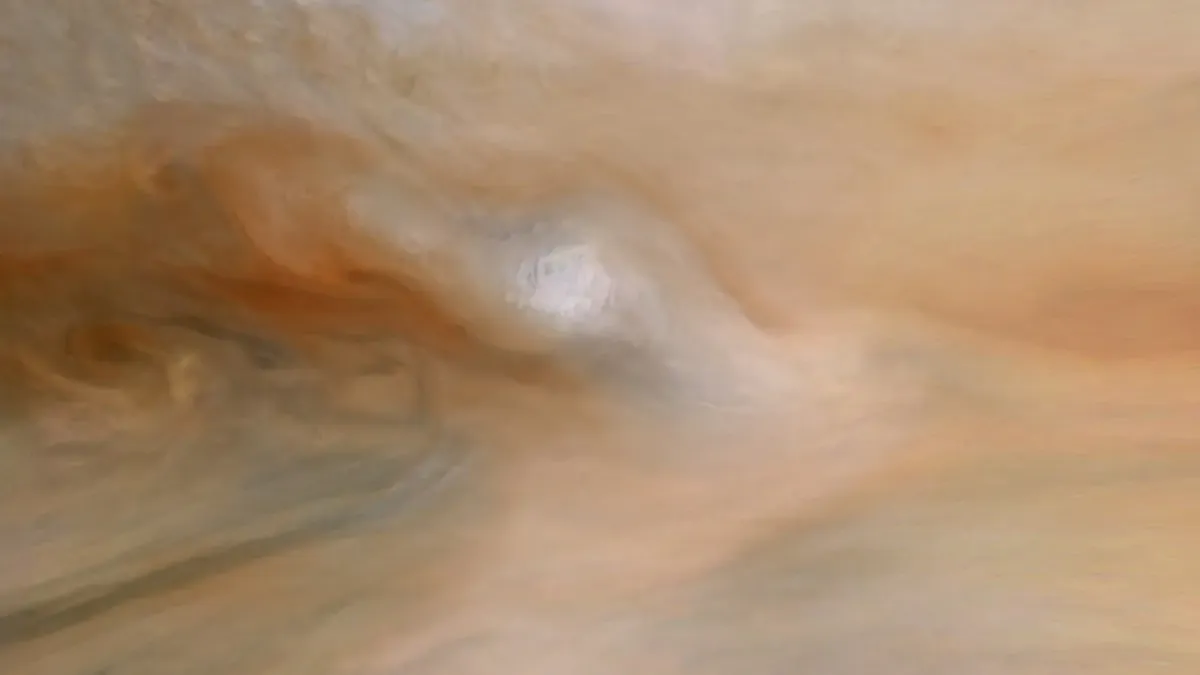
They found a huge range of activity. During four passes over the storms, Juno detected microwave static from lightning about three times a second. In one burst, it picked up 206 pulses. After analyzing 613 of these microwave bursts, the team confirmed it: Jupiter's lightning goes from Earth-level power all the way up to bolts at least 100 times stronger. Some calculations even suggest they contain 500 to 10,000 times more energy.
So, what makes Jupiter's lightning so much more intense? One idea points to the planet's atmosphere. Unlike Earth's air, which is mostly nitrogen, Jupiter's clouds are packed with hydrogen. Hydrogen is heavier than nitrogen. This means a storm on Jupiter needs a lot more energy to push moist air high into the atmosphere. But once it gets there, the electrical discharges that follow are just enormous. It's like building up a massive amount of pressure before the big release.
Scientists like Michael Wong from UC Berkeley are still digging into whether it's the hydrogen atmosphere or just the sheer height of Jupiter's storms that makes the difference. Either way, knowing this helps us understand lightning not just on Jupiter, but even a bit better here at home. It's a pretty wild thought that even our most powerful storms are just a whisper compared to what's happening out there.