Imagine reading a galaxy's diary, all the way back to when it was just a cosmic baby. Scientists just did exactly that, piecing together 12 billion years of a distant galaxy's life story just by looking at its chemical "fingerprints."
This isn't just a cool trick; it's like finding a secret map to how galaxies—including our own Milky Way—actually grow up. A team from Harvard and Smithsonian pioneered this "galactic archaeology" outside our home galaxy for the first time ever.
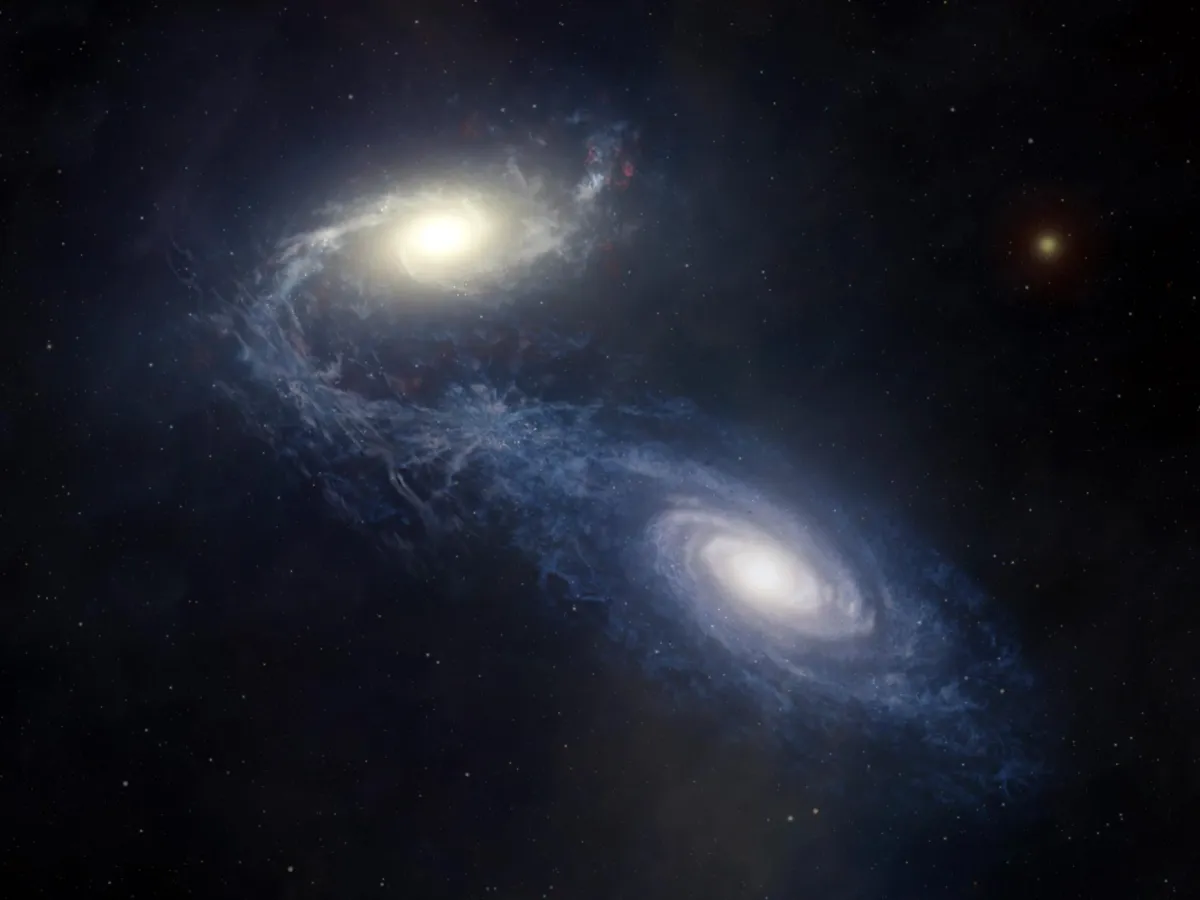
They focused on NGC 1365, a stunning spiral galaxy visible from Earth. By studying the light from gas where new stars are popping up, they could tell exactly what elements were present. Think of it like a cosmic forensics team.
We're a new kind of news feed.
Regular news is designed to drain you. We're a non-profit built to restore you. Every story we publish is scored for impact, progress, and hope.
Start Your News DetoxHere's the thing: galaxy centers usually have more heavy stuff, like oxygen, while the outer edges have less. This isn't random. It's a record of when and where stars formed, exploded, and how gas sloshed around.
The researchers then compared their findings to super detailed computer simulations that model everything from gas movement to black hole activity since the Big Bang. Out of 20,000 simulated galaxies, one perfectly matched NGC 1365.
This comparison told a wild story: NGC 1365 started small. Its core formed super early and got rich in oxygen fast. But its grand spiral arms? Those grew over billions of years, built from gas and stars gobbled up from smaller dwarf galaxies crashing into it. Pretty nuts, right?
This new method, dubbed "extragalactic archaeology," means we can now look at a galaxy and basically rewind its entire life. It's a huge step toward figuring out if our Milky Way's history is totally normal, or if we're living in a cosmic outlier.