Decades after Apollo astronauts brought Moon rocks back to Earth, scientists are now studying some of these untouched samples. They are using new technology that wasn't available before.
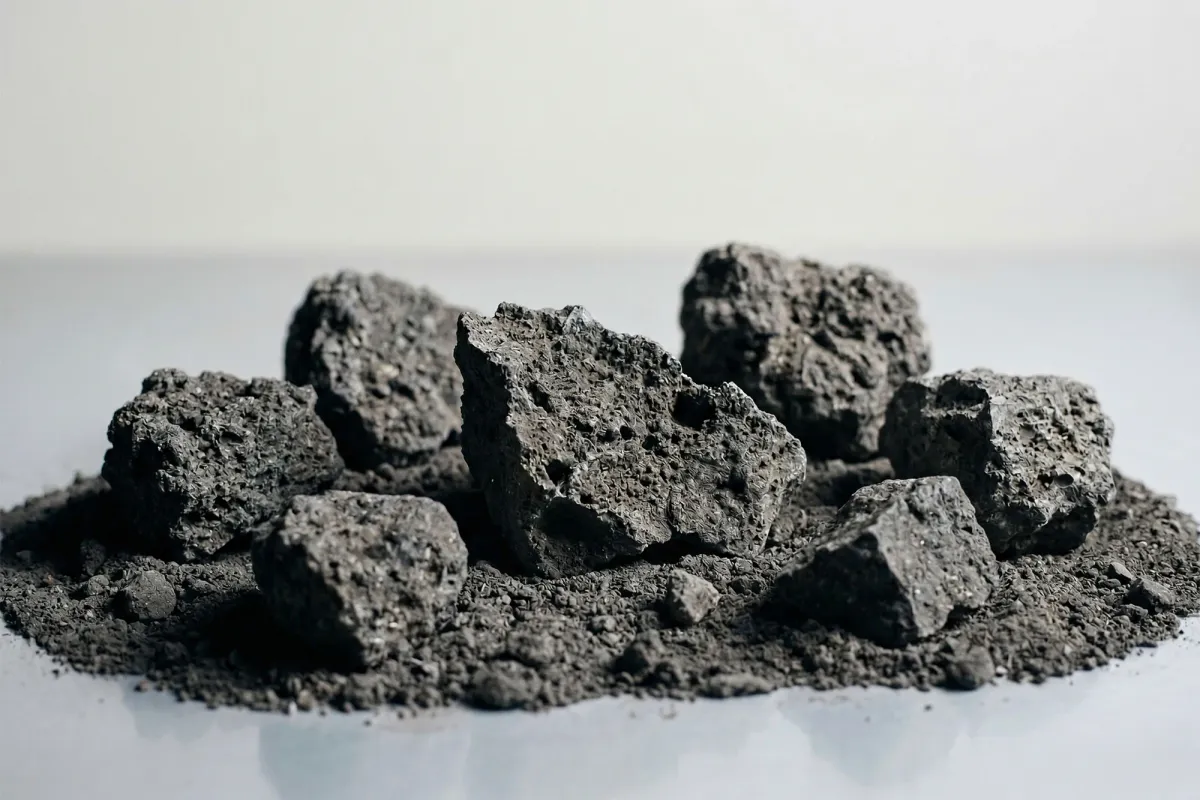
A team led by a Brown University researcher found something unexpected in material from Apollo 17. They discovered unusual sulfur compounds in rocks from the Taurus-Littrow region.
These volcanic rocks have sulfur that is very low in sulfur-33 (33S). This is one of four stable types of sulfur. The team says these levels are very different from what is usually found in rocks on Earth.
We're a new kind of news feed.
Regular news is designed to drain you. We're a non-profit built to restore you. Every story we publish is scored for impact, progress, and hope.
Start Your News DetoxElements have unique "fingerprints" based on their isotope ratios. These ratios show small differences in atomic mass. If two samples have the same pattern, it usually means they came from the same source.
Scientists already knew that Earth and the Moon have similar oxygen isotope signatures. Because of this, many thought sulfur isotopes would also match. But this was not the case, said James Dottin, the lead author of the study and a professor at Brown.
Dottin said he expected to see the same sulfur isotope composition as Earth. Instead, the values were very different from anything found on Earth.
A Pristine Sample from Apollo 17
The material Dottin studied came from a "double drive tube." Apollo 17 astronauts Gene Cernan and Harrison Schmitt pushed this metal cylinder about 24 inches into the Moon's surface.
NASA sealed the tube in a helium environment after it returned to Earth. This kept it unchanged for future research through the Apollo Next Generation Sample Analysis (ANGSA) program.
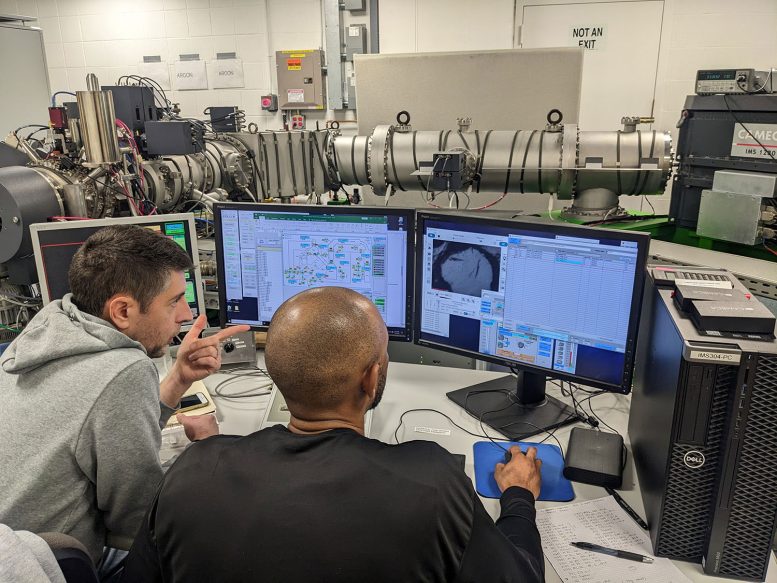
Recently, NASA opened these samples to scientists. Dottin used secondary ion mass spectrometry to measure sulfur isotopes. This very precise technique was not available when the samples first arrived.
He focused on parts of the core that looked like volcanic rock from deep inside the Moon. He wanted to study sulfur that seemed to have erupted with the rock, not added later.
Possible Explanations
The results were surprising. The isotope ratios were much more different than expected from anything on Earth.
Dottin said his first thought was that the results couldn't be right. But after checking, he confirmed they were accurate.
Dottin suggests two main explanations. One idea goes back to the Moon's early environment. Sulfur that reacts with ultraviolet light in a thin atmosphere can develop low 33S levels. Scientists think the Moon once had a brief atmosphere where this could have happened.
If this is true, it would mean material moved from the surface down into the Moon's interior.
Dottin said this would show ancient exchange of materials between the lunar surface and the mantle. Earth has plate tectonics for this, but the Moon does not. So, the idea of an exchange mechanism on the early Moon is exciting.
Another explanation looks even further back to how the Moon formed. The main theory is that a Mars-sized body called Theia hit Earth. The debris from this collision then formed the Moon. If Theia had a very different sulfur composition, that signature might still be inside the Moon's mantle.
For now, the data doesn't clearly favor one explanation. Dottin hopes future studies, including comparing samples from Mars and other planets, will help solve the mystery. Understanding these isotope patterns could offer new clues about how the Moon and the solar system formed.
Deep Dive & References
Endogenous, yet Exotic, Sulfur in the Lunar Mantle - Journal of Geophysical Research: Planets, 2025