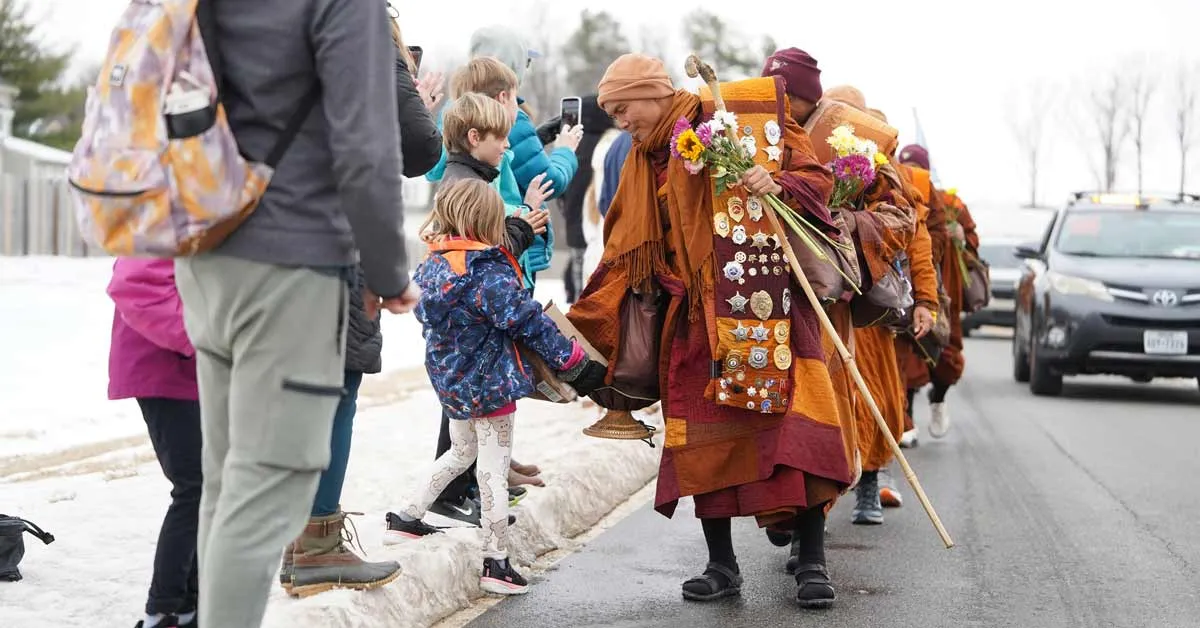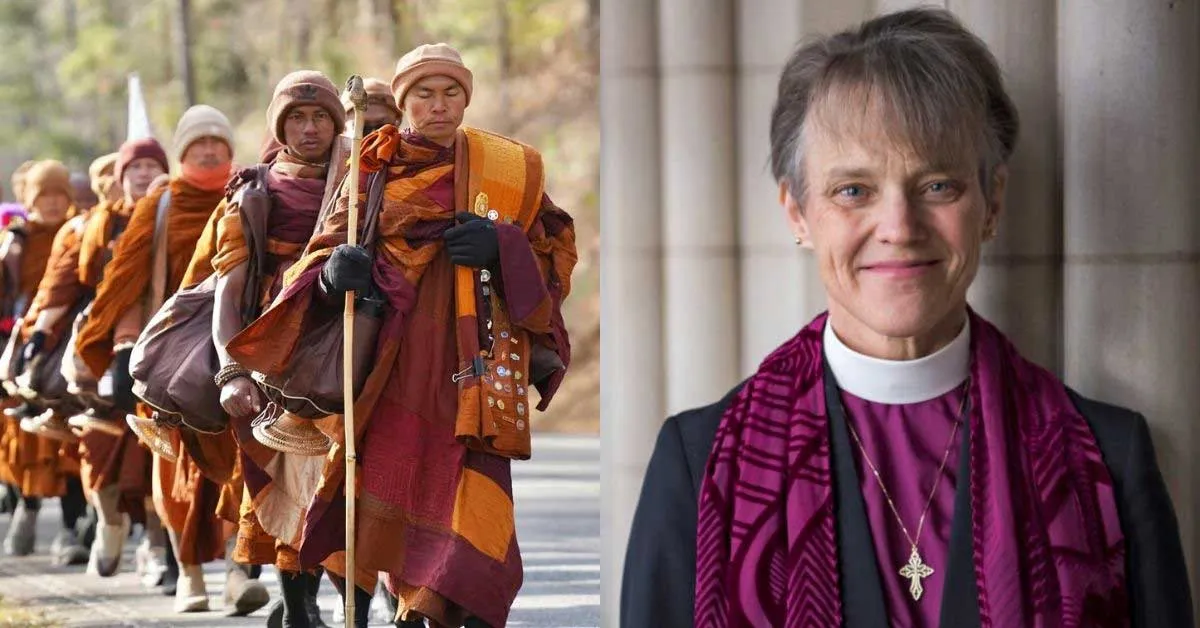
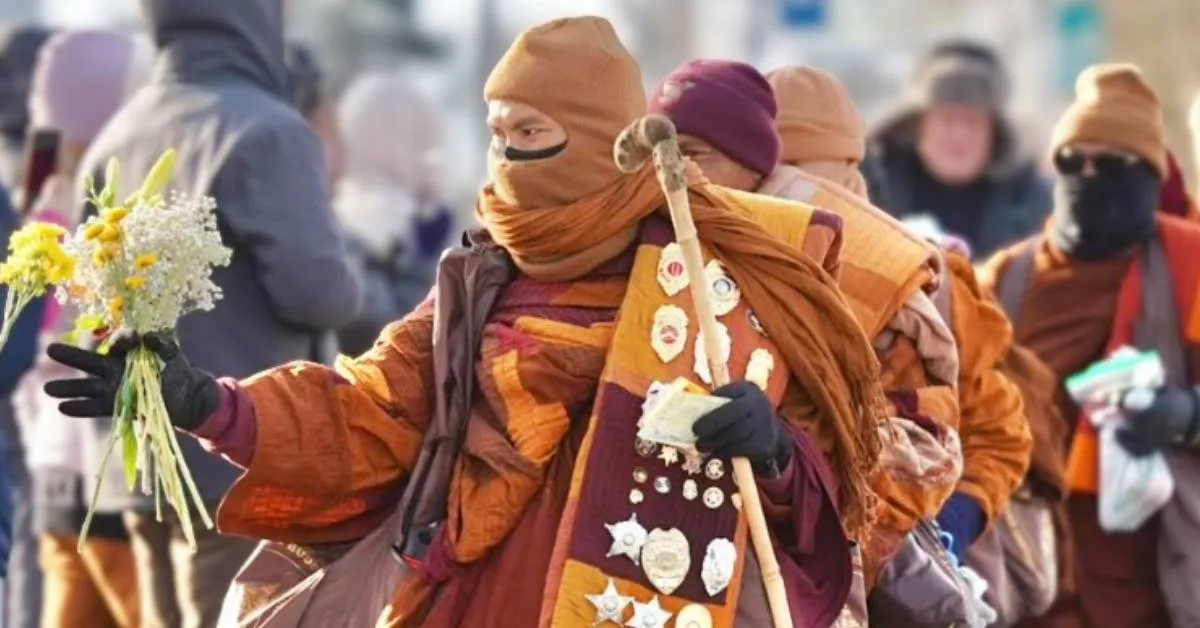
Nineteen Buddhist monks from the Huong Dao Vipassana Bhavana Center set out from Fort Worth, Texas on October 26 with a simple intention: walk 2,300 miles to Washington, D.C., and invite people along the way to remember what peace feels like.
By early February, they'd reached Richmond, Virginia, on day 100 of their journey. Snow covered the ground. The temperature had dropped. And thousands showed up anyway — standing in the cold evening to walk alongside the monks and their rescue dog, Aloka.
"The temperature was low, but the warmth in every heart was overwhelming," the Walk for Peace team posted on Instagram. "It felt deeply touching that so many souls chose to come out in the cold evening to be together, to listen, and to share in the spirit of peace and mindfulness."
We're a new kind of news feed.
Regular news is designed to drain you. We're a non-profit built to restore you. Every story we publish is scored for impact, progress, and hope.
Start Your News DetoxWhere this comes from
Buddhist monks have led peace walks for millennia, but this American walk traces its roots to Cambodia in 1992. After four Cambodian factions signed a peace accord, spiritual leader Maha Ghosananda organized a movement of "socially engaged Buddhism" — monks walking through their communities as an act of healing.
"Peace is growing in Cambodia, slowly, step by step," Ghosananda said. "Each step is a meditation. Each step is a prayer."
That walk inspired Cambodia's annual Dhammayietra — a pilgrimage of truth that continues today. Now the model has crossed the Pacific.
A Cambodian Peace Walk. Image via ณว / Wikimedia Commons (CC BY-SA 3.0)
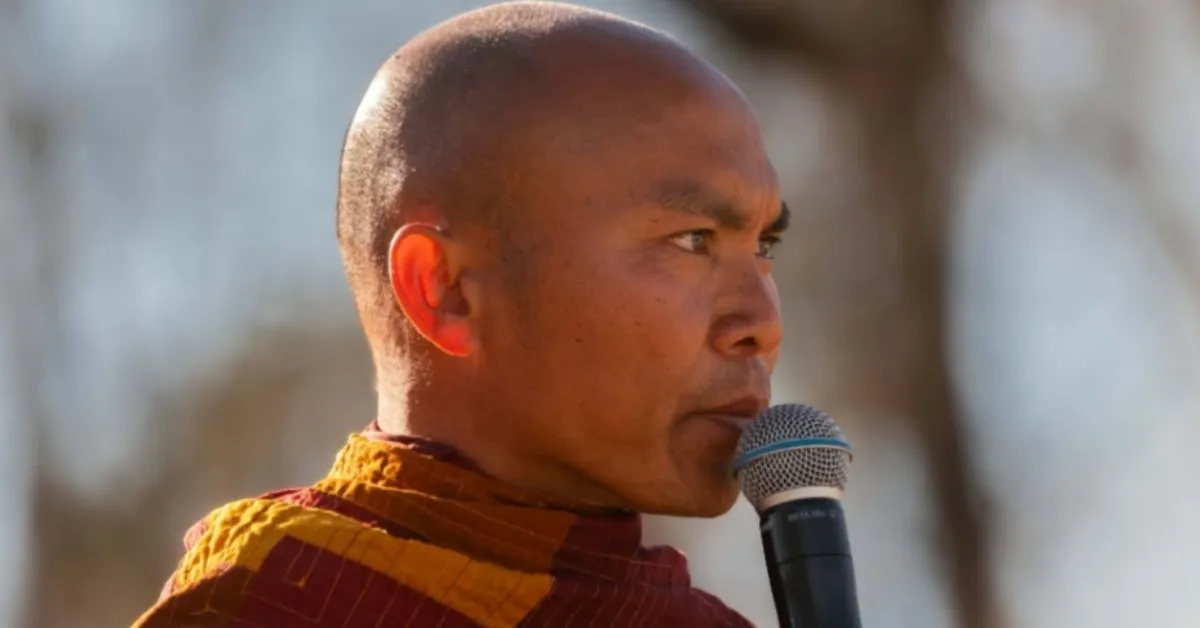
Spiritual leader Bhikkhu Pannakara framed the walk this way: "We walk not to protest, but to awaken the peace that already lives within each of us. The Walk for Peace is a simple yet meaningful reminder that unity and kindness begin within each of us and can radiate outward to families, communities, and society as a whole."
The monks' message, shared along their route and through their social media, centers on something most of us recognize but forget regularly: our suffering often comes from minds that wander into the past we can't change or the future we can't control. Peace, they say, isn't something to find — it's something to return to.
"This here and now, this present moment, is our home," they wrote. "Peace is right here. It has always been right here, waiting for us like a warm home with the door open. We can come back to it simply by returning to our breath — breathing in, breathing out, feeling the gentle rhythm that has been quietly holding us this whole time."
As the monks approach Washington, D.C., their walk continues to draw people out into the streets — not to march against something, but to stand together for something. The journey itself is the message.