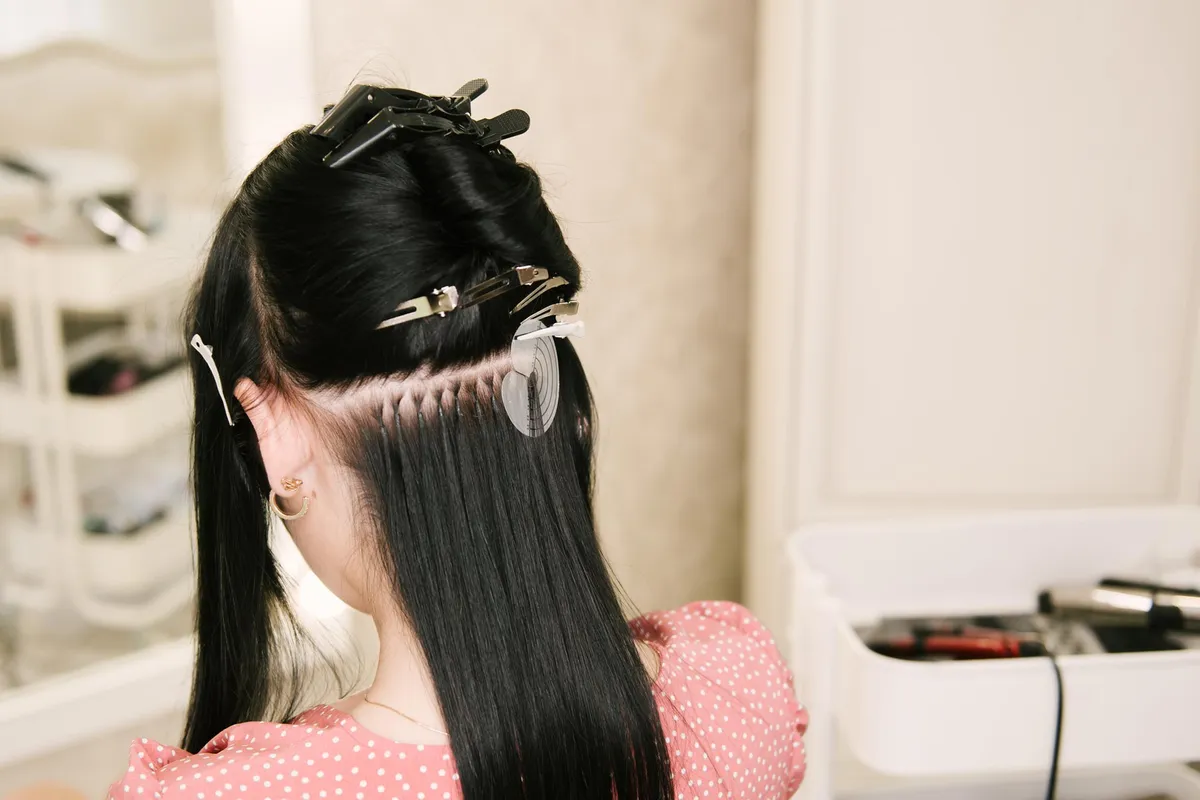
A new analysis of 43 popular hair extension products has uncovered a troubling pattern: 41 of them contained hazardous chemicals linked to cancer, hormone disruption, and developmental harm. The findings come from Silent Spring Institute researchers who tested products bought from online retailers and beauty supply stores, marking the most detailed examination of this largely unregulated industry to date.
The chemicals detected include flame retardants, phthalates, pesticides, and organotins — substances that rest directly against the scalp and neck during wear. Heat styling can release these chemicals into the air, creating an additional inhalation risk. The research, published in Environment & Health, arrives as questions mount about long-term health effects that have been largely overlooked by an industry serving millions of users.
The issue carries particular weight for Black women, who make up the majority of hair extension wearers. More than 70% of Black women say they wore extensions in the past year, compared with fewer than 10% of women from other racial and ethnic backgrounds. Extensions serve important cultural and personal purposes — yet the products themselves have remained largely opaque about their chemical composition.
We're a new kind of news feed.
Regular news is designed to drain you. We're a non-profit built to restore you. Every story we publish is scored for impact, progress, and hope.
Start Your News DetoxWhat the testing revealed
Among the 43 products, researchers found 48 different hazardous chemicals on established danger lists. Twelve appear on California's Proposition 65 for causing cancer, birth defects, or reproductive harm. Seventeen chemicals linked to breast cancer were detected in 36 samples, many known to interfere with hormones in ways that may elevate risk.
Organotins — heat stabilizers used in PVC — appeared in nearly 10% of products, in some cases exceeding health limits set by the European Union. These chemicals have been linked with skin irritation, a complaint commonly reported by extension users, as well as cancer and hormone disruption. Four different flame retardants showed up in both synthetic and bio-based products, suggesting the problem spans across material types.
The two products that came clean were labeled as "non-toxic" or "toxic-free" — a hint that safer alternatives exist, though they remain exceptions rather than the norm.
Dr. Elissia Franklin, lead researcher at Silent Spring Institute, frames the gap plainly: "This is an industry that has long overlooked the health of Black women, who should not have to choose between cultural expression, convenience, and their health."
Regulation beginning to move
The global hair extension market is projected to exceed $14 billion by 2028, with the United States driving worldwide demand. That scale has finally prompted regulatory attention. New York and New Jersey have proposed legislation to increase disclosure and restrict harmful chemicals. At the federal level, the Safer Beauty Bill Package — introduced in Congress last year — includes provisions directing the FDA to oversee the safety of synthetic braids and hair extensions.
These moves signal a shift, though researchers stress that stronger oversight is overdue. Many of the chemicals identified in extensions are already restricted or banned in other consumer products, raising questions about why the beauty industry has operated with such minimal accountability.
The path forward likely involves both clearer labeling requirements and pressure on manufacturers to reformulate. The existence of non-toxic products suggests the barrier is not technical innovation but market incentive — a problem regulation can help solve.