You know that feeling when a task feels too hard to start, even though you know it needs doing. Your brain might actually be working against you—literally hitting the brakes on your motivation.
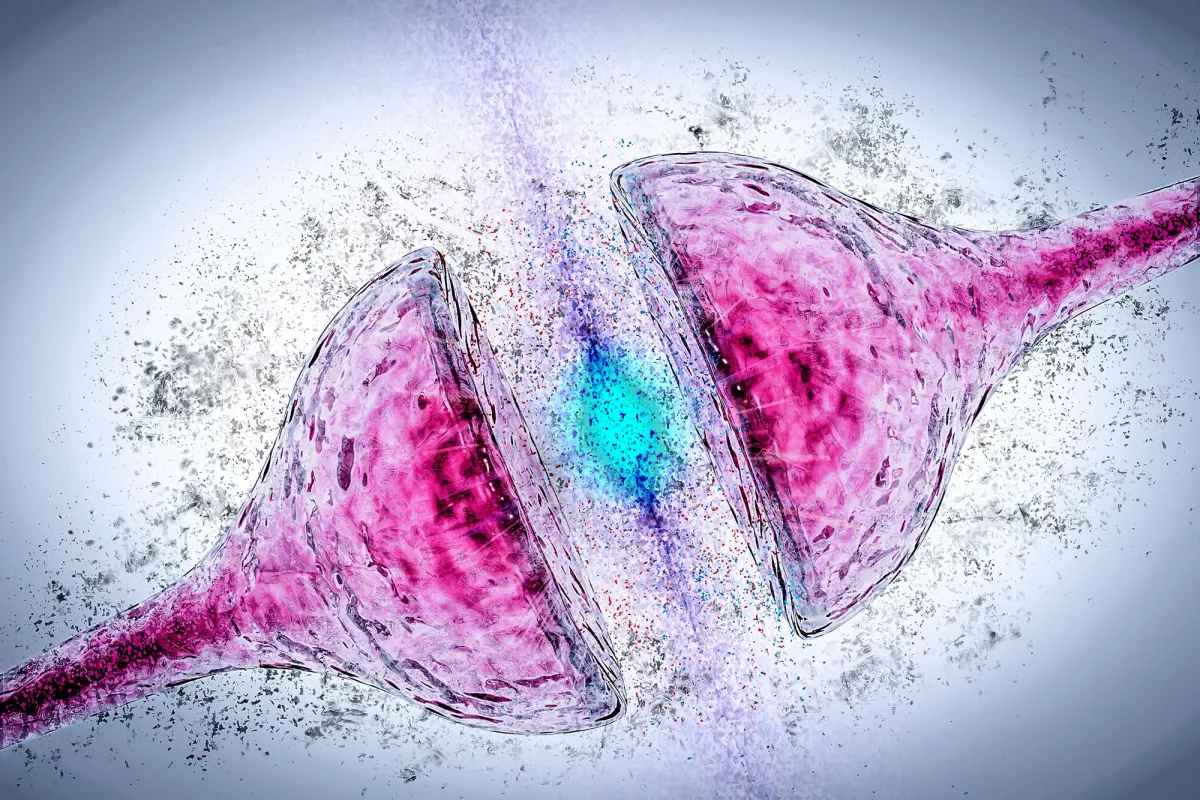
Researchers studying macaque monkeys have identified a neural circuit that acts like a motivation brake, kicking in when we face something unpleasant or stressful. The discovery, published in Current Biology in January, could reshape how we treat conditions like depression where motivation simply vanishes.
The brake in action
In the study, scientists trained two thirsty macaques to choose between two tasks. One earned them water. The other gave them water plus an unpleasant puff of air to the face. When the punishment option appeared, the monkeys hesitated far more—classic procrastination behavior. But here's where it gets interesting: the hesitation wasn't about being unable to judge the trade-off. Something deeper was holding them back.
We're a new kind of news feed.
Regular news is designed to drain you. We're a non-profit built to restore you. Every story we publish is scored for impact, progress, and hope.
Start Your News DetoxThe culprit appears to be a pathway between two brain regions called the ventral striatum and ventral pallidum. When researchers suppressed this circuit using targeted genetic techniques, the monkeys' behavior shifted dramatically. They became willing to tackle the unpleasant task. The change was so pronounced that Amemori, the study's lead neuroscientist at Kyoto University, told Nature it was "dramatic."
What makes this finding powerful is the specificity. The researchers didn't just observe that something was happening—they identified the exact circuit, switched it off, and watched behavior change in response. That's causal evidence, not correlation.
Why this matters for real life
Depression affects roughly 5.7% of adults worldwide, according to the World Health Organization. One of its defining features isn't sadness so much as a crushing loss of motivation—the inability to start tasks, to care about outcomes, to move. If this motivation brake is overactive in depression, then learning to modulate it could open new treatment paths.
The implications extend beyond medication. Psychotherapists using cognitive behavioral therapy might eventually tailor their approaches based on understanding this circuit. Deep brain stimulation—already used for Parkinson's—could theoretically be adapted here. Even new drug therapies could target this specific pathway.
But Amemori and his team are careful about one thing: this brake exists for a reason. Weaken it too much and you risk reckless decision-making or dangerous risk-taking. Any treatment would need precision calibration and rigorous ethical oversight.
The next phase is clear: researchers will build on this foundation to understand how the circuit goes wrong in depression and schizophrenia, and whether interventions can restore balance without creating new problems. We're still years away from a treatment, but for the first time, we're looking at procrastination not as a character flaw, but as something with an actual address in the brain.