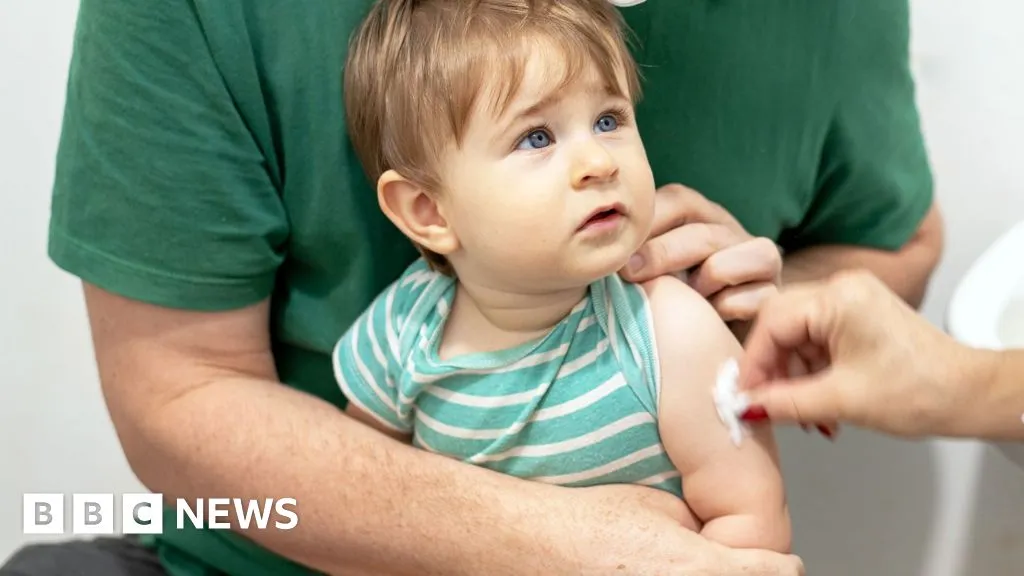
For the first time, every young child in the UK can now get protected against chickenpox through the NHS. The vaccine arrives as a combined shot with MMR — the jab that already guards against measles, mumps and rubella — given at 12 and 18 months old.
Until now, parents who wanted this protection had to pay around £200 privately. That barrier is gone.
What changed the calculation
Maria Horton's daughter Beth was two-and-a-half when chickenpox led to a stroke. "She collapsed and her arm and leg went all floppy and then she started to have a seizure," Horton recalls. Fourteen years later, Beth still lives with the aftermath — she can't use her right hand properly, has speech difficulties, and experiences chronic pain.
We're a new kind of news feed.
Regular news is designed to drain you. We're a non-profit built to restore you. Every story we publish is scored for impact, progress, and hope.
Start Your News Detox"If I'd known years ago what I know now, I wouldn't hesitate to give her the vaccine," Horton says. "As a mum, if you could go back in time and stop something catastrophic happening to them, you absolutely would."
Beth's story isn't unique. While chickenpox is extremely common — around 90% of children catch it by age 10 — it's usually mild. But "usually" isn't always. The virus can trigger bacterial infections, brain swelling, lung inflammation, and in rare cases, stroke or death. Thousands of UK families experience serious complications each year.
The new MMRV vaccine (combining measles, mumps, rubella, and varicella) has been safely used for decades in other countries. Australia, Germany, and the US have all introduced it, and they've seen clear results: fewer children getting chickenpox overall, and fewer ending up in hospital. The UK has lagged behind on this one, but recent research showing the real impact on children and NHS resources finally shifted the decision.
Who gets it, and when
Children born after January 1, 2026 will automatically receive two doses — at 12 and 18 months. Older children are eligible for a catch-up program (one or two doses depending on their birth date). Those aged 6 or older by the end of 2025 likely already had chickenpox, so they're not included.
GP surgeries will contact families when appointments are due. No action needed from parents — the NHS will reach out.
This shift means thousands of families won't face the choice between paying privately or hoping their child's chickenpox stays mild. For children like Beth, it arrives too late. For the next generation, it changes the odds.