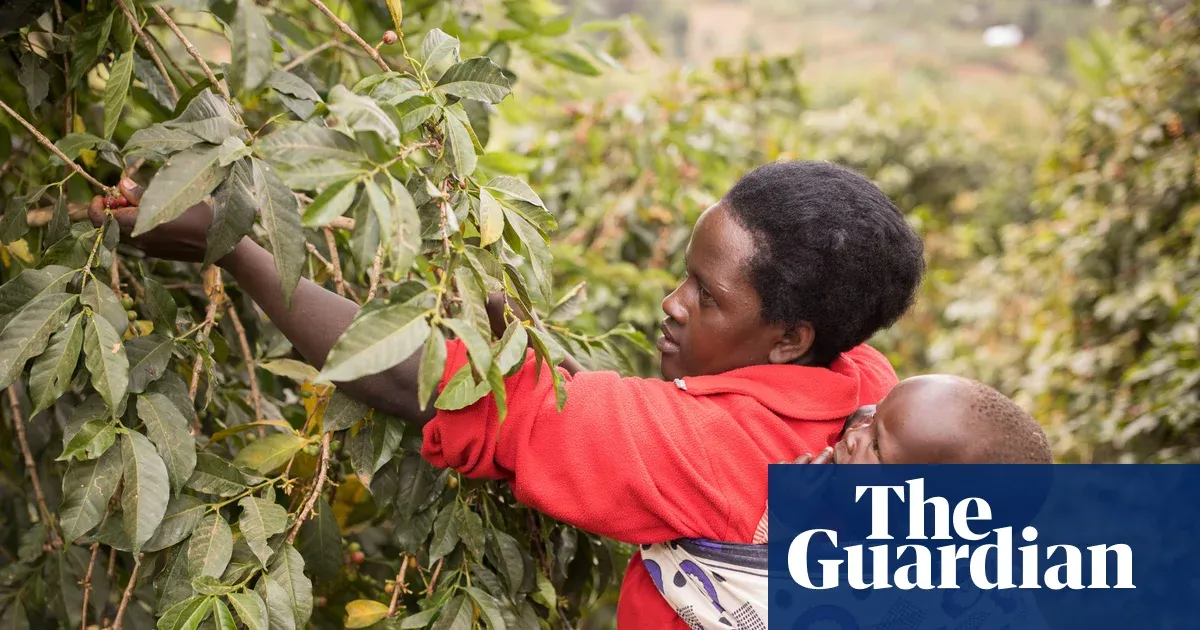
For centuries, mothers across Africa, Latin America, and Asia have carried their babies in cloth wraps tied to their backs. A trial in Uganda suggests this ancient practice could become one of the most effective—and cheapest—tools we have against malaria.
Researchers treated traditional cloth wraps, known locally as lesus, with permethrin, a common insect repellent. When 200 mothers in Kasese, a rural mountainous region of western Uganda, carried their six-month-old babies in these treated wraps for six months, malaria cases dropped by two-thirds compared to babies in untreated wraps.
The result startled even the researchers. "What was quite outstanding was the magnitude," said Edgar Mugema Mulogo, a public health professor at Mbarara University of Science and Technology. His co-lead, Dr. Ross Boyce of the University of North Carolina, was so surprised he insisted they rerun the numbers to verify.
We're a new kind of news feed.
Regular news is designed to drain you. We're a non-profit built to restore you. Every story we publish is scored for impact, progress, and hope.
Start Your News DetoxWhy this matters now
Malaria kills over 600,000 people annually, mostly children under five in Africa. But the mosquitoes carrying the parasite are changing their behavior. They increasingly bite outside nighttime hours, when bed nets offer protection. Wraps, by contrast, are woven into daily life—mothers use them not just for carrying infants but as shawls, bed sheets, and aprons. A treated wrap becomes a tool mothers already reach for.
There's also a timing problem. Babies are most vulnerable before they can be vaccinated, when maternal antibodies are fading. A simple, affordable intervention that works during those crucial months could save thousands of lives.
Permethrin itself isn't new. The US military has used it on textiles for years, and it has a established safety record. In the trial, babies in treated wraps were slightly more likely to develop minor rashes, but none serious enough for any family to drop out.
The intervention's simplicity is its strength. As one researcher put it: "We took some cloth and we soaked it. And it's dirt cheap." No complex manufacturing. No specialized training. No expensive supply chains. Health officials in Uganda and leaders at the World Health Organization have already expressed interest.
Researchers are now working to confirm the results hold in other settings and populations. If they do, treated wraps could become part of the standard toolkit for preventing malaria in infants—a low-cost addition to bed nets, vaccines, and other interventions that's already embedded in how mothers care for their babies.