In 1509, Christopher Columbus was buried at the Monastery of Santa María de las Cuevas in Seville, Spain—a place now known as La Cartuja. He didn't stay there long; his remains were moved to Santo Domingo in the Dominican Republic in 1536. But something far more resilient from his voyages remained behind: a tree that has now survived five centuries.
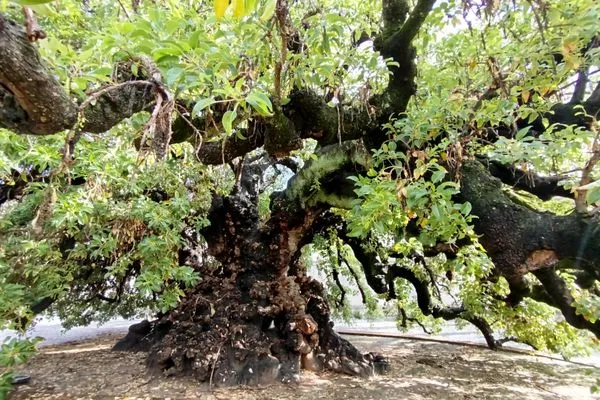
Hernando Colón, one of Columbus's sons, accompanied his father on a voyage to the Americas and returned with ombú seeds. He planted them in the monastery's gardens, creating what became Europe's first specimen of this species. The ombú (Phytolacca dioica) is native to the Argentine pampas and the borderlands of Uruguay, southern Brazil, and Paraguay—a tree shaped by a landscape an ocean away.
The ombú is remarkable for its longevity and its toxic sap, which makes it almost immune to insect attacks. But it has one vulnerability: its soft trunk holds enormous amounts of water. This characteristic nearly killed the tree in 1992.
We're a new kind of news feed.
Regular news is designed to drain you. We're a non-profit built to restore you. Every story we publish is scored for impact, progress, and hope.
Start Your News DetoxWhen restoration workers noticed cavities caused by humidity damage, they applied what seemed like a logical fix—injecting polyurethane foam to seal the gaps. It backfired completely. The foam prevented the tree from managing its own moisture, causing it to absorb even more water. Fungus spread through the trunk. The cure had become a poison.
Specialized gardening technicians eventually saved the tree by removing the foam and letting the ombú return to its natural processes. Today, it still grows near a Columbus statue erected in 1887 by the Pickman family, British owners of a pottery factory that later occupied the monastery grounds.
What makes this tree remarkable isn't just its age or its journey across the Atlantic as a seed in someone's pocket. It's that it survived not only five centuries of European weather and soil, but also the well-intentioned mistakes of modern restoration. The ombú endured because someone finally understood that sometimes the best way to help something ancient is to let it be itself.