Overfished coral reefs are producing a fraction of the food they could. Scientists at the Smithsonian Tropical Research Institute have quantified exactly what we're leaving on the table—and it's substantial.
The research, published in the Proceedings of the National Academy of Sciences, found that if reef fish populations were allowed to recover to sustainable levels, global coral reef fisheries could increase their yield by nearly 50%. That's roughly 59 million tons of additional sustainable seafood annually. To put it in human terms: enough fish servings to meet recommended weekly consumption for millions of people who currently lack reliable access to protein and micronutrients.
The catch is geographic. The places where reef recovery would make the biggest nutritional difference are also the places where hunger is most severe. Indonesia leads the list, followed by regions across Southeast Asia and sub-Saharan Africa. "There is a positive correlation between countries' potential increase in fish servings with stock recovery and their global hunger index," notes Sean Connolly, a co-author at STRI. In other words, the ocean's recovery could help feed the people who need it most.
We're a new kind of news feed.
Regular news is designed to drain you. We're a non-profit built to restore you. Every story we publish is scored for impact, progress, and hope.
Start Your News Detox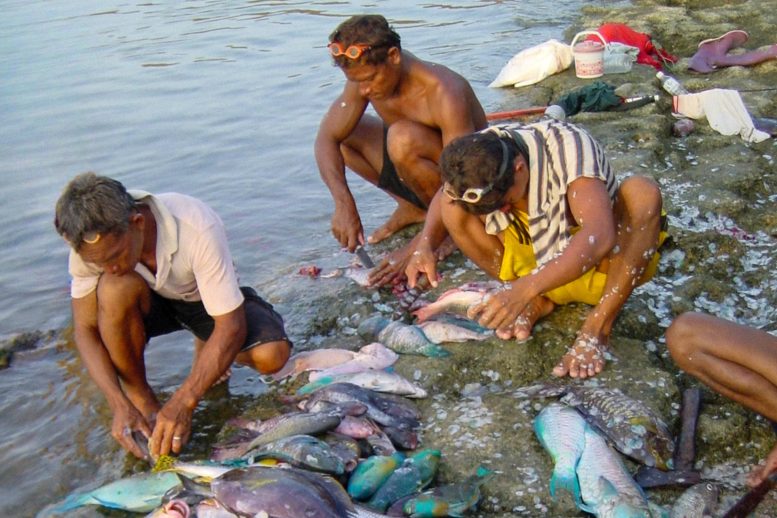
Cleaning the catch after a coral reef fishing trip in North Sulawesi, Indonesia. Credit: Joshua Cinner
How much have we lost?
The research team compared current fish populations across coral reef regions—from the Dominican Republic to the Philippines to Kenya—against what those reefs could sustainably support. They used statistical models to estimate recovery timelines under different management scenarios. The results: most reefs could bounce back within 6 to 50 years, depending on how depleted they are and how strictly fishing is regulated.
The gap between what reefs currently produce and what they could produce is staggering. Jessica Zamborain-Mason, the study's lead author, frames it plainly: "Our study quantifies how much is being lost by having overfished reef fish communities in terms of food provisioning and, in turn, how much could be gained from rebuilding reef fish stocks."
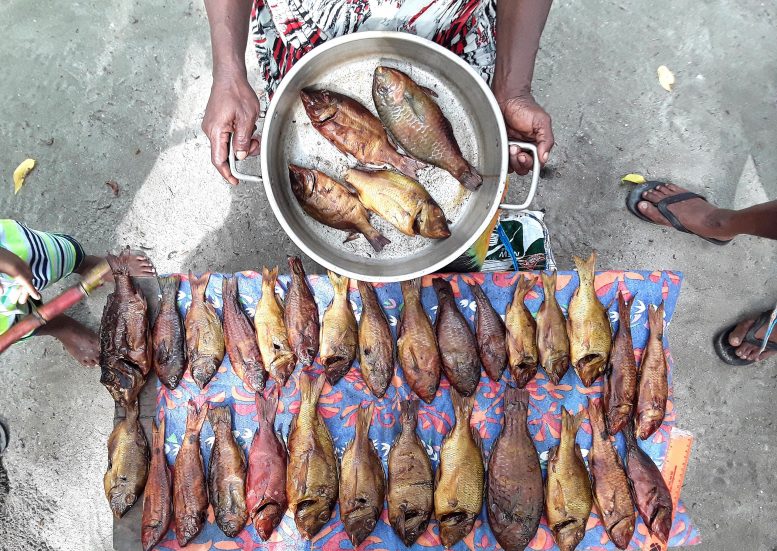
Fishing for food security: On a small island in Papua New Guinea, families lay an assortment of smoked reef fish across a shared table, illustrating the importance of sustainably managed multispecies reef fisheries for food security. Credit: Jessica Zamborain-Mason
This isn't just an environmental argument, though the environmental case is strong. It's a food security argument. Millions of people in coastal regions depend on reef fish for protein and essential nutrients. Right now, overfishing means those reefs are delivering far less than they could. Recovery would change that—but only with effective management, alternative income sources for fishing communities during transition periods, and genuine international support.
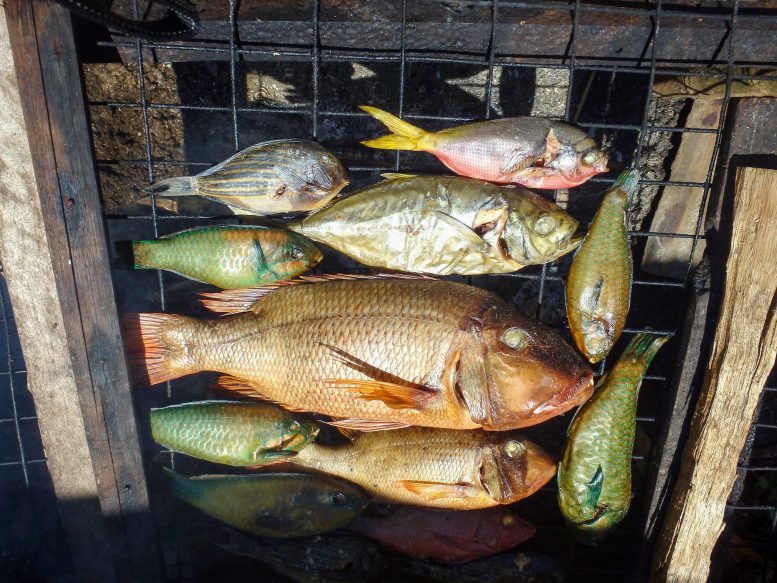
A variety of smoked reef fish in Papua New Guinea. Seafood intake is recommended to support cardiovascular health and coral reef fish recovery could provide enough to meet recommended seafood intake for millions more people annually. Credit: Jessica Zamborain-Mason
The path forward requires seeing reef restoration not just as conservation work, but as infrastructure for human nutrition. Countries like Indonesia, which stand to gain the most, now have a concrete case for why protecting their reefs matters as much to a child's health as to a fish's survival.
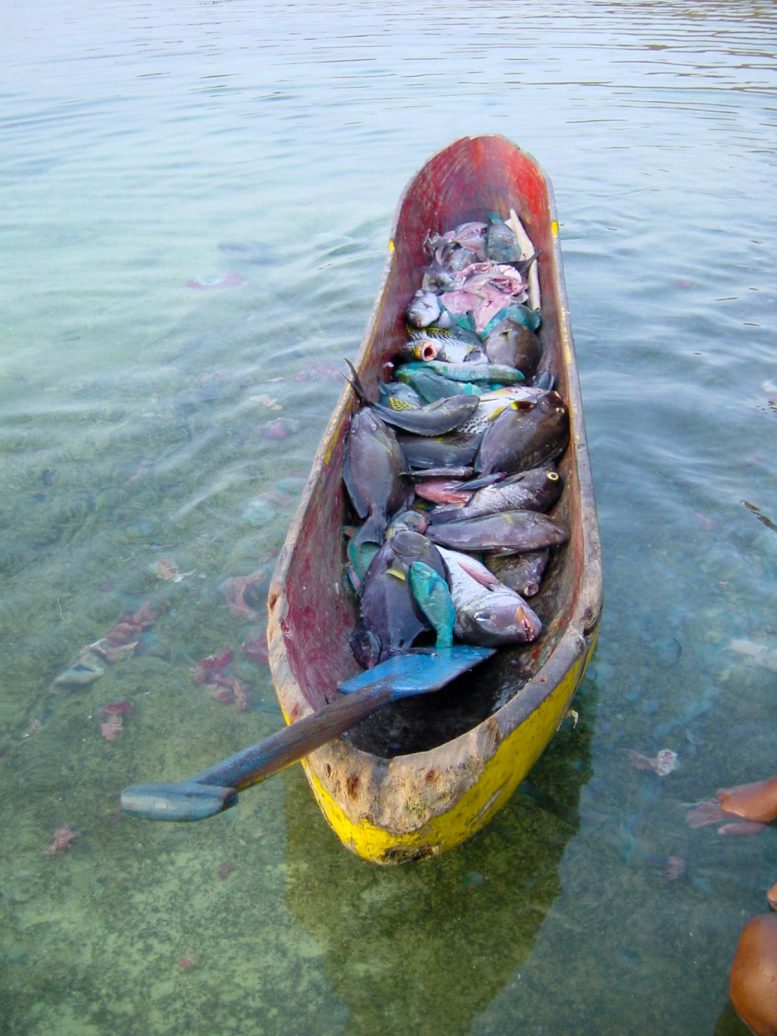
A multi species coral reef fish catch in North Sulawesi, Indonesia. Credit: Joshua Cinner
The question now is whether policymakers will act on what the science shows: that letting reefs recover is one of the most direct ways to improve food security in the regions that need it most.