Costa Rica's highest court has ruled that the government and national electricity utility failed to protect wildlife from electrocution on power lines—and ordered them to fix it.
The case started in the Nosara region of northwestern Costa Rica, where bare wiring and poor infrastructure maintenance have turned power lines into a lethal hazard for tree-dwelling animals. A coalition of NGOs, represented by the law firm Alta Legal, sued the Constitutional Court, arguing that the exposed infrastructure violated existing wildlife protection laws.
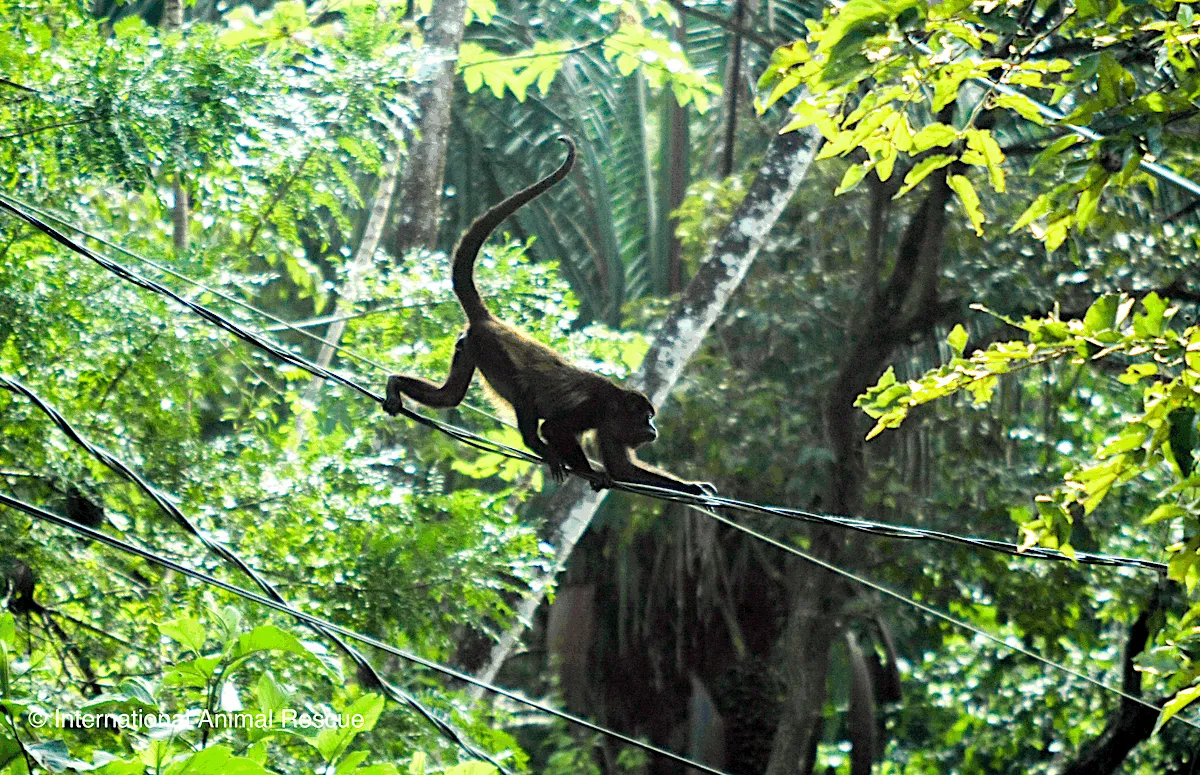
The toll on local wildlife has been visible and brutal. Howler monkeys—large primates that live in the canopy—are electrocuted regularly when they contact uninsulated wires and transformers. When a mother is killed, her dependent offspring either dies with her or becomes orphaned. Male troop leaders, who hold the social structure together, are also frequent victims. "That means you get a child that's with her that becomes orphaned or dies as well," said Elena Kukovica, with the International Animal Rescue Center, one of the NGOs that brought the case. "Male troop leaders are frequently killed, which disrupts the social hierarchy of the monkeys."
We're a new kind of news feed.
Regular news is designed to drain you. We're a non-profit built to restore you. Every story we publish is scored for impact, progress, and hope.
Start Your News DetoxFrancisco Sánchez Murillo, a Costa Rican veterinarian who provided evidence for the case, documented the pattern across the country. "Bare electrical wiring is a widespread problem in Costa Rica, especially affecting rural areas," he told researchers. The issue isn't new—poor insulation on cables and transformers, combined with aging infrastructure, has been an ongoing hazard for years.
What makes this ruling significant is its scope. While the lawsuit focused on one region and one species, conservationists see it as a template for protecting wildlife across Costa Rica. The court's order isn't just symbolic—it requires concrete action from both government agencies and the national electricity utility to shield power lines from animal contact.
This kind of ruling is rare in the region. Most countries treat power line safety as a human infrastructure problem, not an animal welfare issue. Costa Rica's decision to recognize electrocution as a wildlife protection matter—and to order systemic fixes—sets a precedent that other countries with similar problems may eventually follow.