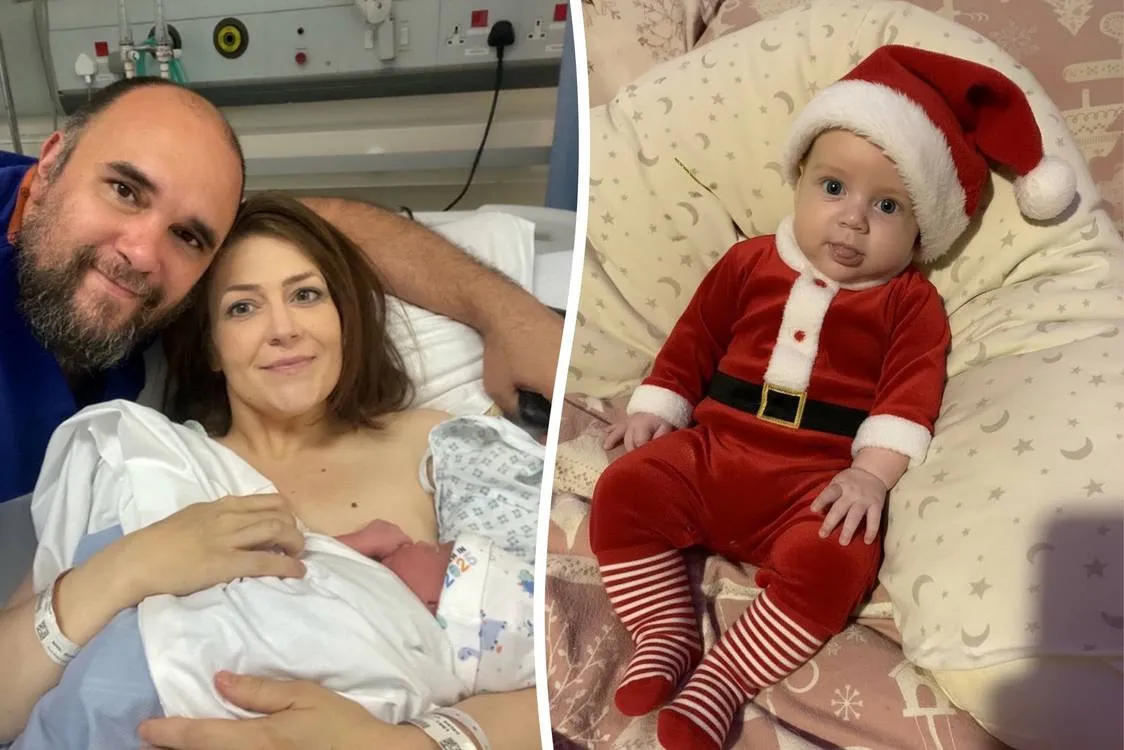
Helen Delgard and her husband Stephane started IVF treatment on Christmas Day. By January, Helen was pregnant. By autumn, they were holding their newborn son.
It's a compressed timeline for what had been an 11-year wait.
The couple's path to parenthood wasn't straightforward. Helen had undergone abdominal surgery years earlier, leaving uncertainty about whether natural conception was possible. After several years of trying on their own, they were referred to a fertility clinic in Bristol. The clinic became central to their lives—not just medically, but emotionally. "The support from the clinic throughout our journey was incredible," Helen later reflected.
Even after the positive pregnancy test, the early weeks brought fear. At three weeks, Helen experienced heavy bleeding. The medical team braced for the worst. But the six-week scan showed what they'd been waiting years to see: a tiny heartbeat.
We're a new kind of news feed.
Regular news is designed to drain you. We're a non-profit built to restore you. Every story we publish is scored for impact, progress, and hope.
Start Your News Detox"We both broke down, and the team were crying too," Helen told Southwest News Service.
From that moment, the pregnancy progressed without major complications. Their son arrived at 37 weeks, weighing 6lbs 10oz—healthy and here.
What makes this story resonate isn't just the happy ending, though that matters. It's the span of time between wanting and having. Eleven years is long enough to reshape how you imagine your future, to grieve versions of life you thought you'd live, to wonder if this particular dream will ever arrive. It's long enough that when it does, the relief comes with its own weight.
The couple's gratitude toward their clinic reflects something often overlooked in fertility stories: the human infrastructure that makes these outcomes possible. Nurses and doctors and embryologists who show up, who cry with their patients, who hold the technical and emotional space simultaneously. That matters as much as the science.
Their son is now part of a growing cohort. IVF has been available for nearly 50 years, yet it remains inaccessible or unaffordable for millions. In the UK, where Helen and Stephane received treatment, the NHS funds up to three cycles for eligible couples—a policy that shifts outcomes dramatically. Elsewhere, cost remains the barrier between trying and succeeding.
For this couple, the wait is over. For many others, the journey continues.