
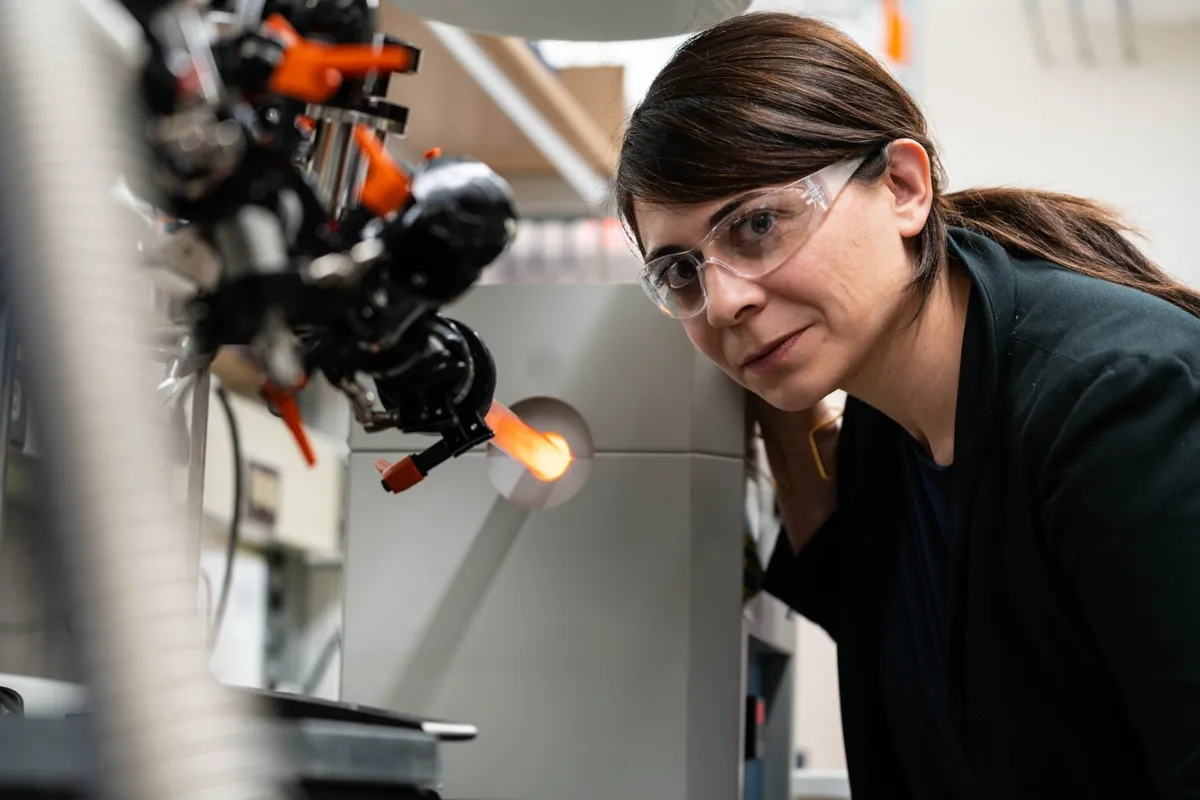
MIT, apparently deciding its engineering school needed a jolt of pure, unadulterated brilliance (and maybe a few more patents), just tapped Desirée Plata as its new associate dean of engineering. Starting July 1, Plata — already the School of Engineering Distinguished Climate and Energy Professor, because her title needed a little more oomph — will be steering some serious academic ships.
Her new gig involves everything from nurturing fledgling research projects by faculty (think: scientific incubator, but with more lab coats and less artisanal coffee) to turbocharging the school's already formidable entrepreneurship and innovation machine. Because if there's one thing MIT isn't known for, it's innovation, right? Wink. She'll also be overseeing a suite of Technical Leadership and Communication (TLC) Programs, which help turn brilliant engineers into brilliant communicators and leaders. Because explaining your groundbreaking discovery to a venture capitalist requires more than just equations.
Dean Paula T. Hammond practically gushed, noting Plata's existing "leadership, scholarship, and commitment" have already left a crater-sized impact. And now, she's getting an even bigger sandbox to play in.
We're a new kind of news feed.
Regular news is designed to drain you. We're a non-profit built to restore you. Every story we publish is scored for impact, progress, and hope.
Start Your News DetoxFrom Nanomaterials to Methane Missions
Plata's brain, it turns out, is a finely tuned sustainability engine. Her research is all about making dirty industrial processes less, well, dirty. She basically invents cleaner energy tech by baking environmental goals into the very first blueprint. Imagine designing a car and thinking about its recycling plan before you even draw the wheels. That's Plata, but for complex chemical processes.
Her projects are impressively varied, from using nanomaterials to clean up pollution (because tiny things can do big jobs) to developing advanced energy conversion methods. She also directs MIT’s Parsons Laboratory, which studies how natural systems work and how humans manage to mess with them (and hopefully, adapt).
But wait, there's more. She's basically MIT's climate general. Plata directs the MIT Climate and Sustainability Consortium (MCSC), which partners with industry to tackle global climate challenges. And as if that wasn't enough, she founded and leads the MIT Methane Network, which is on a mission to slash global methane emissions this decade. Because if you're going to dream, dream big, right?
Startup Star and Mentor Extraordinaire
Beyond the hallowed halls of academia, Plata has co-founded two climate and energy startups. Nth Cycle is busy revolutionizing metal refining and the battery supply chain, recently signing a $1.1 billion agreement to create a "secure and circular" tech for battery minerals. Which, if you think about it, is both impressive and slightly terrifying in its scale. Her other venture, Moxair, is developing new ways to monitor and destroy those pesky low levels of methane. In 2026, with a little help from the U.S. Department of Energy, Moxair will be building a new tech to tackle methane emissions with special catalysts. Because apparently, we can now make chemistry do the heavy lifting.
She's also a champion for the next generation, having helped launch programs like the MIT Postdoctoral Fellowship Program for Engineering Excellence and the MCSC Climate and Sustainability Scholars Program. Because even climate rock stars need a good support system.
Plata's trophy cabinet is probably overflowing, including MIT’s Harold E. Edgerton Faculty Achievement Award and the Junior Bose Award for Excellence in Teaching. So, if you're looking for someone to make industrial processes sustainable, cut methane, launch startups, and generally make the world a better place, all while teaching the next generation to do the same, MIT just found their person. And they gave her an even bigger office.