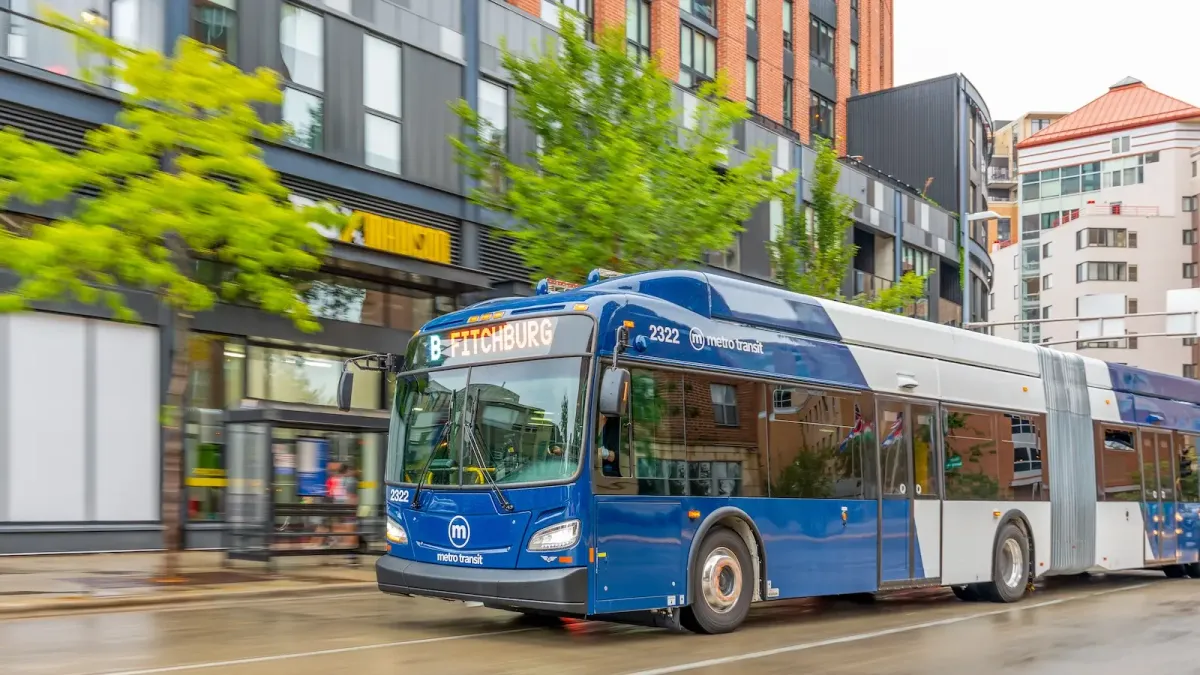
When Madison rolled out 62 electric buses last fall, Jonathan Mertzig wasn't holding his breath. The city had tried this four years earlier, and it had been a disaster — alarms wailing, buses dying mid-route, riders stranded. Mertzig, who experiences severe migraines and depends on transit, needed these buses to work. This time, they did.
Wisconsin winters are unforgiving. Madison averages 18 days below zero each year. A study in Ithaca, New York found that electric bus range can drop by half when temperatures hit 24 to 32 degrees Fahrenheit. On January 23, when Madison's temperature plummeted to minus 4 degrees and the University of Wisconsin shut down, the buses kept running.
Why This Matters Now
The breakthrough matters far beyond one Midwestern city. Some 3.6 million Americans rely on buses for daily commuting, and transportation accounts for roughly 28 percent of the nation's greenhouse gas emissions. Cities across the country are watching to see whether electric buses can actually replace diesel fleets in cold climates — a question that seemed unanswerable just a few years ago.
We're a new kind of news feed.
Regular news is designed to drain you. We're a non-profit built to restore you. Every story we publish is scored for impact, progress, and hope.
Start Your News DetoxThe difference this time came down to two things: better batteries and strategic charging infrastructure. Metro Transit installed overhead chargers (called pantographs) at key stops along Route A, allowing buses to top off in just 15 minutes during routine layovers. The newer batteries, built by New Flyer instead of the bankruptcy-prone Proterra, hold significantly more charge. Battery energy density has been improving at roughly 7 percent per year over the last decade.
The math works out elegantly. A 60-foot bus on Route A can now travel as far as 258 miles in a day, arriving at the end of its run with 15 to 20 percent battery remaining — exactly what the charger replenishes in one stop. Even on the coldest winter days, range drops by only 10 percent compared to summer. Route B, which lacks overhead chargers, still manages four-hour runs before returning to the depot with 25 percent battery left.
The infrastructure wasn't cheap. Those pantograph chargers cost roughly $1.5 million each — the same as a bus. But Metro Transit's facilities manager Joshua Marty notes they likely saved money anyway. Without them, the agency would need to triple the number of buses on Route A from 18 to 54 just to maintain service.
The Real Test: Humans and Machines
The transition hasn't been seamless. Last year the charging system malfunctioned, sidelining buses. Maintenance remains complex — electric buses have inverters, motors, sensors, and software systems that diesel buses don't, making diagnosis tricky. Some riders noticed the new buses require a step up to reach most seats, an accessibility issue the city is addressing.
Yet drivers and riders are adapting. Shanell Hayes, who's driven both diesels and electrics, appreciates how regenerative braking — which uses the motor to slow the vehicle and return energy to the battery — makes handling snowy, icy roads easier. She can ease off the accelerator and let the bus decelerate smoothly without sliding. Rabbit Roberge, new to driving electric buses, finds them "smoother" and "not as loud." Kira Breeden, a regular rider, calls it "a really good system."
Madison isn't alone anymore. Minneapolis, Duluth, and Milwaukee are expanding their electric fleets. Missoula, Montana — which gets a week or two below zero annually and sits in a valley that traps diesel exhaust — has already replaced 90 percent of its transit buses, well ahead of its 2034 net-zero target.
The federal outlook has grown uncertain. The Trump administration is cutting electric bus investment, with only 3 percent of federal low-emission grants going to zero-emission buses last year. Yet the proof is accumulating: in the places where cities invested in charging infrastructure and modern batteries, the buses work through the harshest winters North America throws at them.