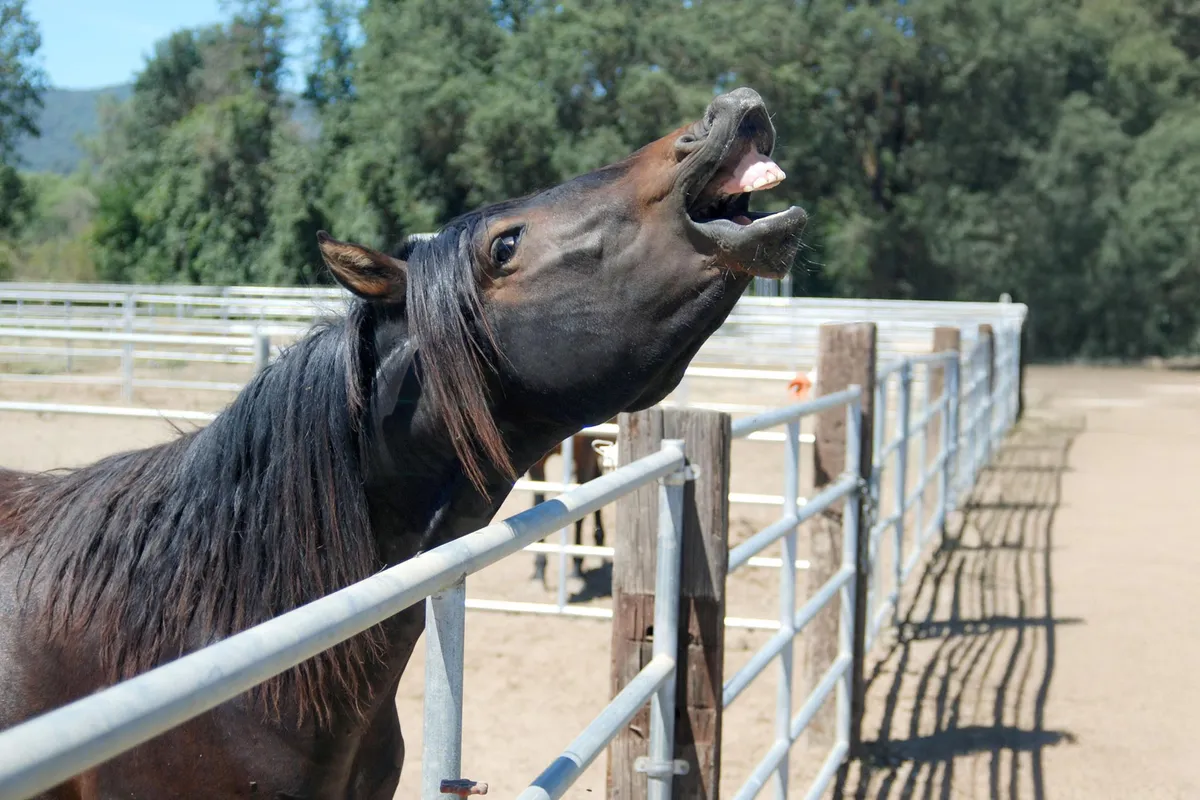
A horse's whinny has always sounded different from other animal calls — layered, almost musical. Now researchers know why. When a horse whinnies, it's actually producing two completely separate frequencies at the same time: a deep tone and a high-pitched whistle, blended into one call.
The discovery, published in Current Biology, solves a puzzle that's bothered scientists for years. Horses are large animals, and large animals typically produce only low-pitched sounds because of their bigger larynx. Yet horses somehow manage high frequencies too. The question was how.
"We now finally know how the two fundamental frequencies that make up a whinny are produced," says Elodie Briefer of the University of Copenhagen, who led the research. "In the past, we found that these two frequencies convey different messages about the horses' own emotions. We now have compelling evidence that they are produced through distinct mechanisms."
We're a new kind of news feed.
Regular news is designed to drain you. We're a non-profit built to restore you. Every story we publish is scored for impact, progress, and hope.
Start Your News DetoxHow the dual sound works
The team discovered that horses use something called biphonation — a rare vocal phenomenon where a single call contains two separate frequencies. The lower frequency comes from vibrating vocal folds, the same mechanism humans use to sing or cats use to meow. But the high frequency? That's where it gets interesting.
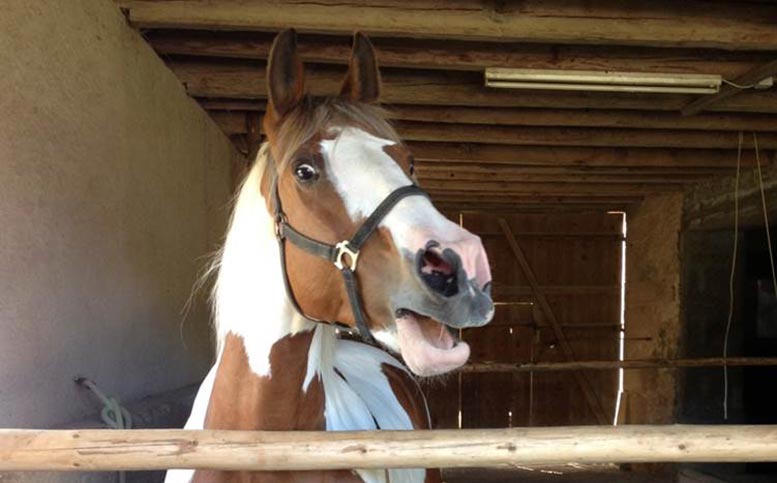
The high-pitched sound is produced by what researchers call a laryngeal whistle. Instead of forming the sound with lips (like humans do when whistling), the airflow creates turbulence inside the horse's larynx itself. Small rodents like rats and mice produce laryngeal whistles too, but horses are the first large mammal known to do this. More remarkably, they're the only animals known to combine this internal whistle with vocal fold vibration simultaneously.
To confirm this, the researchers conducted an elegant experiment. They took larynges from deceased horses and passed air through them, then switched the air to helium. Since sound travels faster in helium, whistle frequencies shift higher in helium while sounds from vibrating vocal folds stay the same. The results matched their prediction exactly: the high frequency component rose when helium flowed through, but the low frequency remained unchanged. "When we blew helium through the larynges for the first time, the frequency shift was immediately obvious, and we knew we'd solved the mystery," says William Tecumseh Fitch of the University of Vienna.
Why this matters
This ability likely evolved to let horses send multiple independent messages in a single call. Horses have lived alongside humans for over four thousand years, yet scientists still know relatively little about how they communicate vocally. This research suggests horses developed specialized vocal adaptations that give them a broader, more complex range of calls than many other mammals.
Interestingly, Przewalski's horses — a close relative of domesticated horses — also produce whinnies with biphonation. But more distant relatives like donkeys and zebras lack the high-frequency element. This pattern suggests the ability is a distinctly equine innovation.
The work opens a window into how vocal complexity evolves across species. "Understanding how and why biphonation has evolved is an important step towards understanding the origins of the amazing vocal diversity of mammalian vocal behavior," says David Reby of the University of Lyon/Saint-Etienne.