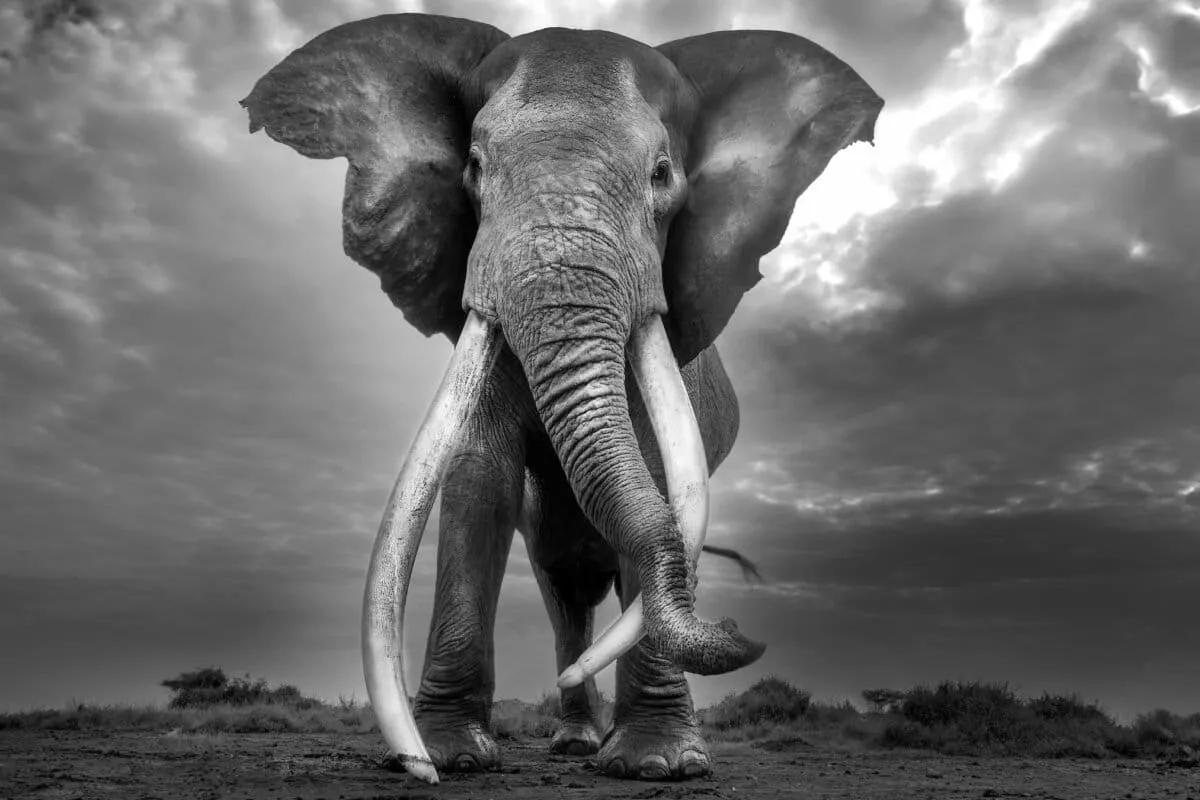
Craig died last month at 54 years old. In the wild, that's extraordinary. Most elephants don't make it past 40.
He lived that long because of something that actually worked: a network of researchers, local communities, and wildlife authorities in Kenya's Amboseli region who decided, collectively, that elephants were worth protecting. No single factor saved Craig. It was the combination — habitat intact, poaching reduced, communities invested in the outcome.
What Craig's Life Reveals
The Amboseli ecosystem sits at the border between Kenya and Tanzania, a landscape of savannas, swamps, and volcanic slopes. It's the kind of place elephants need: room to move, water sources that don't disappear, enough vegetation to sustain large herds. For 54 years, Craig had that. He survived droughts that would have killed younger elephants in fragmented habitats. He avoided the poaching that has decimated elephant populations across much of Africa.
We're a new kind of news feed.
Regular news is designed to drain you. We're a non-profit built to restore you. Every story we publish is scored for impact, progress, and hope.
Start Your News DetoxThe numbers tell the story. Amboseli's elephant population has rebounded dramatically over recent decades, bucking a continent-wide trend. That didn't happen by accident. The Amboseli Trust for Elephants, founded in 1972, has maintained detailed records on individual animals for generations. Researchers know Craig's family, his movements, his age at each milestone. That kind of long-term attention — unglamorous, persistent, underfunded — is what makes protection possible.
Jane Doe, a researcher at the trust, put it simply: "Craig's long life is a triumph for elephant conservation. He survived poaching, habitat loss, and the many challenges wild elephants face, thanks to the dedicated protection of his herd and the Amboseli ecosystem."
The local Maasai communities surrounding Amboseli have been central to this. They see elephants not as obstacles but as a shared resource worth defending. That shift in perspective — from conflict to coexistence — didn't happen overnight. It required listening, compromise, and genuine benefit-sharing. When communities benefit from conservation, they protect it.
Craig's death matters not because one elephant's life is a tragedy (though it is), but because his 54 years prove something worth believing: when habitat is protected, when poaching is reduced, when communities are genuinely involved, elephants can thrive in the wild. They can reach old age. They can raise calves that reach old age. The population can grow.
That doesn't solve the broader crisis. Poaching remains a major threat across Africa. Habitat loss continues. Climate change is making droughts more severe and less predictable. But Amboseli shows the alternative is possible — not everywhere, not yet, but somewhere real.
As conservation efforts expand across Africa, Amboseli's model — long-term research, habitat protection, community partnership — is being adapted and tested in other regions. The lessons Craig's life teaches are already spreading.
Amboseli Trust for Elephants - Nonprofit organization dedicated to elephant research and conservation in Kenya
Elephant Poaching and the Ivory Trade - Journal article on the ongoing threat of ivory poaching
Community-Based Conservation in Amboseli - Research on the role of local communities in protecting Amboseli's elephants