A bird that hadn't been seen in the wild since 2020 turned up again in Samoa's rainforests last month. Researchers with the Samoa Conservation Society documented five separate sightings of the manumea—a critically endangered pigeon so elusive that no one managed to photograph it. But the fact that it's still out there, still alive, matters more than any picture could.
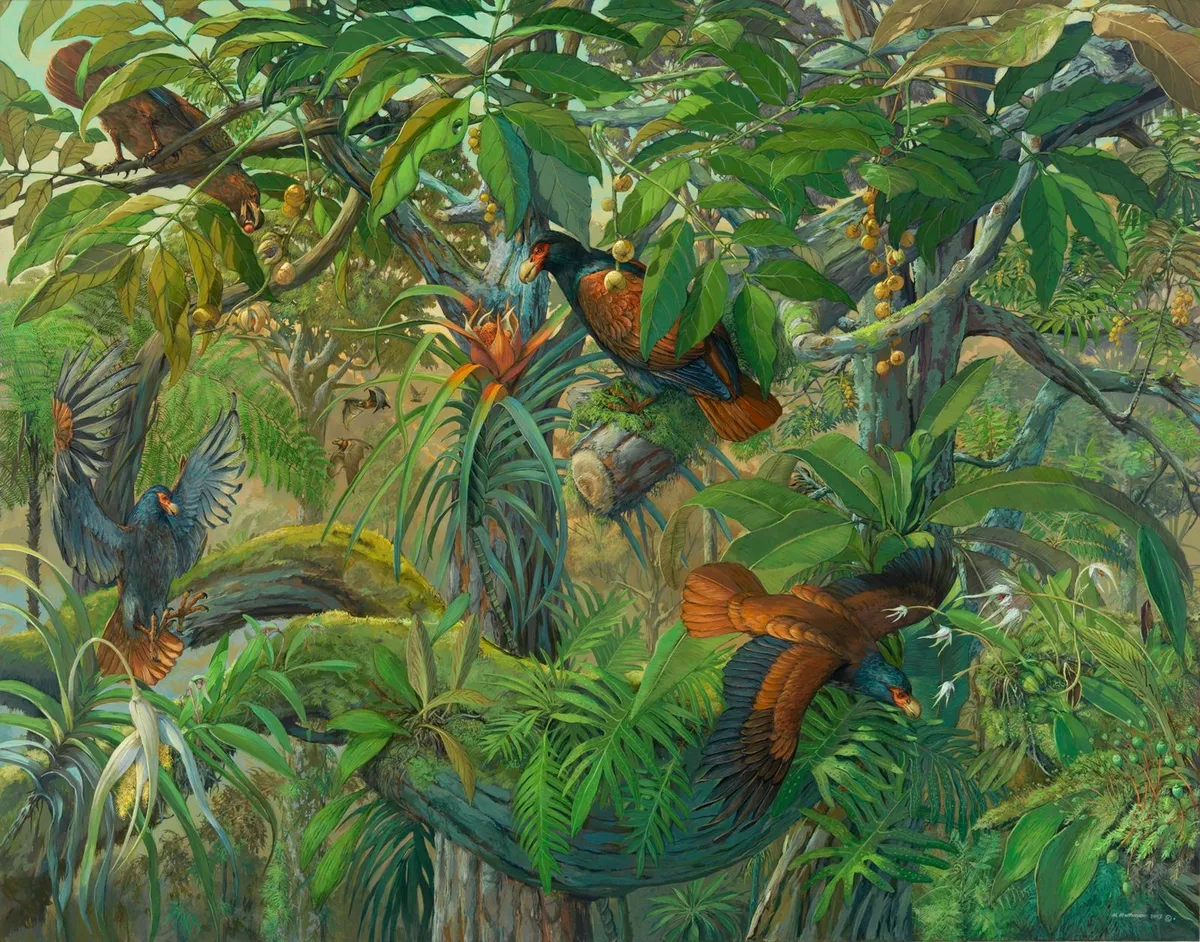
The manumea is one of the last living relatives of the dodo, the flightless bird that vanished in the 17th century. It's the only surviving member of its genus, a small chicken-sized pigeon with a distinctive hooked bill and reddish-brown feathers. To Samoans, it's the national bird. To conservation biologists, it's a ticking clock.
In the 1990s, roughly 7,000 manumeas lived in Samoa's forests. Today, scientists estimate between 50 and 150 remain—and that's essentially an educated guess, because the birds are genuinely hard to find. They move quickly through the canopy, they don't call often, and they blend into their surroundings. The last confirmed sighting before this month was August 2020. The last time anyone documented a breeding bird was December 2013.
We're a new kind of news feed.
Regular news is designed to drain you. We're a non-profit built to restore you. Every story we publish is scored for impact, progress, and hope.
Start Your News DetoxThe decline came fast. Habitat loss, hunting, and predation from invasive rats and feral cats have pushed the species toward the edge. Without intervention, conservationists warn, the manumea could follow the dodo into extinction.
What's Changing
The recent sightings, announced on Facebook by the Samoa Conservation Society on November 7, represent the first real confirmation in five years that the species hasn't already slipped away. It's not a photograph. It's not a breeding pair. But it's proof of persistence.
Conservationists are now using a combination of on-the-ground expeditions and artificial intelligence to locate the birds and understand their behavior. The Samoa Conservation Society has organized six major surveys in the past three years. One key challenge: the manumea's call is nearly indistinguishable from that of another common pigeon, the lupe. By training AI systems to recognize the difference, researchers hope to find birds more reliably—and eventually monitor population trends.
Sefuiva Moeumu Uili, a conservationist known among colleagues as the "manumea queen," believes improved identification techniques could transform the effort. "There has to be some kind of control program," adds Joe Wood, a conservation biologist at the Toledo Zoo who co-chairs the IUCN's pigeon and dove conservation group. That means managing invasive predators and protecting the remaining forest habitat where manumeas live.
The discovery that the manumea is still there—still breeding, still calling in the canopy—opens a narrow window. Not a guarantee, but a chance. What happens next depends on whether Samoa's government, conservation organizations, and the international community commit to keeping that window open.