Each summer in the Belgian town of Chimay, about 1,000 virgin queen bees launch into the sky for what beekeepers call the "wedding flight." Males mate with them mid-air—a fatal act for the male, whose body falls to the ground. The queens, now carrying enough genetic material to sustain colonies for years, descend to waiting beekeepers who travel from Belgium, the Netherlands, France, and Germany to collect them, sometimes driving over 300 kilometers home.
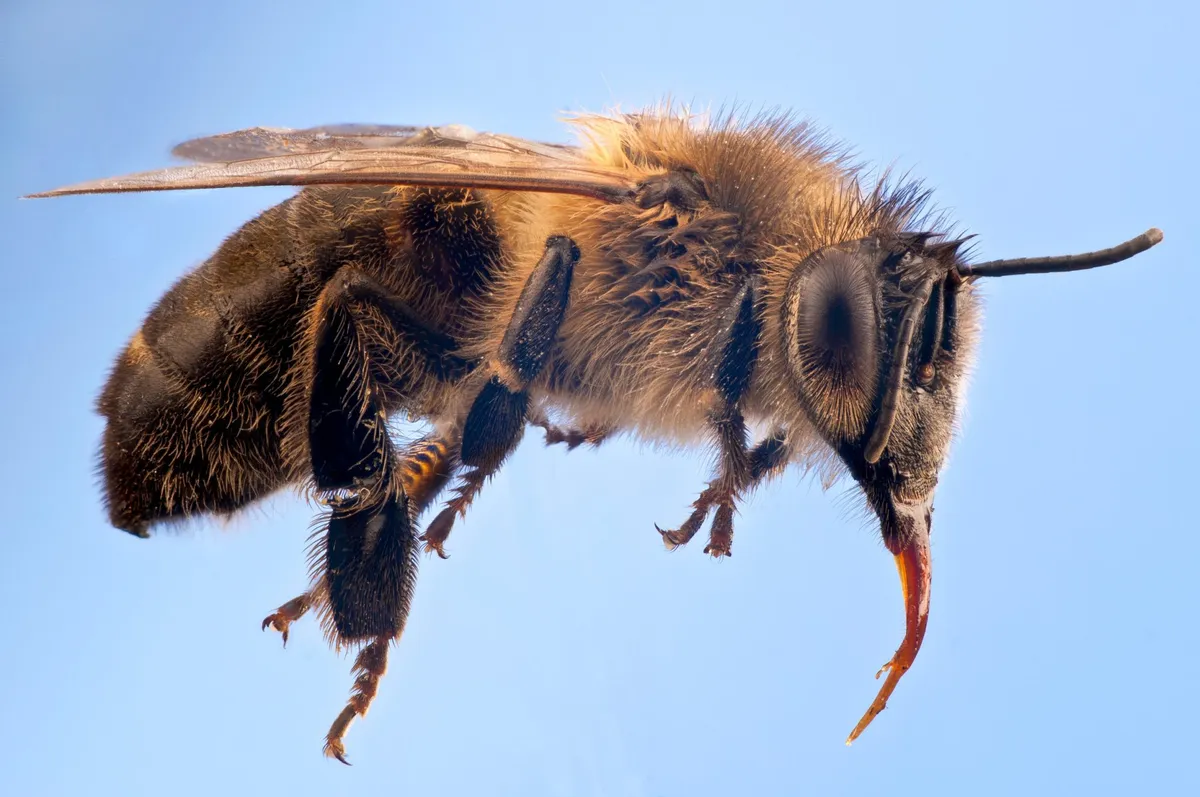
This annual gathering, launched in 2000, has become the most important lifeline for the European dark bee, Apis mellifera mellifera—a subspecies that once thrived across northern and western Europe but nearly vanished in the twentieth century.
Why the Dark Bee Nearly Disappeared
For thousands of years, dark bees were perfectly matched to Europe's colder climates and damp forests. Then, around the 1950s, beekeepers began importing hybrid honeybees bred for higher honey yields. These imports interbred with native populations, causing what conservationists describe as genetic damage so severe that dark bees became fragmented and scarce, surviving mainly in isolated pockets of Scandinavia, France, and Spain. They were even thought extinct in the United Kingdom until small populations were rediscovered just over a decade ago.
We're a new kind of news feed.
Regular news is designed to drain you. We're a non-profit built to restore you. Every story we publish is scored for impact, progress, and hope.
Start Your News DetoxBelgian beekeeper and biologist Hubert Guerriat has spent four decades reversing this decline. In 1983, he established a beekeeping school and founded Mellifica, an organization uniting dark bee keepers across Europe. Around Chimay and nearby Momignies—30,000 hectares in total—only dark bees are now permitted. An estimated 50 to 100 beekeepers participate, with plans to expand the protected zone further.
One of them is cheesemaker Isabelle Noé, who manages over 100 hives that produce around a tonne of honey annually. She started her colony in 2017 inside a retrofitted Aldi van, painting each hive in different colors and patterns to help bees navigate home. Her "miel de noire" sells for €4.50 per 250-gram jar, alongside lip balm, candles, and throat syrup.
Why This Matters Now
Dark bees produce less honey than hybrids and maintain smaller colonies, but they're built for survival in ways that increasingly matter. They require fewer winter sugar feedings, suffer fewer losses, and handle cold, humidity, and sudden climate swings far better than imported strains. Some populations even survived the last ice age in France. During a rainy 2024 summer that devastated hybrid honey yields across Europe, dark bee colonies proved largely unaffected.
This resilience isn't academic. In the United States, beekeepers have reported losing an average of 60 percent of colonies in recent years, largely due to parasites and disease. Research increasingly suggests that locally adapted bees are more resistant to such pressures than imported strains—a pattern that extends beyond honeybees. Growing evidence shows that large-scale commercial beekeeping with non-native species can actually disrupt wild pollinator populations, making native bees not just valuable but essential.
Guerriat uses a precise metaphor: "Nature is like a high-precision watch. You can't swap in one bee for another." Pollinators aren't interchangeable.
Conservationists are also restoring wild dark bee populations in forests by installing log hives that mimic natural tree cavities. Estelle Doumont, a conservation biologist at the University of Liège, notes that protecting the species "is also a way to contribute to the resilience of our forest ecosystem." As climate change, invasive species, and disease reshape agriculture, the shift toward working with local biodiversity rather than against it becomes less a choice and more a necessity.
Chimay's annual wedding flight represents something larger: a recognition that the bees best suited to Europe's ecosystems are the ones that evolved there. As Guerriat says of the dark bee, "With time they find that it is a beautiful bee."