Conservation has pulled in billions over three decades. Biodiversity keeps collapsing anyway. Something in how we're doing this isn't working.
The problem isn't money or commitment. It's that we've been building conservation backwards — designing it in offices, then asking communities to enforce rules they didn't write on land they know better than anyone.
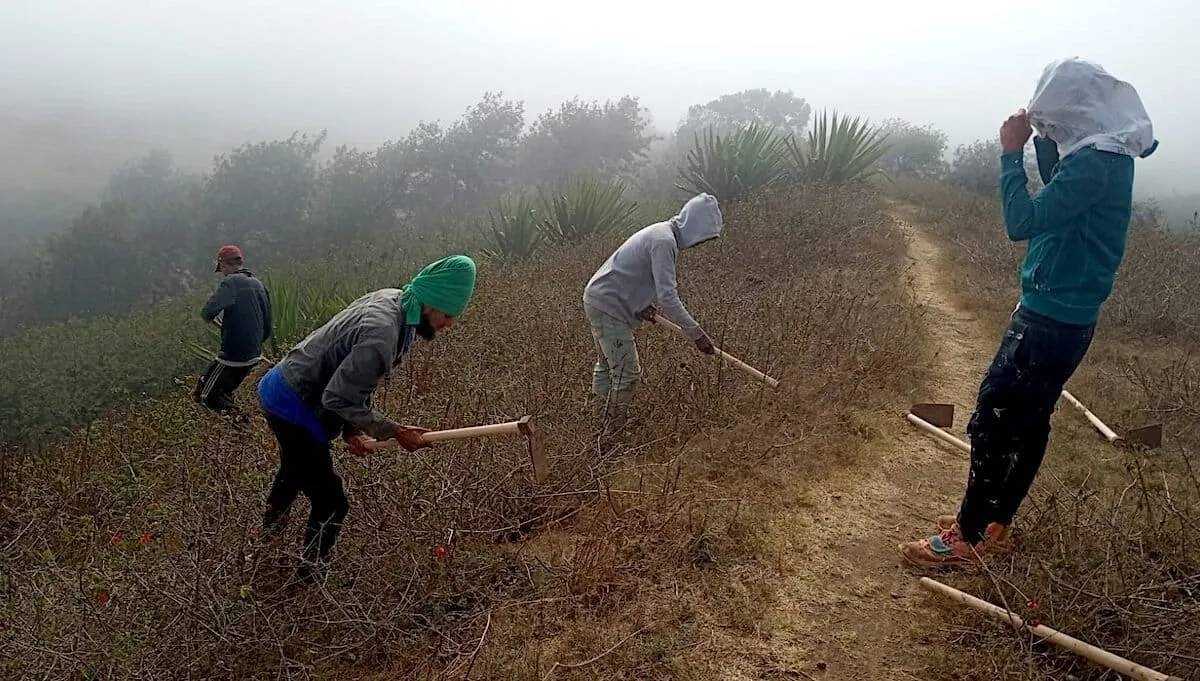
There's a quieter model gaining ground. Community-led conservation works differently. Instead of top-down mandates, it embeds conservation rules in institutions communities already trust. Enforcement becomes cheaper because people aren't fighting against their own interests. Compliance rises because the rules make sense locally.
We're a new kind of news feed.
Regular news is designed to drain you. We're a non-profit built to restore you. Every story we publish is scored for impact, progress, and hope.
Start Your News DetoxTake Tanzania's Tarangire ecosystem. Pastoral communities there manage wildlife areas (WMAs) that technically aren't even fully under their control — the government still holds formal authority. Yet these communities defend the land fiercely. They use the WMA framework to protect their grazing routes and water sources while keeping wildlife habitat intact. No external enforcement needed. The system works because it serves them first.
This matters beyond Tanzania. When conservation aligns with what communities actually need — secure livelihoods, land rights, water access — it stops being something imposed and becomes something people invest in protecting. The transaction costs plummet. The resilience grows. And here's what gets overlooked in most funding conversations: it scales more easily because you're not fighting human nature; you're working with it.
The Investment Question
Yet most conservation money still flows toward traditional models: protected areas managed by governments or NGOs, often with minimal community involvement in decision-making. The 5th Business of Conservation Congress, gathering in Nairobi soon, will focus on enterprise models and blended finance — important tools, certainly. But the underlying question matters more: if community-led conservation is genuinely more efficient and resilient, why isn't it the default?
Part of it is structural. Funding mechanisms favor projects that can be measured, reported, and controlled from a distance. Community-led models are messier. They require trust, long-term relationships, and acceptance that local people might make different choices than outside experts would. That's harder to package in a proposal.
But the evidence is accumulating. Communities managing their own resources tend to sustain them longer. They respond faster to threats. They don't abandon the work when external funding dries up because their survival depends on it. Over 30 years, that compounds into something more durable than any program designed elsewhere.
The next phase of conservation funding — and there will be a next phase, because the current one isn't solving the problem — will likely depend on treating communities not as beneficiaries or stakeholders to consult, but as the core infrastructure of conservation itself. Not because it's noble, but because it actually works.