Indigenous peoples protect a quarter of Earth's land while making up less than 6% of the global population. Yet when environmental journalists write about forests, water, and wildlife, Indigenous voices rarely make it into the story — they're sources at best, absent at worst.
Mongabay, one of the world's largest environmental news outlets, is trying to fix that structural gap. The organization just launched an Indigenous Desk: a dedicated team that doesn't just report about Indigenous communities, but reports with and for them. The difference matters. It means Indigenous journalists leading coverage, Indigenous knowledge shaping the narrative, Indigenous communities deciding which stories get told.
Building from the ground up
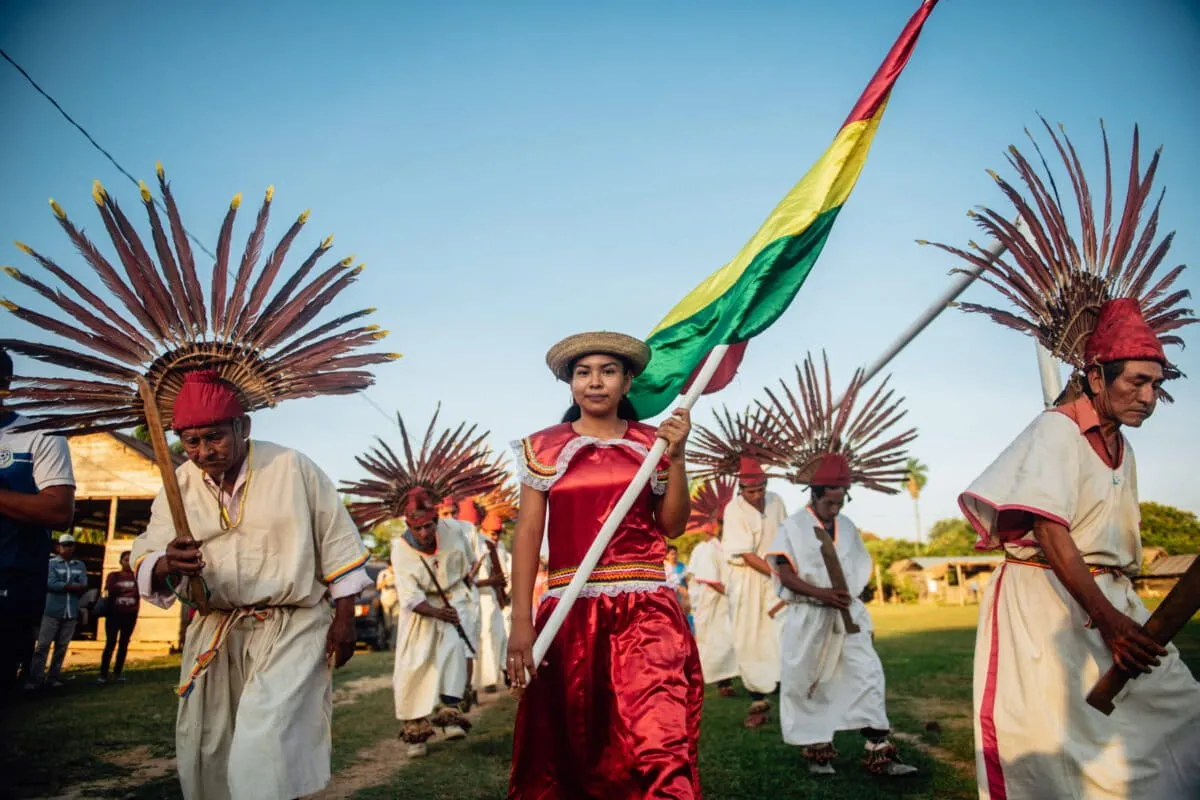
The desk started at Terra Livre, Brazil's annual Indigenous rights gathering in Brasília. In 2022, over 7,000 Indigenous people from across Brazil converged on the capital — a moment of collective visibility that Mongabay's team recognized as both urgent and instructive. You can't understand environmental journalism in the Amazon without understanding the people who've lived there for millennia and are actively defending it. The desk's launch there wasn't coincidental; it was a statement about where the real expertise lives.
We're a new kind of news feed.
Regular news is designed to drain you. We're a non-profit built to restore you. Every story we publish is scored for impact, progress, and hope.
Start Your News DetoxWhat makes this different from the usual "diversity hire" approach to newsrooms is the structure itself. This isn't a desk about Indigenous issues staffed by outsiders. It's journalism by Indigenous people, which changes everything — the stories that get prioritized, the sources that get trusted, the angles that get explored. When a Yanomami journalist covers threats to their territory, they're not translating someone else's emergency into English-language news. They're documenting their own.
The gap Mongabay is addressing is real and measurable. Environmental reporting has exploded in the last decade, but Indigenous perspectives remain marginal. Climate stories focus on carbon and policy; Indigenous coverage of the same forests emphasizes sovereignty and survival. Both are true. Both matter. But only one has traditionally made it into mainstream outlets.
This desk is part of a broader shift in how media outlets think about representation — moving from including marginalized voices to centering them in the decision-making process. It's slower and messier than slapping a diversity statement on your website, but it's the only way coverage actually changes.
Mongabay's experiment will likely influence how other environmental outlets approach Indigenous reporting. If it works — if stories get richer, if Indigenous communities feel accurately represented, if policy actually shifts because Indigenous knowledge finally has a platform — then this becomes a model worth copying.