When you're deep in a book, time works differently. The clock ticks forward, but your mind moves at the pace of sentences—slower, richer, more deliberate. That mental rhythm is what Benjamín Edwards, a marketing specialist in Peru, believes we're in danger of losing.
Eight months ago, Edwards posted a simple invitation on LinkedIn: a club for readers who loved books without judgment or hierarchy. No gatekeeping between "serious" and "light" readers. No single canonical text to dissect. Just people who wanted to talk about what they read. That day, Club Leamos (Let's Read) was born.
It started small. Now it's a weekly gathering of readers from across Latin America, meeting online to share books and argue about them, to be surprised by what strangers love, to feel less alone in the act of reading.
We're a new kind of news feed.
Regular news is designed to drain you. We're a non-profit built to restore you. Every story we publish is scored for impact, progress, and hope.
Start Your News DetoxWhy This Matters in an Age of Algorithms
The irony is sharp: we have more books available than ever, yet reading feels more fragmented. Screens promise infinite content but deliver fractured attention. AI can summarize, synthesize, even generate book recommendations in seconds. So why gather humans in a room—even a virtual one—to talk about pages they've already turned.
Edwards's answer is blunt: "AI is unable to do that, at least for now." A reading group produces something a language model cannot simulate—genuine surprise, the friction of disagreement, emotional commitment that emerges from actual stakes. When someone in your group passionately defends a book you hated, something shifts. You're not scrolling past their opinion. You're sitting with it, reconsidering.
There's also something deeper happening. Edwards works in marketing, an industry built on algorithms and data patterns. Yet he's noticed that reading—the slow, solitary act of following one narrative thread—is becoming a counterweight to that world. It's where critical thinking still requires your thinking, not a prompt engineered to extract someone else's thinking.
AI excels at answering questions. Reading groups excel at changing which questions you ask.
How Leamos Actually Works
The structure is deliberately simple. Each week, three or four members present a book they've read. They answer three questions: What is it about. Why did you love it. Why should we read it. Then the group responds—asking, challenging, adding their own recommendations.
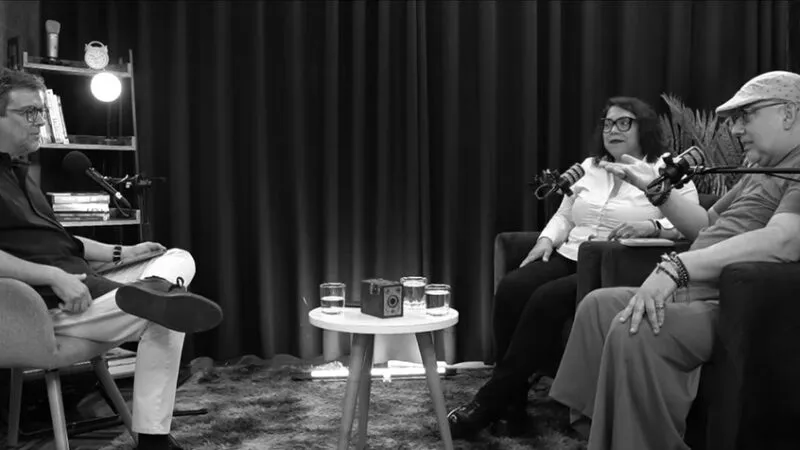
What started as a weekly online session has grown into something messier and more human. Members exchange books like Secret Santa. They meet in person at bookshops and cafés. They've created a podcast called La biblioteca imaginaria (The Imaginary Library) where conversations between two readers become their own kind of narrative.
Edwards never planned these offshoots. They emerged because readers, given a space without rigid rules, naturally create rituals. They build community around the thing they already do alone.
This is worth noting: Leamos didn't require an app, a funding round, or a carefully designed user experience. It required one person saying "let's gather" and others showing up.
What's Next
Edwards dreams of Leamos spreading across Latin America—not as a franchise, but as a model. More clusters of readers, meeting in their own time zones, speaking their own languages, arguing about their own books. The readers themselves, he says, keep proposing new ways to deepen the connection between people and pages.
In a world where AI is getting better at approximating human thought, Leamos is a quiet reminder that some of the most human things we do—being surprised, being challenged, changing our minds in real time with people we care about—still require actual humans in the room.