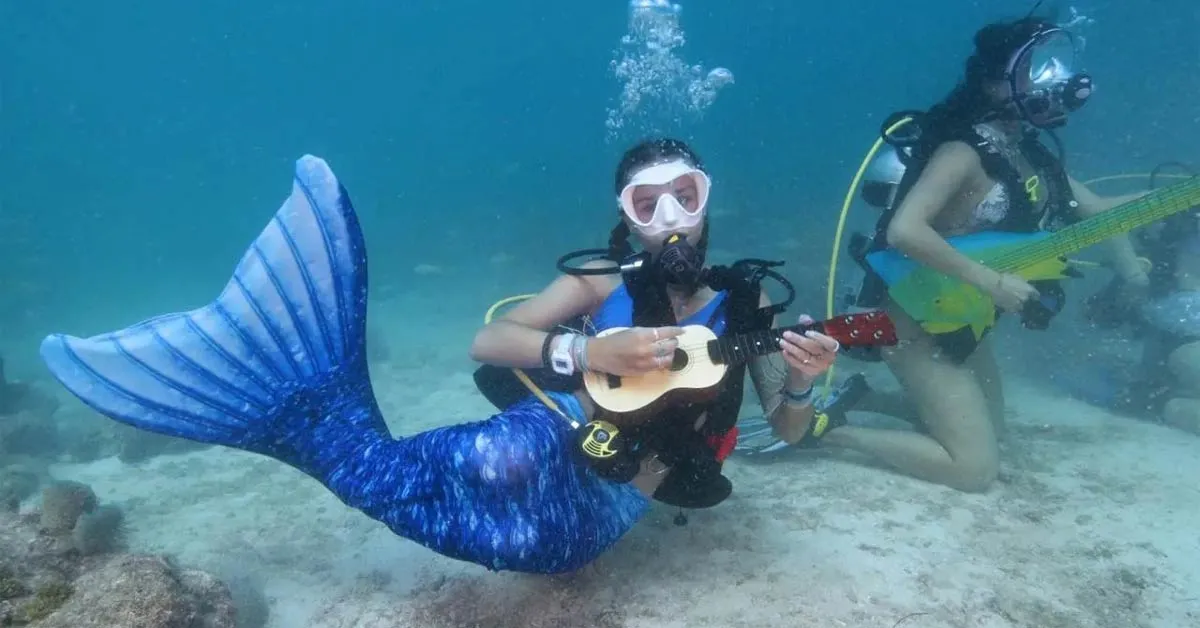
Every July, saxophonists descend into the waters off the Florida Keys with their instruments in waterproof cases. They're not lost. They're part of something genuinely strange and oddly effective: an underwater concert designed to make people care about dying coral.
The Lower Keys Underwater Music Festival started in 1985 when Bill Becker, a radio news director, had a simple idea: stream music through underwater speakers at Looe Key Reef and watch what happens. What happened was that people showed up. They snorkeled down to hear "Yellow Submarine" and Jimmy Buffett's "Fins" played through the water. Local musician-divers and performers dressed as mermaids played custom instruments built by local artists—strange, ethereal contraptions that sound like nothing you'd hear on land.
Thirty-nine years later, the festival still works because it does something counterintuitive: it makes conservation feel like fun rather than obligation.
We're a new kind of news feed.
Regular news is designed to drain you. We're a non-profit built to restore you. Every story we publish is scored for impact, progress, and hope.
Start Your News DetoxWhy this matters
Looe Key Reef is part of the only living coral barrier reef in North America. It's also under serious stress. Rising ocean temperatures, pollution, and disease have decimated coral populations across the Florida Keys. The reef needs people to care about it—not as an abstract environmental problem, but as a real place worth protecting.
That's where the music comes in. "The more people realize what's down there and enjoy it, the more likely they are to protect it," Becker said. It's not a new idea in conservation, but it works. The festival brings hundreds of snorkelers to the Florida Keys National Marine Sanctuary each year, and alongside the music, attendees learn about responsible diving practices and reef protection efforts.
The event also includes tours of Mote Marine Laboratory's Coral Reef Research Center, where scientists are actively working to rebuild the ecosystem. Visitors see the work happening in real time—the restoration projects, the research, the people who've made protecting this reef their life's work.
Steve Miller, executive director of the Lower Keys Chamber of Commerce, frames it plainly: "We have the largest living coral reef in the Northern Hemisphere, and we want to bring attention to it and some of the stresses that it faces."
The festival isn't going to save the reef on its own. But it's part of a larger shift in how we approach conservation—moving from doom-scrolling about environmental collapse to actually showing people why a place matters. When you've snorkeled down to hear a mermaid play a custom instrument above a living coral reef, you're more likely to support the policies and practices that protect it.
The next festival is coming this summer. The underwater speakers are being tested. The mermaids are practicing.