For nearly 40 years, a Hindu temple in Mylapore has opened its kitchen each Ramadan to serve iftar meals to the Muslim community—a quiet, sustained act of interfaith solidarity that has fed thousands and never made headlines until now.
The Sufidar Temple was founded by Dada Ratanchand, a Hindu refugee who arrived in Chennai after the 1947 Partition with little but a conviction that compassion shouldn't stop at the temple gates. The walls inside hold images of Hindu sages, Muslim saints, Jesus, Mary, and Guru Nanak side by side—a visual statement of what Ratanchand believed a shared space should be.
Almost four decades ago, he began preparing iftar meals during Ramadan. The practice has grown into something that now feeds roughly 1,200 people each evening during the holy month. What makes this remarkable isn't the scale—it's the consistency. Year after year, through economic shifts, political tensions, and the ordinary wear of maintaining community work, the kitchen fires up.
We're a new kind of news feed.
Regular news is designed to drain you. We're a non-profit built to restore you. Every story we publish is scored for impact, progress, and hope.
Start Your News DetoxHow It Works
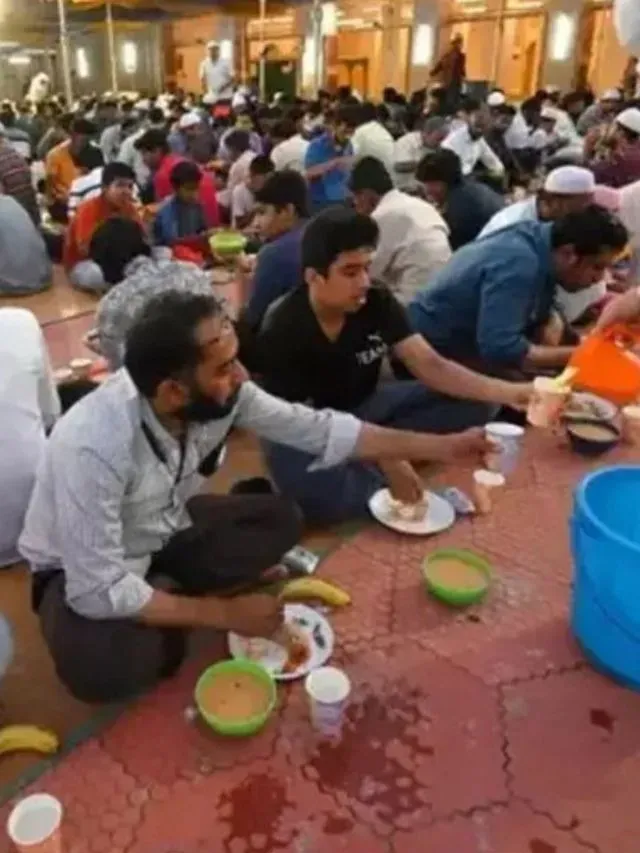
Every Ramadan morning, volunteers arrive by 7:30 am. The menu rotates daily: vegetable biryani, fried rice, saffron milk, fresh fruits, pickles. Nothing fancy. Everything made with the kind of deliberate care that comes from understanding you're feeding people at a vulnerable moment—hungry, thirsty, waiting for sunset. As dusk approaches, the meals travel to the historic Wallajah Mosque, where fasting Muslims break their fast.
The volunteers wear traditional Muslim skullcaps while serving. It's a small gesture, but it matters. Muslims break their fast while Hindus hand them the food. Neither group performing for cameras. Just the mechanics of care made visible.
What's worth noting here: this tradition predates the current wave of interfaith initiatives by decades. It wasn't born from a grant program or a corporate social responsibility mandate. It emerged from one person's decision to live out a belief, then others choosing to show up and sustain it. That's how practices become traditions—through repetition, not announcement.
The practice has earned recognition from community leaders, including Prince Nawab Abdul Ali of Arcot, who has cited it as evidence that genuine secularism isn't a policy—it's what happens when people choose to feed each other across difference. But the temple hasn't chased recognition. The work has simply continued, year after year, in the practical language of shared meals.
As religious tensions rise in different parts of the world, the Sufidar Temple offers a counterpoint: proof that sustained, unglamorous community work—showing up, cooking, serving, repeating—can hold space for coexistence. Not as a statement. Just as a habit.