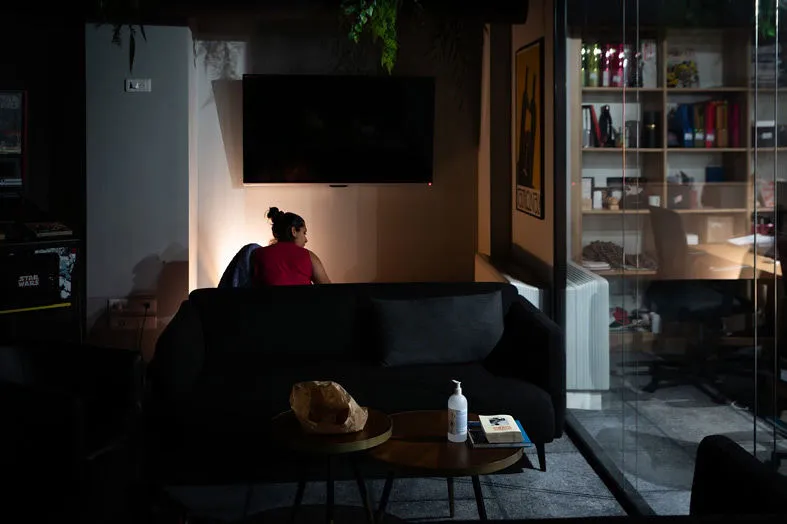
For years, Pierre-Yves Loaëc saw a woman sleeping near his marketing agency in Nantes, France. His office had heat, a kitchen, and sofas, but sat empty all night. He wondered why so many offices were unused while people lacked safe places to sleep.
This led him to create Bureaux du Coeur, or "Offices of the Heart." This nonprofit turns empty office spaces into temporary overnight housing for people experiencing homelessness.
A Simple Solution to a Big Problem
Today, Bureaux du Coeur works with 400 companies in 40 cities across France. It has also expanded to Lisbon, Barcelona, and Brussels. Since 2019, it has helped over 1,000 people and provided about 160,000 nights of shelter. The goal is to grow across Europe, addressing both rising homelessness and empty office spaces.
We're a new kind of news feed.
Regular news is designed to drain you. We're a non-profit built to restore you. Every story we publish is scored for impact, progress, and hope.
Start Your News DetoxThe idea is simple: when employees leave, offices become temporary homes. Loaëc, who leads the Nantes chapter of a business movement called Centre des Jeunes Dirigeants (CJD), believes in collective solutions. When he first shared his idea, many thought he was crazy. They worried about security, insurance, and property damage.
The group then created a practical model. Guests must be adults, without children or pets, and live legally in France. They must not use alcohol or drugs, or have severe health issues. Guests also need to participate in programs to help them find jobs or training.
These rules mean not everyone can be helped. Loaëc notes that about 350,000 people are homeless in France. Companies are not set up to offer medical care or addiction support. Instead, they provide space, while partner organizations select guests and offer professional help.
Each company hosts one guest at a time. Guests sleep in meeting rooms or break areas, which are turned into bedrooms each night.
Loaëc's own office was the first host in 2019. He welcomed Elisabeth, who was fleeing domestic violence and sleeping in her car despite having a job. She stayed for three weeks until she found long-term housing. Another guest, Booba, stayed during the COVID-19 lockdown, safe from crowded emergency shelters.
In May 2020, a major newspaper, Ouest-France, featured the initiative. This led to a huge response from companies and social services. What started locally became a national movement. Bureaux du Coeur now has 12 staff and about 270 volunteers. It is funded by foundations and private donations.
More Than Just a Place to Sleep
Guests often say the experience changes their lives. Samy, an electrician trainee from Sudan, found it hard to find stable housing. He said, "I feel a little bit at home here. I feel a little freer."
Social workers know that homelessness is more than just lacking shelter. Loaëc explains, "People spend their days wondering where they will sleep, whether they will be safe, where they can shower, charge a phone, store their belongings or simply rest." He adds that it's hard to keep a job without a stable home because the stress is immense.
Bureaux du Coeur has a clear system. Three parties are involved: the host company, the guest, and a social-service organization. Everyone signs an agreement. Guests commit to finding housing and jobs. Social partners offer guidance. Companies provide the space. They all meet monthly to check on progress.
The program also helps challenge stereotypes. Loaëc realized that homeless people are not always what he expected. Many are working people, apprentices, students, or refugees. Their main problem is often not unemployment, but the lack of a stable place to rebuild their lives.
Souleymane Diarra, a former guest, felt welcomed. He said, "Here, people don’t judge me for the hardships I’ve been through. People here lift me up. It encourages me to move forward."
Guests are encouraged to share coffee and talk with employees in the mornings. This creates a sense of belonging.
Alain, who was homeless and hosted by Bureaux du Coeur, shared his story. Depression led him to lose everything. While homeless, people often ignored him or treated him badly.
The employees at Haxoneo and Bureaux du Coeur were the first to talk to him. This human interaction, along with a safe place to sleep, helped him regain confidence. He found a job and prepared for independent housing.
An employee from Haxoneo noted that sharing coffee might seem small, but it created a social bond. Loaëc believes Bureaux du Coeur strengthens community in companies, especially with remote work becoming common. He says hosting a guest can unite employees more than traditional team-building events.
An impact study shows that 85% to 90% of participants find both housing and employment after an average stay of four and a half months.
Loaëc emphasizes that housing stability is key for other support to work. He calls it a "transition solution." The program is also affordable. A spot in a traditional emergency shelter costs about €10,000 per year. A Bureaux du Coeur spot costs less than €2,000 because it uses existing offices and volunteers.
While rare, problems can occur. One guest left the accommodation in poor condition, and another drove off with a company car. Out of over 1,000 guests, only four or five serious issues have happened. These usually occurred when host companies did not follow the guidelines.
Insurance companies like AXA have changed their policies to allow businesses to host people overnight, removing an early challenge. Guests typically stay for three to six months. Loaëc's company once hosted a guest for 18 months until he could enroll in job training.
Loaëc believes the concept isn't new. He sees it as bringing back an old tradition of hospitality. For centuries, businesses offered temporary shelter to workers and those in need. Modern offices simply lost this tradition.
The woman who first inspired Loaëc still sleeps outside sometimes. But the question she raised has led to a network that has helped over a thousand people find safety and shelter. Every evening, as employees leave, someone else arrives with a key to an office that becomes their temporary home.