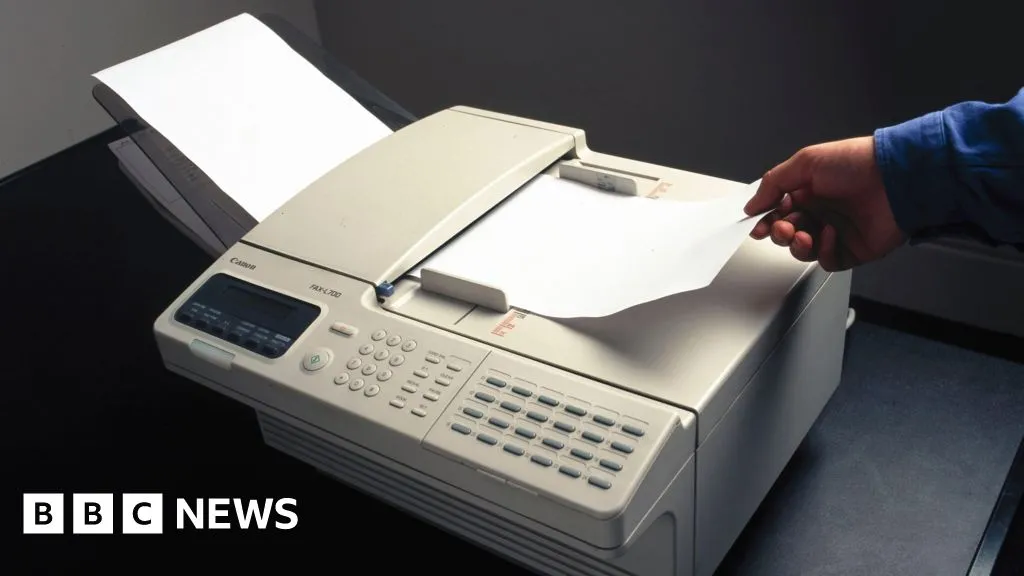
In October 2024, Health Secretary Wes Streeting made a simple promise on Radio 5 Live: get fax machines out of the NHS within a year. By most measures, he's delivered. Of 205 NHS trusts across England, only three still use fax machines for everyday work. Leeds and Birmingham have committed to phasing them out entirely within the next 12 months. Shrewsbury and Telford will take longer, but they're moving.
It's a small victory that somehow took six health secretaries and nearly a decade to achieve.
The Machine That Wouldn't Die
Fax machines arrived in 1964 and became the default way to send documents across distance for decades. You'd feed a page into a slot, it would grind and whir, and somewhere else, a printed copy would emerge. Email killed the fax in the early 2000s for most offices. But the NHS held on. Hospitals kept them for inter-department communication. Multi-site trusts relied on them. And crucially, some kept them as emergency backup—a way to communicate if the main systems went down.
We're a new kind of news feed.
Regular news is designed to drain you. We're a non-profit built to restore you. Every story we publish is scored for impact, progress, and hope.
Start Your News DetoxIn December 2018, Conservative health secretary Matt Hancock announced a ban on buying new fax machines and ordered a complete phase-out by April 2020. The deadline came and went. So did five more health secretaries, each inheriting the same unfulfilled promise.
When Streeting took the role, he inherited this peculiar legacy. Rather than ordering the three remaining trusts to stop immediately—which would have caused "significant operational headaches," he said—he worked with them on transition plans. Leeds and Birmingham found alternatives. Shrewsbury and Telford are still working through it.
The sticking point wasn't stubbornness. It was cybersecurity. If the NHS's digital systems go down during an attack or outage, staff need a backup way to communicate. A fax machine in a cupboard, plugged into a phone line, still works when everything else fails. It's old-fashioned, but it's reliable.
Streeting acknowledged the legitimate concern while staying committed to the goal. "We're working with the system to help them move into the 20th century, if not the 21st," he said—a wry acknowledgment that this particular battle had dragged on longer than anyone expected.
For the NHS, moving away from fax means finding better backup systems and trusting newer infrastructure. It's not glamorous, but it's real progress. And after nearly a decade of broken promises, even a small victory counts.