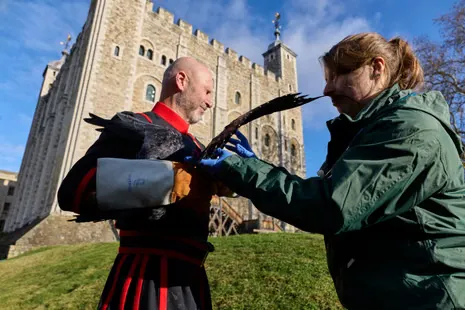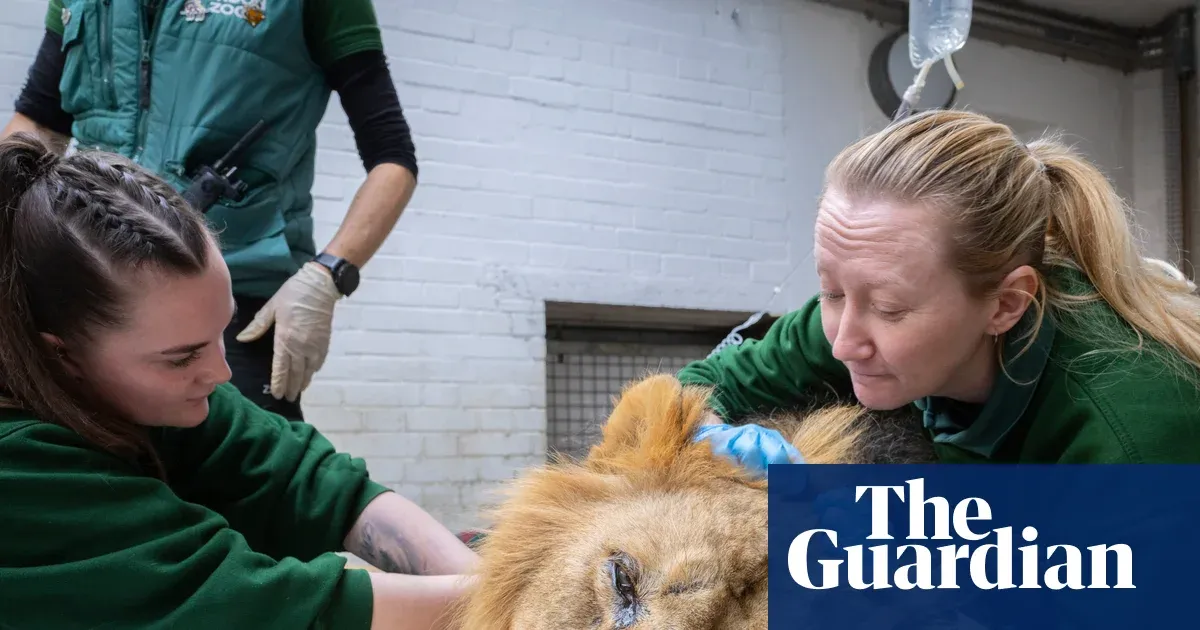
Guardian photographer David Levene spent a year documenting the intricate veterinary operations at London Zoo. He captured everything from sedating rhinos to treating tiny dormice. His work highlights the challenges and dedication involved in caring for some of the world's most endangered animals.
Levene recalled a moment with King Arthur, an 11-year-old king cobra. After receiving an anesthetic, the snake reared up and spat at him through the glass. Levene quickly told the snake, "It wasn't me!"
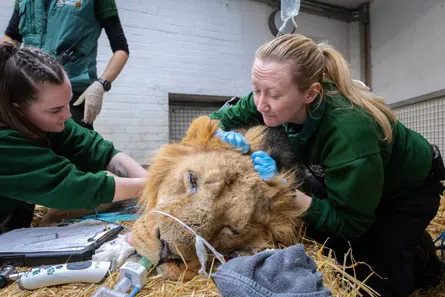
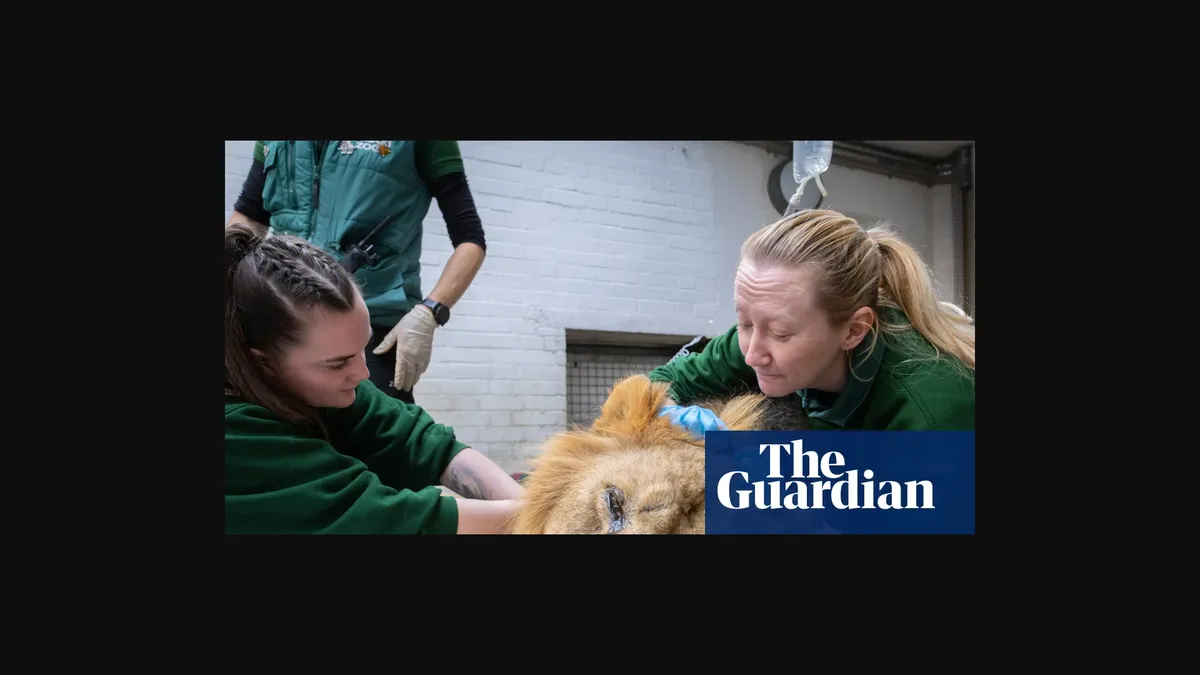
The Zoological Society of London (ZSL) runs zoos in London and Whipsnade. Their veterinary team faces diverse challenges with both exotic and native animals. Levene's project started with a "baptism of fire" when he found himself face-to-face with a lion.
We're a new kind of news feed.
Regular news is designed to drain you. We're a non-profit built to restore you. Every story we publish is scored for impact, progress, and hope.
Start Your News DetoxBhanu, an Asiatic lion, suffered from chronic ear infections. These caused his ear canal to be unusually narrow. Vets had to use a general anesthetic (GA) to examine him fully. While Bhanu was sedated, they also checked his teeth, which are vital for a carnivore's health.
ZSL, celebrating its 200th birthday, has a dedicated team. This includes five vets, six nurses, a pathologist, and other specialists. Only a few British zoos employ their own in-house veterinarians.
ZSL vets have a history of pioneering animal welfare. Charles Spooner, the zoo's first "medical attendant," documented early veterinary care. He successfully treated a lion cub named Nelson for mange and an ulcer. Joan Beauchamp Procter, the first female curator of reptiles, revolutionized reptile care in 1923. Oliver Graham-Jones, Britain's first dedicated zoo vet, invented the handheld dart gun in 1951. This allowed safe administration of anesthetics from a distance.
Levene's year at the zoos began after he saw the veterinary hospital. He wanted to be a vet as a boy and was instantly drawn to it. After months of talks, he gained access in 2025.
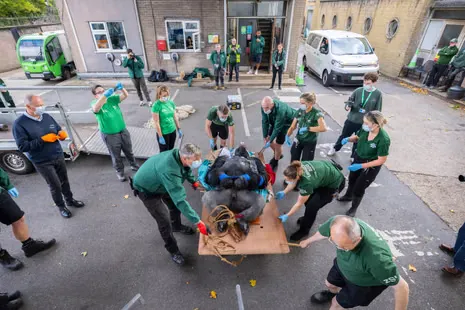
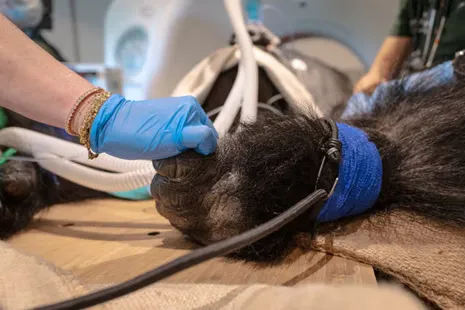
Moving a sedated rhino for an operation takes more than a dozen staff. Anesthetized animals don't always fall in a convenient spot. Security was also on high alert when Kiburi, a 177kg western lowland gorilla, had a CT scan.
Some procedures are very delicate. Levene watched as nine dormice were weighed and anesthetized with tiny face masks. This allowed vets to check their health and growth. These dormice are part of a breeding program to help the severely declining species in the UK.
Levene's favorite picture shows four staff tending to a mountain chicken frog. This critically endangered amphibian can grow up to 1kg. Only 21 were found in the wild in 2023. ZSL is working to breed them in captivity and address threats like a deadly fungus. This particular frog had gallstones and needed gallbladder surgery. Levene noted the intense focus on the vets' faces, showing their care for all creatures, big or small.
Levene was impressed by the passion and professionalism of the staff. They were lighthearted outside the operating room but became "laser-focused" during procedures. He felt lucky to be trusted with such close access.
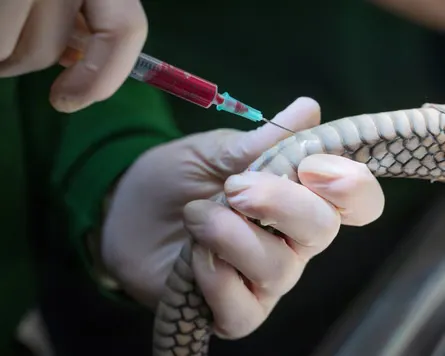
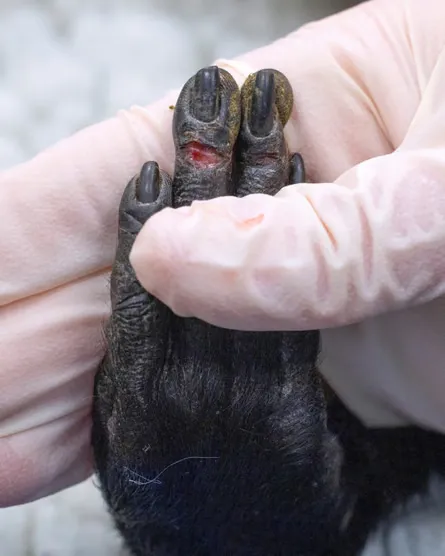
Keepers often have a more intimate bond with the animals. Levene observed them cuddling sedated dangerous animals, taking the chance to be close. After taking 50,000 photos, Levene felt the wonder of these animals. He even held a sedated lion's paw, describing it as "biiiiig."
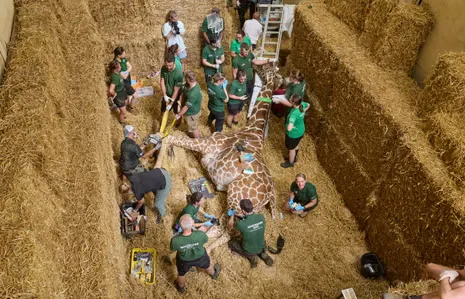
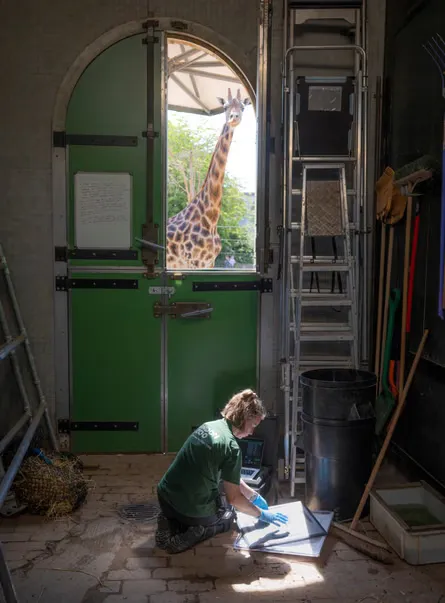
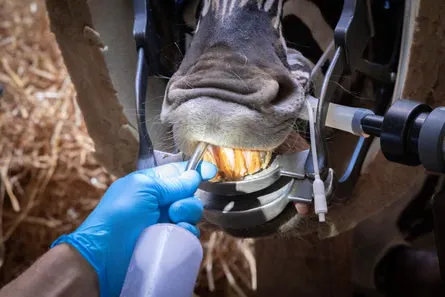
Bashu, a reticulated giraffe at Whipsnade Zoo, received a hoof trim. Four months later, Bashu died from unrelated kidney issues.
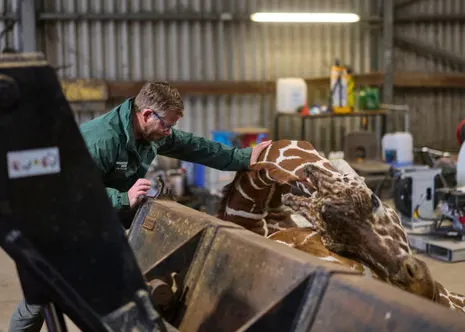
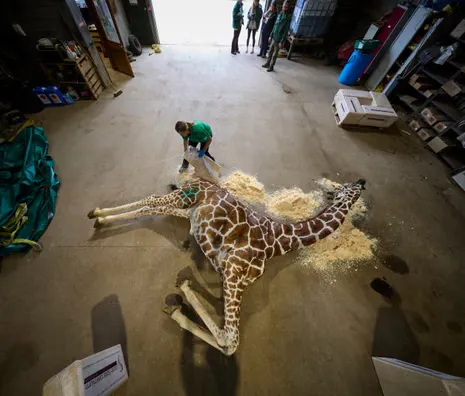
Anesthetizing Large Animals
Each day at the London Zoo veterinary hospital begins with a meeting. The team, including staff at Whipsnade, discusses the day's schedule. This includes inpatient procedures and minor ailment treatments.
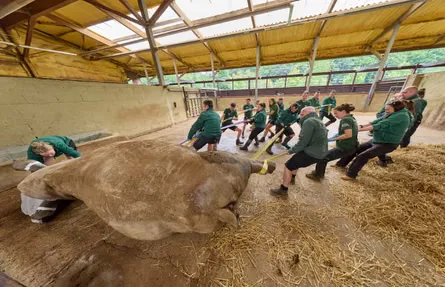
General anesthetics (GA) are used for serious conditions or dangerous animals. Simple procedures might need one vet and a nurse. Complex ones can involve multiple vets, specialists, nurses, and keepers. These often happen within the animal enclosures.
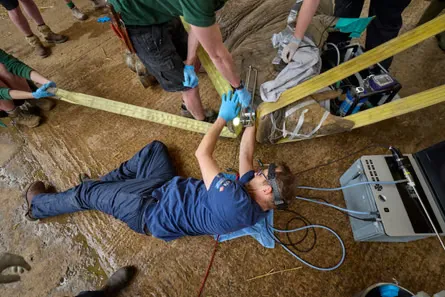
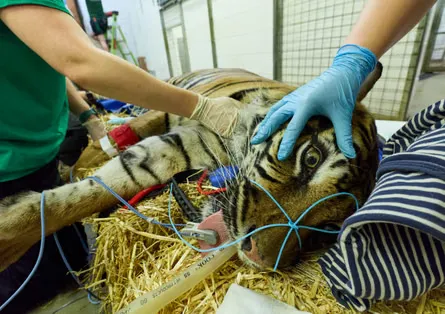
Anesthesia helps with animal welfare and safety, reducing stress. For trained animals, a simple injection works. For large or difficult patients, a dart from an air rifle might be needed. After a procedure, a "reversal" drug gently wakes them up.
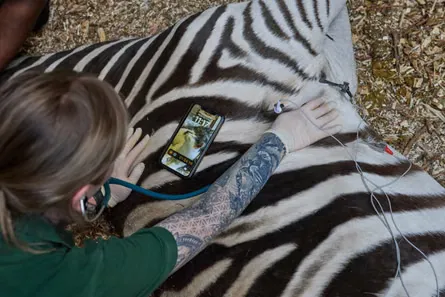
A Veterinary Resident's Journey
Harriet Woodhall is ZSL's new veterinary resident. This three-year program trains a few candidates for zoo veterinary specialism. Many vets want to work in zoos, but few achieve it.
Woodhall noted the sacrifices needed, like in pay and time off. She started by working with domestic cats and dogs, which is common for vets. This builds essential surgical and clinical skills. These skills are then applied to the many species found in zoos.