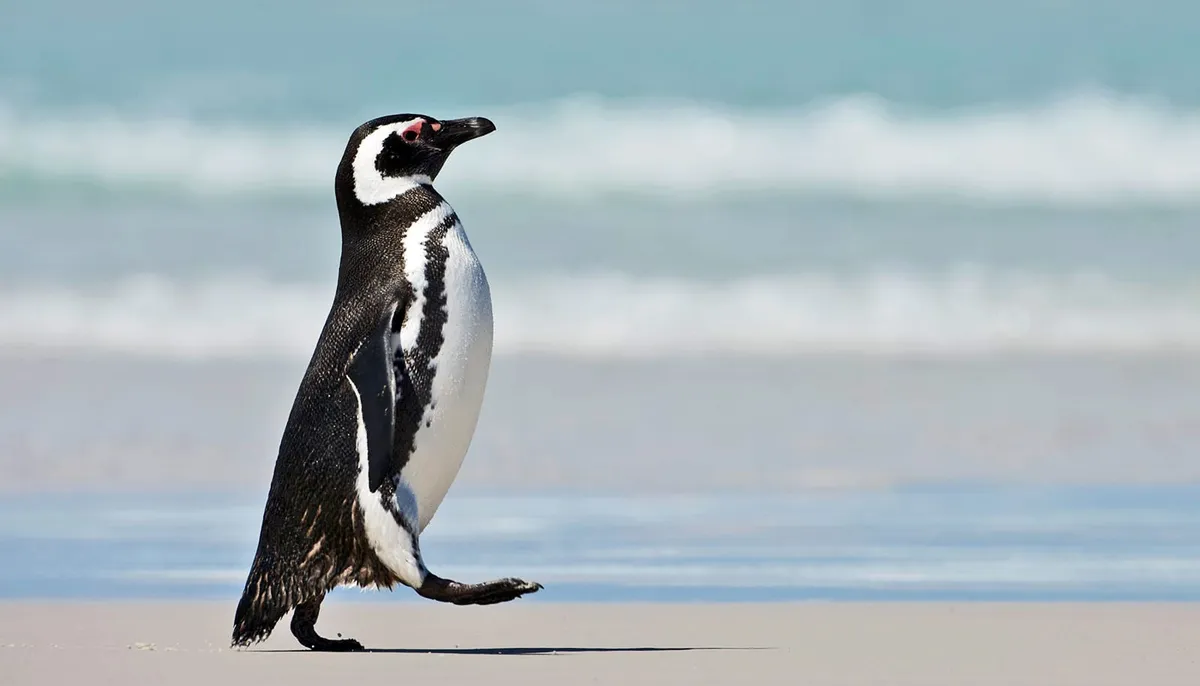
In a turn of events that sounds suspiciously like a spy movie plot, scientists have strapped tiny silicone bands onto the legs of Magellanic penguins in remote Patagonia. Their mission? To turn these waddling birds into feathered environmental detectives, sniffing out "forever chemicals" that have, apparently, found their way everywhere.
Because when you need to track invisible pollutants in some of the most pristine corners of the world, who better to call than a creature that spends its days diving, swimming, and generally getting into everything?
The World's Most Adorable Pollution Trackers
Researchers from UC Davis and the University at Buffalo fitted 54 unsuspecting penguins with these high-tech ankle bracelets. The birds wore them for a few days during their breeding seasons between 2022 and 2024. As the penguins went about their daily business — foraging, swimming, judging humanity from afar — the silicone bands quietly absorbed chemicals from the water, air, and anything else they brushed against.
We're a new kind of news feed.
Regular news is designed to drain you. We're a non-profit built to restore you. Every story we publish is scored for impact, progress, and hope.
Start Your News DetoxUpon retrieval, the results were… well, sobering. Over 90% of the bands tested positive for PFAS, those notorious "forever chemicals" that refuse to break down. This wasn't just old news, either. The bands picked up both legacy pollutants and their newer, supposedly "safer" replacements, like GenX, which are now apparently on a global tour.
Diana Aga, a lead author on the study, noted the shift, explaining that these replacement chemicals are designed to be less persistent but are still raising eyebrows about their long-term effects. Because, as we've learned, "less bad" doesn't always mean "good."
This method is a clever workaround. Traditionally, scientists would need blood samples or feathers, which is a bit more involved than, say, a quick leg band swap. Ralph Vanstreels of UC Davis highlighted the beauty of letting the penguins "choose" the sample sites. Which, if you think about it, is both practical and slightly hilarious. Imagine a penguin peer-reviewing your environmental sampling strategy.
This low-drama approach allows researchers to efficiently track chemical exposure, especially in those hard-to-reach aquatic areas. The team hopes to expand their investigations to other species, like deep-diving cormorants, because apparently, the animal kingdom is now our first line of defense against industrial runoff.
Marcela Uhart, another co-author, put it best: turning penguins into "sentinels" offers a powerful, if adorable, way to understand the health of our oceans. And all thanks to a study funded by the Houston Zoo, who clearly understands the power of a well-placed ankle monitor.