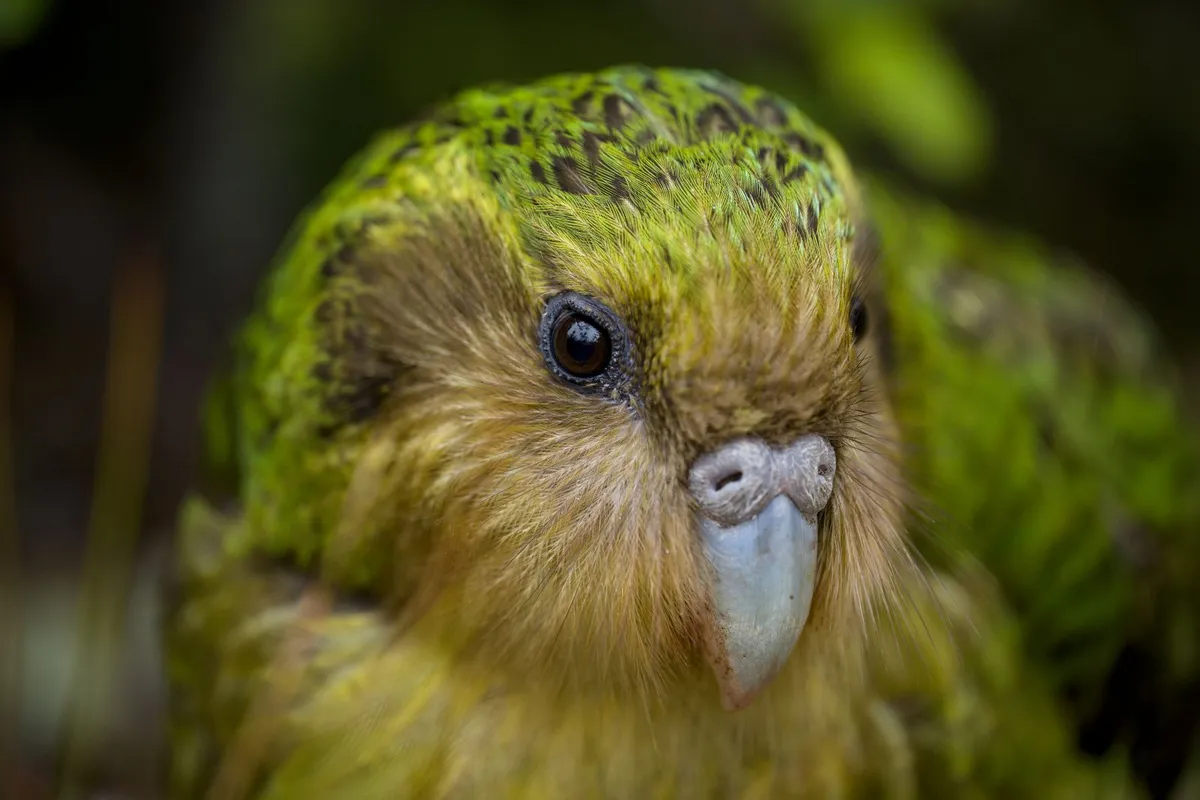
New Zealand's kakapo, a parrot so delightfully unique it practically defies description, just had its most successful breeding season ever. And really, it all comes down to a whole lot of berries.
Biologists are currently high-fiving over 95 surviving chicks from 105 hatched eggs. For a bird that was staring down the barrel of extinction just a few decades ago, that's not just good news; it's a full-on avian party.
The Parrot That Forgot How to Fly
Meet the kakapo: the world's heaviest parrot. Males can tip the scales at nine pounds, which, for a bird, is less a 'bird' and more a 'feathered bowling ball.' These guys are so chill, they essentially gave up flying 30 million years ago because, well, they didn't have to. New Zealand was predator-free, so why bother with all that flapping?
We're a new kind of news feed.
Regular news is designed to drain you. We're a non-profit built to restore you. Every story we publish is scored for impact, progress, and hope.
Start Your News DetoxNow, they mostly use their wings for balance, waddle around on strong legs, and climb trees with impressive claws. One biologist lovingly described them as "the bird version of a badger." They're also nocturnal, sport mottled green feathers for camouflage, and can live to be 90. So, basically, a very slow, very long-lived, very green badger-parrot.
The catch? That predator-free paradise ended about 700 years ago with the arrival of humans and their furry, four-legged companions: dogs, cats, rats, and stoats. The kakapo, bless its evolutionary heart, had no defense. Even worse, they have a distinctive, fruity smell, which, while probably lovely to human noses, basically screams "dinner special" to anything with a strong sniffer.
To attract a mate, the male kakapo digs a bowl in the ground, then unleashes a deep, booming call for up to eight hours a night. For two or three months. Imagine that commitment. Then, just to make sure she can find him in the dark, he throws in some metallic "chings." Because apparently, that's where we are now.
Berry Good News
Back in 1995, only 51 kakapo remained. Fifty-one. Thanks to some serious conservation muscle, that number has climbed to around 235 today, with hopes of hitting 300 after this latest baby boom.
What sparked this feathered fertility festival? Rimu trees. These native New Zealand trees only produce a bounty of berry-like fruit every two to four years. This year, the rimu had one of its best crops in decades, and the kakapo, sensing an all-you-can-eat buffet, decided it was time to get busy.
Nearly every sexually mature female laid eggs – 256 in total. While some didn't make it (navel infections, nest interference from petrels, and the general mysteries of nature took their toll), the overwhelming success has scientists buzzing. Conservationists are now focused on expanding their protected, predator-free island habitats and, eventually, getting these magnificent, flightless parrots back into their historic homes.
Because, as one Ngai Tahu representative put it, the kakapo is a taonga – a treasure. And sometimes, all a treasure needs is a really good berry season to bounce back.