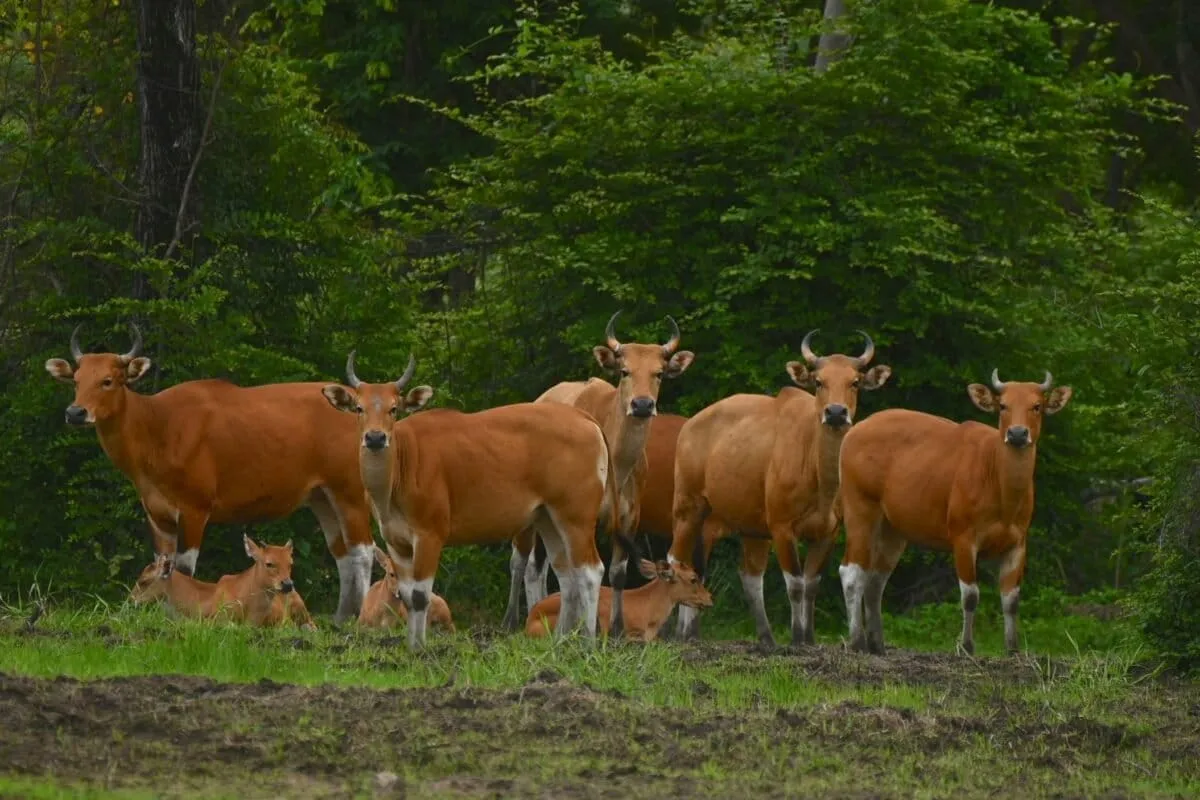
Critically endangered wild cattle in Thailand decided they'd had enough of sanctuary life. The banteng, a majestic species of wild ox, have doubled their population in the Huai Kha Khaeng Wildlife Sanctuary over the past two decades. That's a jump from a mere few hundred to a robust 1,400. Let that satisfying number sink in.
This makes it the largest banteng population in Southeast Asia. Which is fantastic news, if you're a banteng. Less fantastic for the local farmers, as these newly emboldened herds started venturing out of the sanctuary and, naturally, into nearby farmlands. Because apparently, the grass is always greener on the other side of the protected zone, even if it means trampling someone's crops.
From Nuisance to Niche Tourism
This bovine jailbreak created a bit of a pickle: damaged crops for the humans, and increased poaching risk for the banteng now roaming areas with less official oversight. So, what do you do when endangered wild cattle start treating your fields like a buffet?
We're a new kind of news feed.
Regular news is designed to drain you. We're a non-profit built to restore you. Every story we publish is scored for impact, progress, and hope.
Start Your News DetoxIf you're the ingenious residents of Thailand's Rabam subdistrict, you start charging people to come and watch them. In 2021, they launched a community-based ecotourism project centered entirely around banteng-watching tours. Suddenly, these crop-munching wild oxen became a valuable financial and cultural asset.
Over 320 residents from 19 villages are now involved, offering everything from wildlife watching to boat tours and cultural activities. It's a rather brilliant pivot: turning a potential conflict into a thriving local economy. Because nothing says 'conservation' quite like making sure the wildlife pays its own way. And perhaps, making the banteng the most expensive lawnmowers on the planet.