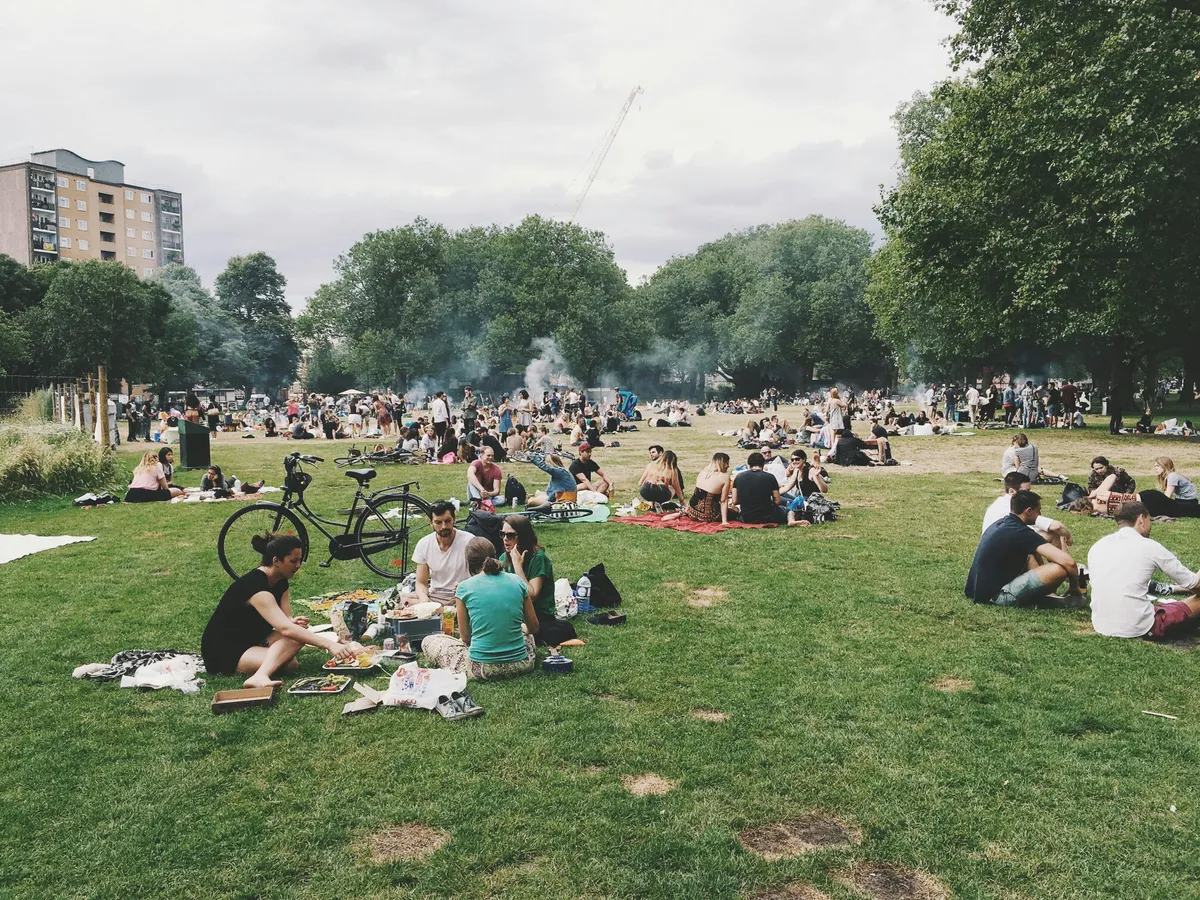
Urban parks offer a break from summer heat. However, new research from Concordia University shows that how trees are arranged in parks affects cooling differently throughout the day and night.
Researchers studied 13 parks in Montreal. They looked at air temperature and humidity to see how different tree patterns influenced cooling. Their findings were published in Urban Forestry and Urban Greening.
Lingshan Li, the lead author, explained that more trees don't always mean cooler conditions. The way trees are grouped and the amount of open space are also very important.
We're a new kind of news feed.
Regular news is designed to drain you. We're a non-profit built to restore you. Every story we publish is scored for impact, progress, and hope.
Start Your News DetoxTrees Cool by Day, But Not Always by Night
The team used sensors to measure temperature and humidity. They studied three types of park areas: open grass, scattered tree clusters, and large, dense tree clusters.
They found that large, dense tree clusters cooled best during the day. This is because of shade and evapotranspiration, which is how water moves from the ground into the air. But these same dense clusters held onto heat after sunset, making nights warmer.
Open grass areas were often hotter during sunny days. Sometimes they were even warmer than nearby paved areas. However, these grassy spots cooled down faster after the sun set. This helped parks release stored heat overnight.
The researchers also measured wet-bulb temperature. This combines heat and humidity and shows how comfortable people feel. They found that humidity changed many of the temperature differences between park areas.
Designing Parks for Round-the-Clock Comfort
Li noted that these results mean we need a smarter way to design urban green spaces. Planting trees is still key for reducing daytime heat. But leaving some open areas in parks can help prevent heat from getting trapped overnight, especially during heat waves.
"A park that meets visitors' needs at different times of day should be structurally diverse," Li said. A mix of mature trees and open grassland can keep conditions comfortable day and night.
The study also suggests that urban planners should think about the trade-offs between tree density and nighttime cooling. This is important when designing new parks or updating old ones.
What This Means for Cities
These findings are especially important for Montreal, which has warm summers and a humid climate. But the researchers believe similar patterns could apply to other cities with similar weather.
This work could also improve urban climate models. It adds details about how dispersed and dense tree clusters, and open grass areas, affect temperature. These factors are often simplified or missed in current models.
Li hopes future studies will look at how tree types, canopy shapes, irrigation, and weather conditions like wind and sun affect park temperatures even more.
She concluded that urban green spaces are vital for dealing with climate change. Understanding how their design affects comfort can help cities make better choices as extreme heat becomes more common.
Deep Dive & References
Tree presence and level of aggregation in urban parks are associated with opposite daytime and nighttime urban cooling - Urban Forestry & Urban Greening, 2025