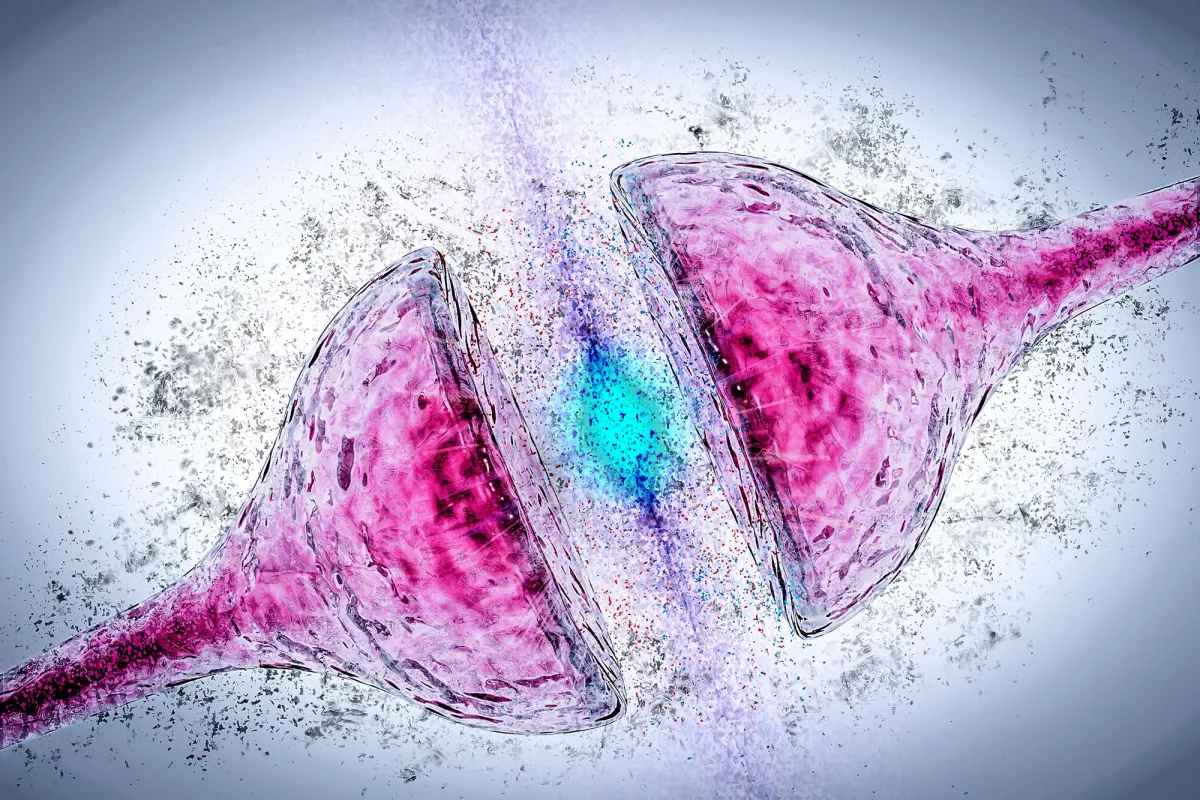
Researchers at Johns Hopkins have developed what they're calling a "pain sponge" — stem cells engineered into sensory neurons that absorb pain signals at their source, potentially offering an alternative to painkillers for people with osteoarthritis and other chronic pain conditions.
In preclinical tests on mice, the therapy, called SN101, did something unexpected: it not only blocked pain signals but also appeared to help repair damaged cartilage and bone. That dual effect matters because it suggests the treatment could address the underlying problem, not just mask the symptom.
How It Works
The approach starts with human pluripotent stem cells — the kind that can become almost any cell type in the body. Neurology professor Gabsang Lee's team coaxed these into forming specialized sensory neurons designed to act like a sponge for inflammatory signals. When injected into inflamed joints, these neurons intercept pain messages before they travel to the brain.
We're a new kind of news feed.
Regular news is designed to drain you. We're a non-profit built to restore you. Every story we publish is scored for impact, progress, and hope.
Start Your News DetoxThis is fundamentally different from how most painkillers work. Current medications block pain after your nervous system has already registered it. SN101 tries to stop the signal entirely, at the site where inflammation lives. The engineered neurons don't replace damaged tissue — they coexist alongside native nerve cells, mopping up inflammatory signals like a cellular cleanup crew.
"Theoretically, this could work for all kinds of chronic pain," said Daniel Saragnese, co-founder of SereNeuro Therapeutics, the company developing SN101. The research has focused on osteoarthritis so far, which affects millions and remains one of the leading causes of long-term pain. About 9% of people with knee osteoarthritis still rely on opioids, despite the nausea, dependence risk, and addiction potential that come with them.
The Reality Check
The research is still in preclinical stages — a long way from human use. Before clinical trials can begin, SN101 needs rigorous safety testing, toxicology studies, and time to prove it works as intended.
There are real questions ahead. Mouse joints are fundamentally different from human ones in size, mechanical stress, and complexity. Whether the therapy translates to human knees, hips, backs, or necks remains unknown. There's also the question of immunogenicity: could these introduced neurons trigger an unwanted immune response in some patients?
Yale orthopedics professor Chuan-Ju Liu, who wasn't involved in the research, notes that pain processing and immune-neuronal interactions differ substantially between mice and humans — which could affect both how well the therapy works and how long those effects last.
Why This Matters
What makes this research distinctive is the shift in strategy. Rather than trying to rewire the brain's pain response or suppress it with drugs, SN101 aims to filter out the message entirely at the cellular level — something like biological noise-canceling for inflammation.
If future studies continue to support its safety and effectiveness, this could eventually give millions of people managing chronic pain an option that doesn't involve pills.