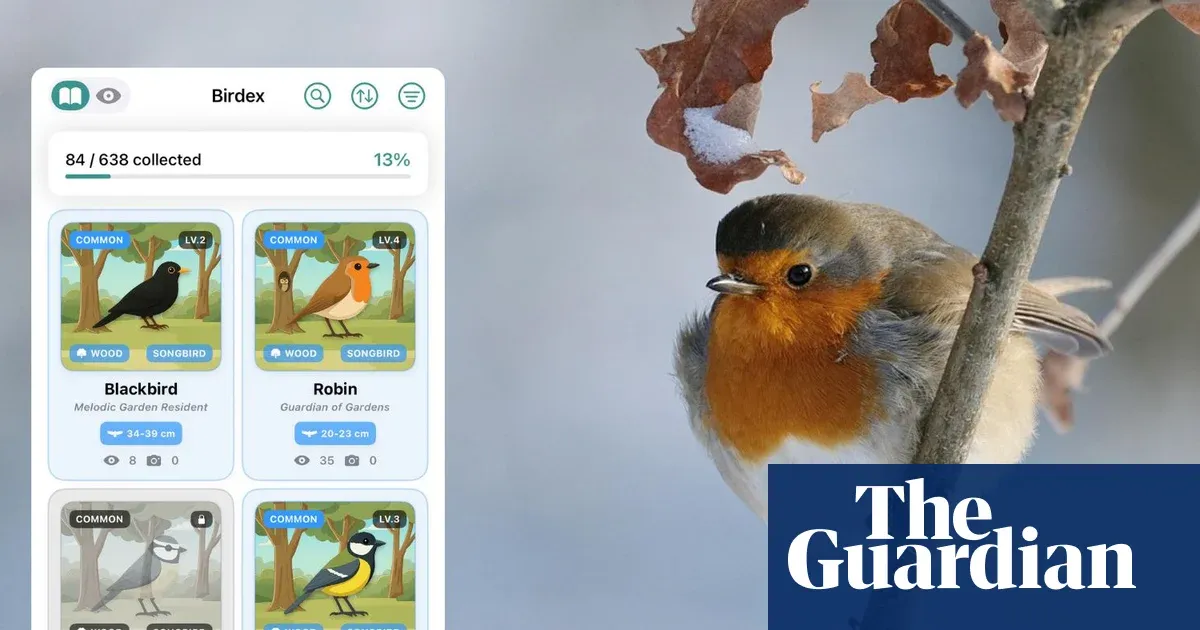
A new app called Birdex is betting that the same pull that keeps millions hunting Pokémon could work for spotting real birds. Users collect digital cards whenever they spot a species, rack up points for rarer sightings, and compete with friends — all while actually stepping outside.
Harry Scott and a collaborator built Birdex over six months as a side project, banking on a simple insight: birdwatching and Pokémon both reward patience, attention, and the thrill of finding something you've been searching for. The difference is that when you catch a great spotted woodpecker, you're also learning actual ornithology.
Michelle Williams, a psychologist in London, uses the app with her seven and eight-year-old children. "There is something nice about collecting a set, isn't there?" she said. For parents tired of screen time arguments, Birdex offers a trade-off: your kids are on their phones, but they're also outside, looking up.
We're a new kind of news feed.
Regular news is designed to drain you. We're a non-profit built to restore you. Every story we publish is scored for impact, progress, and hope.
Start Your News DetoxThe app has already logged over 200,000 bird sightings since launch. That data could matter beyond the game itself. If Birdex shares records with organizations like the British Trust for Ornithology (BTO), which runs its own recording app BirdTrack, it could feed into genuine citizen science — the kind that helps track population shifts and migration patterns across the UK.
But there are wrinkles. The app uses AI-generated artwork for bird depictions, which has frustrated some birdwatchers who see it as cutting corners. The developers acknowledge budget constraints forced the choice, and they're planning to hire human artists as the app grows. Birdex is free now, though some features may eventually require payment.
Violá Ross-Smith, a science communications manager at the BTO, praised the app's engagement factor — her own Pokémon-loving son thought it "looked quite cool." But she flagged a real concern: an app that rewards rare sightings could inadvertently push people toward vulnerable species like the capercaillie, a rare Scottish woodland grouse. The developers will likely need to add warnings about protected species and the ethics of not disturbing them.
The core gamble here is straightforward. If you can make birdwatching feel like collecting, you might hook a generation that's grown up with games. And once they're outside looking for birds, something else often happens: they actually start caring about them.