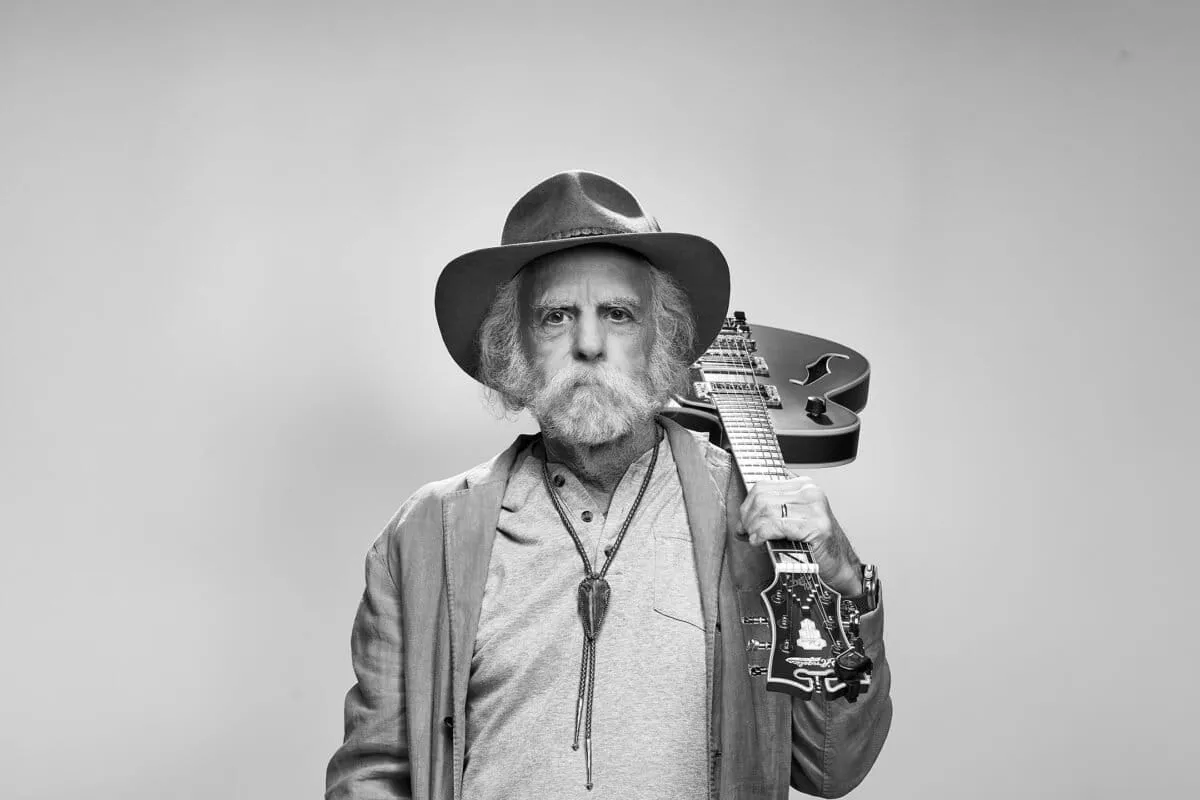
Bob Weir, founding member of the Grateful Dead, died on January 10th. For most of his adult life, he treated environmental collapse not as a metaphor for something else, but as a material crisis happening in real time — forests being cleared, climate systems shifting, survival at stake.
His activism wasn't a side project that fit neatly alongside his fame. It demanded more from him than comfortable celebrity alignment with a cause. It meant writing op-eds in the New York Times. It meant showing up on Capitol Hill to lobby Congress. It meant speaking plainly when the music industry and his peers might have preferred he stay quiet.
A voice when forests mattered most
Weir's environmental focus sharpened in the late 1980s and early 1990s, when tropical rainforest destruction and old-growth logging entered public debate with new urgency. In 1988, the Grateful Dead helped convene a press conference at the United Nations alongside Greenpeace, the Rainforest Action Network, and Cultural Survival. Weir didn't frame it as an aesthetic loss or romantic tragedy. "It's not really an aesthetic issue," he said plainly. "It's a survival issue." He understood what was harder to see then: forest loss was already reshaping climate and weather systems everywhere, whether you lived near a rainforest or not.
We're a new kind of news feed.
Regular news is designed to drain you. We're a non-profit built to restore you. Every story we publish is scored for impact, progress, and hope.
Start Your News DetoxBy 1992, his concern had become more pointed and more political. While touring, Weir wrote an op-ed opposing a bill that would have opened millions of acres of Montana national forest to logging, mining, and road-building. He called it a public land giveaway. He challenged the claim that industrial logging protected jobs — "Two or three guys can clear-cut a forest in a day," he said, describing a system that stripped land quickly while leaving communities economically hollowed out. The op-ed wasn't enough. He followed it with visits to Capitol Hill, pushing lawmakers directly.
What mattered about Weir's approach was its consistency and its refusal to accept comfortable distance. He didn't treat environmental advocacy as something a musician does between albums or after retirement. He wove it into his actual life, which meant accepting that it would sometimes conflict with the easier path. That kind of persistence — unglamorous, sustained, sometimes inconvenient — is how movements actually shift. Not through one perfect statement, but through someone showing up again and again, in different rooms, with the same message.
Forests are still under pressure. The systems Weir warned about in 1988 have only accelerated. But the fact that he spent decades treating them as a survival issue, not a luxury cause, matters. It matters because it models what sustained environmental commitment actually looks like.