On December 22, 1774, sixteen men in Greenwich, New Jersey did something that would echo through American history—but almost nobody remembers it now.
They burned tea. Not the famous Boston shipment that everyone learns about in school, but a cargo bound for Philadelphia, seized and set alight in the town square as a protest against British taxation. It was an act of defiance that happened 16 months before the Revolutionary War even started, yet it's been almost completely overshadowed by its more famous cousin.
The Tea Act had infuriated colonists across America. To them, it represented everything wrong with British rule: taxation without representation, corporate monopolies imposed from across an ocean, a government that didn't think it needed to ask permission. In towns from Boston to Charleston, people were looking for ways to push back. Greenwich's answer was direct. The men, disguised in a way accounts now dispute—some say as Native Americans, details have blurred over centuries—intercepted the shipment and burned it publicly. It was a statement: we won't accept this.
We're a new kind of news feed.
Regular news is designed to drain you. We're a non-profit built to restore you. Every story we publish is scored for impact, progress, and hope.
Start Your News DetoxA Monument to Disputed Memory
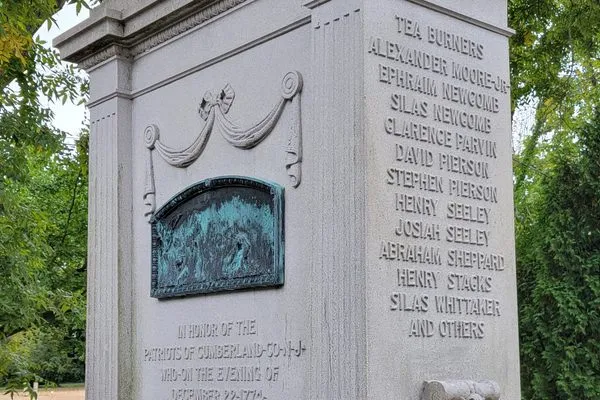
For nearly 150 years, the event faded into local lore. Then in 1908, the town erected a granite monument with a bronze relief, determined that this moment wouldn't be forgotten entirely. The monument lists 23 names—the men recorded by Dr. Ebenezer Elmer in the 1830s as participants in the burning.
But here's where the story gets complicated. Historians have since questioned Elmer's list. Not everyone named actually participated. The specifics of what happened—exactly where the tea was seized, precisely how the men were disguised, the sequence of events—remain murky even now, filtered through fragmentary accounts and the fog of 250 years.
What remains clear is this: Greenwich's residents understood something fundamental about power. They knew that if they didn't resist, nothing would change. That small act of protest in a New Jersey town square was part of a larger conversation happening across the colonies—a conversation that would reshape a nation.
The monument still stands, a reminder that revolutionary change often comes not from the famous moments everyone knows about, but from quiet acts of defiance in places most people have never heard of.