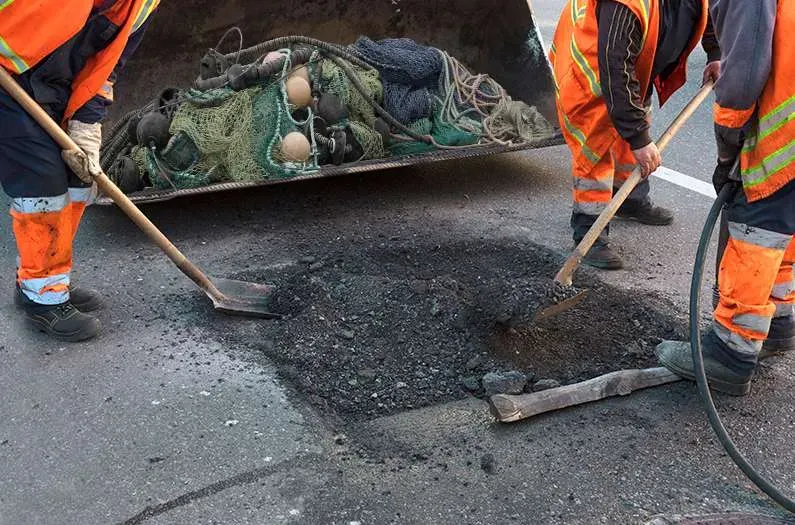
Turns out, you can teach old plastic new tricks. In Hawaii, researchers are taking discarded fishing nets and other plastic detritus that would otherwise be clogging up the ocean and turning it into something surprisingly useful: asphalt for roads. Because apparently, that's where we are now, and it's actually pretty brilliant.
The team from Hawaiʻi Pacific University recently unveiled their findings at a science conference, confirming that this isn't just a pipe dream. Early tests show it works, and even better, it doesn't seem to be spewing tiny plastic bits (microplastics, if you're nasty) back into the ocean. Which is, you know, the whole point.
Jeremy Axworthy, the lead researcher, put it rather succinctly: using the plastic waste already in Hawaii helps reduce pollution, cuts down on the need to ship the stuff off-island, burn it, or just bury it in a landfill. It's a closed-loop system that sounds like it was designed by someone who actually likes the planet.
We're a new kind of news feed.
Regular news is designed to drain you. We're a non-profit built to restore you. Every story we publish is scored for impact, progress, and hope.
Start Your News DetoxNow, using plastic in pavement isn't entirely new. It's called polymer-modified asphalt (PMA), and it usually involves adding styrene rubber particles to the mix. This makes roads more flexible, which means fewer cracks, ruts, and water damage. In a place like Hawaii, where the sun and rain can really do a number on traditional asphalt, PMA has been the go-to for most roads since 2020. It's like giving your roads a yoga class.
But the Hawaii Department of Transportation (HDOT) wondered if recycled plastic could pull its weight. So, they tapped Axworthy and Jennifer Lynch's team to find out.
The researchers went on a plastic treasure hunt, gathering old fishing nets and other beach plastics, specifically focusing on polyethylene – the tough stuff you find in milk jugs. A local paving company on Oahu then shredded this plastic and mixed it into their asphalt. They paved test sections of road with both the new recycled mix and standard PMA.
After nearly a year of cars doing their thing, Lynch's team got to work, collecting road dust, pavement samples, and even water runoff. The big reveal? The pavement made with recycled polyethylene didn't shed any more plastic than the control PMA pavement. Let that satisfying number sink in.
Lynch pointed out that the plastic shed from tires was significantly higher than anything coming from the pavement itself. Which, if you think about it, is both impressive and slightly terrifying. She noted, "Some people think plastic recycling is a hoax... But this work demonstrates that recycling can work when society prioritizes sustainability." So, next time you're driving on a Hawaiian road, you might just be cruising over someone's old milk jug. You're welcome.