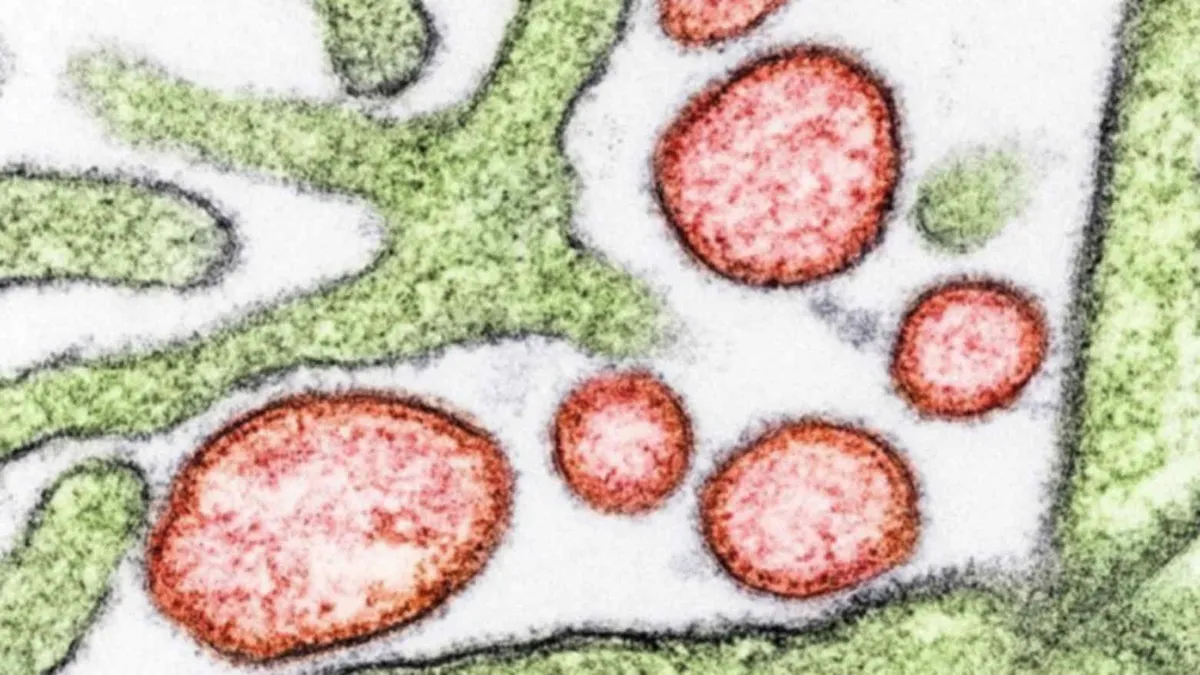
A virus that kills up to three-quarters of the people it infects may finally have a defense. Researchers at the University of Tokyo have developed the first vaccine candidate for Nipah virus, and clinical trials in humans are set to begin in April in Belgium.
Nipah sounds like a disease from another era — and in some ways it is. When it emerges, it kills with startling speed. Fatality rates range from 40% to 75%. There's no specific treatment, only supportive care: keeping patients hydrated, managing symptoms, hoping their immune system wins. When an outbreak hit India in January, doctors had little more to offer than hope.
The virus spreads in a chain that connects bats, fruit, and people. Infected bats contaminate tree fruit with their saliva. Someone eats the fruit. Then, once Nipah takes hold in a human, it spreads through any fluid exchange — breath, blood, sweat. In rural tropical areas where the virus naturally occurs, limited access to medical care means outbreaks can spiral quickly.
We're a new kind of news feed.
Regular news is designed to drain you. We're a non-profit built to restore you. Every story we publish is scored for impact, progress, and hope.
Start Your News DetoxA vaccine built from an old tool
The Tokyo team's approach is elegant: they took the genetic material that makes Nipah recognizable to the immune system and inserted it into a modified measles vaccine. Early tests in hamsters showed the vaccine was both safe and effective. Now it moves to the next stage.
The Phase 1 trial will test the vaccine in 60 human volunteers, run by the European Vaccine Initiative in collaboration with Belgian health authorities. This phase isn't about proving it works against the virus — that comes later. It's about confirming that it's safe, that the dose is right, that the immune system responds as expected.
Nipah outbreaks remain rare but recurring. The virus is endemic in parts of South Asia and the Pacific, where bats are the natural reservoir. Climate change and deforestation are expanding the overlap between human settlements and bat habitats, which epidemiologists watch closely. A vaccine wouldn't just save lives in the next outbreak — it could fundamentally change how we respond to a pathogen that has killed hundreds since it was first identified in Malaysia in 1998.
If the human trials show safety and immune response, the real-world testing begins. That's still years away. But for the first time, there's a concrete path forward.