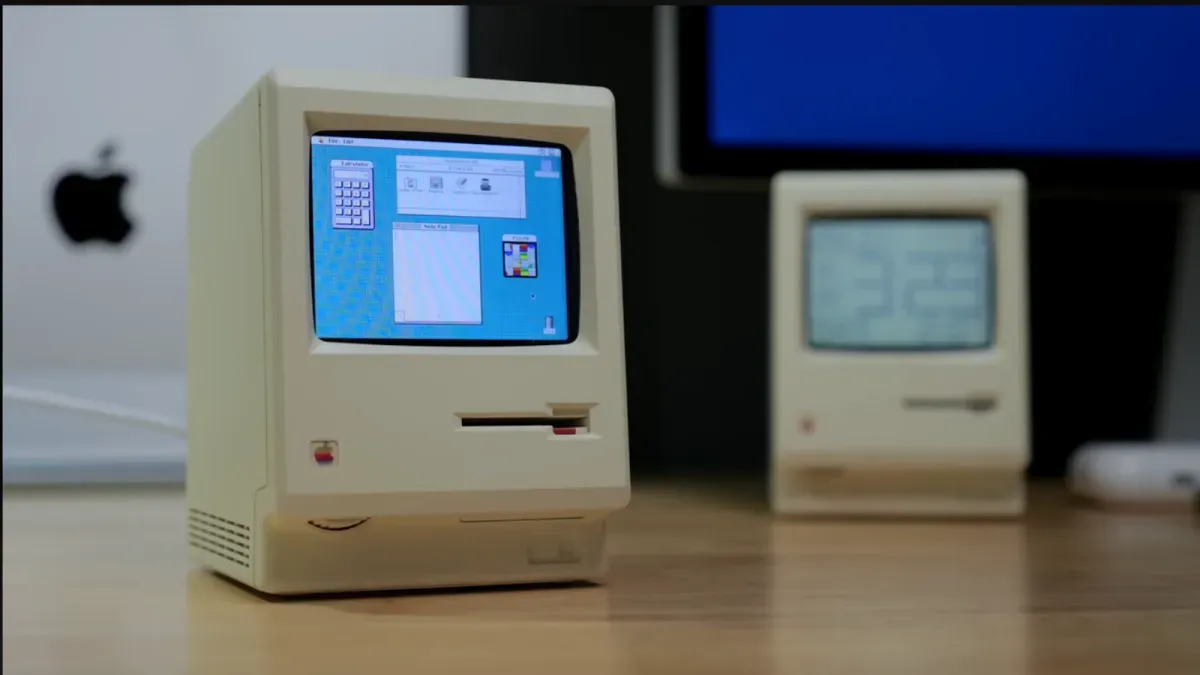
A YouTube maker just proved that nostalgia and modern miniaturization can live in the same 2.8-inch screen. They gutted a novelty desk clock, swapped its guts for a Raspberry Pi 2 and a tiny LCD display, and built a fully functional retro Macintosh—complete with the beige aesthetic and the clunky operating system that defined 1980s computing.
The project, shared by the channel This Does Not Compute, is less about recreating the past and more about celebrating how absurdly far we've come. The original Macintosh, released in 1984, was revolutionary partly because it was compact—by the standards of room-sized mainframes. Now, the entire thing fits inside a clock the size of your palm.
The Build
The technical side is straightforward enough: remove the clock's internals, mount a Raspberry Pi and a small LCD screen, load emulator software onto a microSD card, and configure it to look and feel like System Software from the 68000 era. The creator even disabled the touchscreen capabilities—a detail that's almost funny, given that Apple wouldn't add a touchscreen to anything until the iPhone arrived in 2007. It's a reminder that what feels like basic computing today was pure speculation back then.
We're a new kind of news feed.
Regular news is designed to drain you. We're a non-profit built to restore you. Every story we publish is scored for impact, progress, and hope.
Start Your News DetoxThere are trade-offs. The modified clock lost its brightness and volume buttons in the process, and the display ratio doesn't perfectly match the original 4:3 proportions. But those feel like small prices to pay for something that actually works, boots up, and lets you interact with software that shaped how millions of people thought about personal computers.
What makes this project resonate isn't the technical achievement—it's the gesture. In a moment when we're all tethered to devices that do everything, there's something quietly powerful about building a computer that does almost nothing. It can't run Slack. It won't check your email. It's just there, small and purposeful, asking you to slow down for a moment and remember what computing felt like before it became ambient.
The real question now is whether this sparks a trend of makers stuffing retro computers into increasingly unlikely objects.