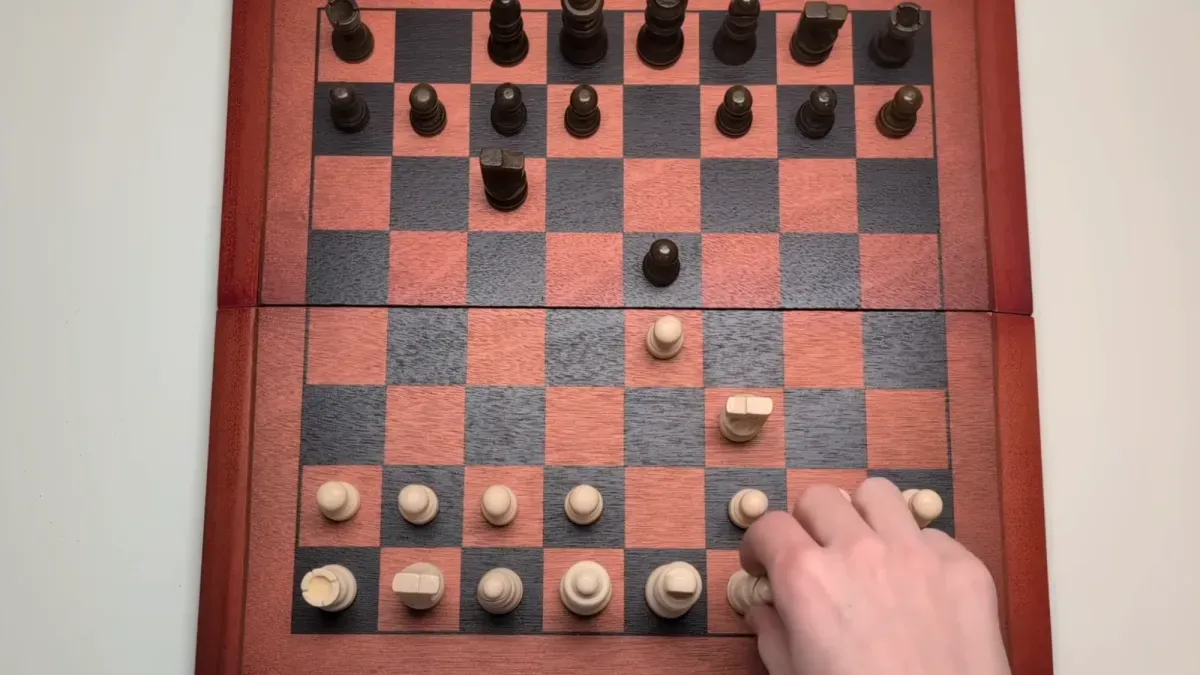
A YouTuber named Joshua Stanley built a chessboard that moves its own pieces—and wins. He hollow-printed each chess piece, embedded magnets inside them, and wired the board with magnetic sensors underneath. An electromagnet beneath the surface drags pieces across the board when it's the computer's turn. The brains come from Stockfish, an open-source chess engine that Stanley can tune up or down depending on how badly he wants to lose.
The whole thing sounds like overkill, and Stanley would probably agree. He's not actually a strong chess player. "To rectify this, instead of spending any time practicing or studying chess, I'm going to make a chess robot capable of beating me so thoroughly that I don't want to play anymore," he said in a video walkthrough of the build.
How it actually works
The real challenge wasn't the chess thinking—that part is solved. It was the translation layer. Stanley needed a way to tell the physical board what the digital engine wanted to do, and vice versa. He wrote a Python script that acts as a middleman between the board's magnetic sensors (which track where pieces are) and Stockfish (which decides where they should go). When you move your piece, the sensors detect it, the script tells Stockfish, Stockfish thinks for a moment, and then the electromagnet beneath the board physically drags the computer's piece to its destination.
We're a new kind of news feed.
Regular news is designed to drain you. We're a non-profit built to restore you. Every story we publish is scored for impact, progress, and hope.
Start Your News DetoxStanley's first instinct was to build a robotic arm that would grab and place pieces. It didn't work—the arm couldn't move with enough precision. The magnet approach proved simpler and kept the whole board light enough to move around. There are trade-offs: knight moves can be messy because the piece gets dragged across the board rather than jumping over others, so it sometimes knocks pieces over. Captured pieces have to be removed by hand. But the core idea works.
Not the first, but his own
Magnet-based self-playing boards already exist on the commercial market. The Miko-Chess Grand and Phantom use similar approaches. Stanley's version isn't revolutionary—it's something different. He built it to learn Python, to solve a specific technical puzzle, and to have an opponent that would never let him win. In that sense, it's already a success. The electromagnet's hidden motion and the slight hum of the motors add just enough suspense to make losing feel like part of the show.