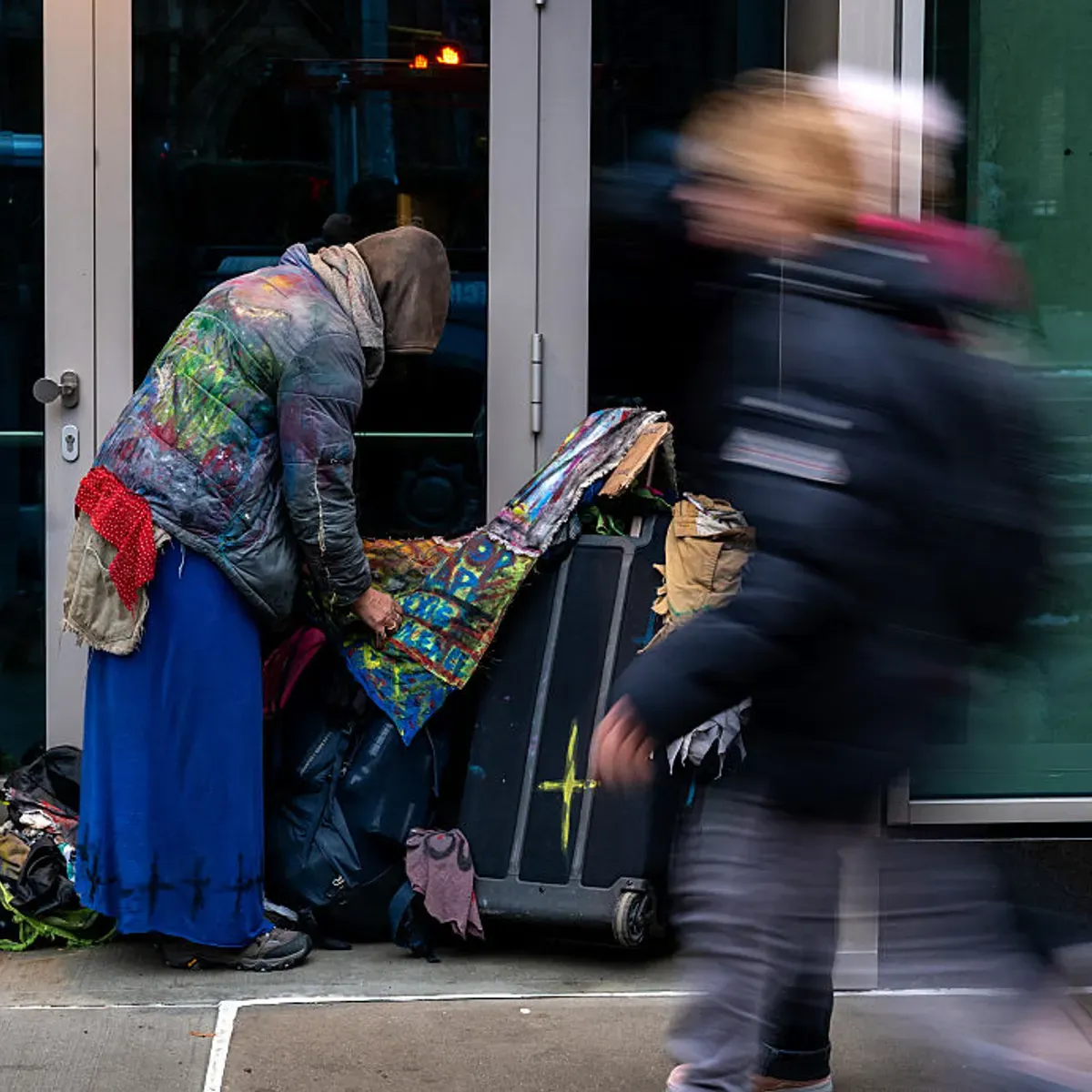
Good news, everyone: after what felt like an endless climb, the number of people experiencing homelessness in the U.S. actually dropped by 3% last year. Let that satisfying number sink in, especially since 2024 saw us hit some truly grim record highs.
The U.S. Department of Housing and Urban Development (HUD) just released its annual assessment, confirming that on a single night in January 2025, 745,652 people were unhoused. The biggest win? A 4% decrease in folks needing emergency shelter, meaning 16,931 fewer people had to rely on it. Which, if you think about it, is both impressive and slightly terrifying that we needed that many fewer spots.
Where Did It Get Better (and Worse)?
Twenty-two states and Washington, D.C., managed to nudge their numbers down. New York and Illinois, which had seen some of the steepest increases in 2024, showed the largest drops this time around. Because apparently, what goes up can, occasionally, come down.
We're a new kind of news feed.
Regular news is designed to drain you. We're a non-profit built to restore you. Every story we publish is scored for impact, progress, and hope.
Start Your News DetoxCalifornia still holds the unenviable title for the most unhoused people (181,934), with New York not far behind (145,560). Both states did see declines, though: California by 2.8% and New York by a more substantial 7.9%.
On the flip side, Oregon saw an 18.9% rise, adding 4,327 more people to its unhoused population. North Carolina, meanwhile, jumped by a whopping 33.4% (3,886 people), a surge HUD directly linked to the aftermath of Hurricane Helene. Because as if a hurricane wasn't enough.
The Great Policy Debate Continues
HUD Secretary Scott Turner wasted no time in declaring that the data proves "housing first" policies — which prioritize getting people into permanent homes — haven't worked. He suggests these policies are actually responsible for more people living on the streets, and that HUD is pivoting to focus more on "recovery and self-sufficiency."
Homeless advocates, however, are still firmly in the "permanent housing is the answer" camp and are, let's just say, not thrilled with the administration's new direction. It seems everyone agrees homelessness is bad; they just can't agree on how to make it less bad.
In slightly more positive news, unsheltered homelessness also saw a 3% drop, meaning nearly 8,000 fewer people were sleeping rough. Over half the nation's unhoused population still calls the 50 largest cities home, with another 24% tucked away in the suburbs. Because even your quiet cul-de-sac isn't immune.