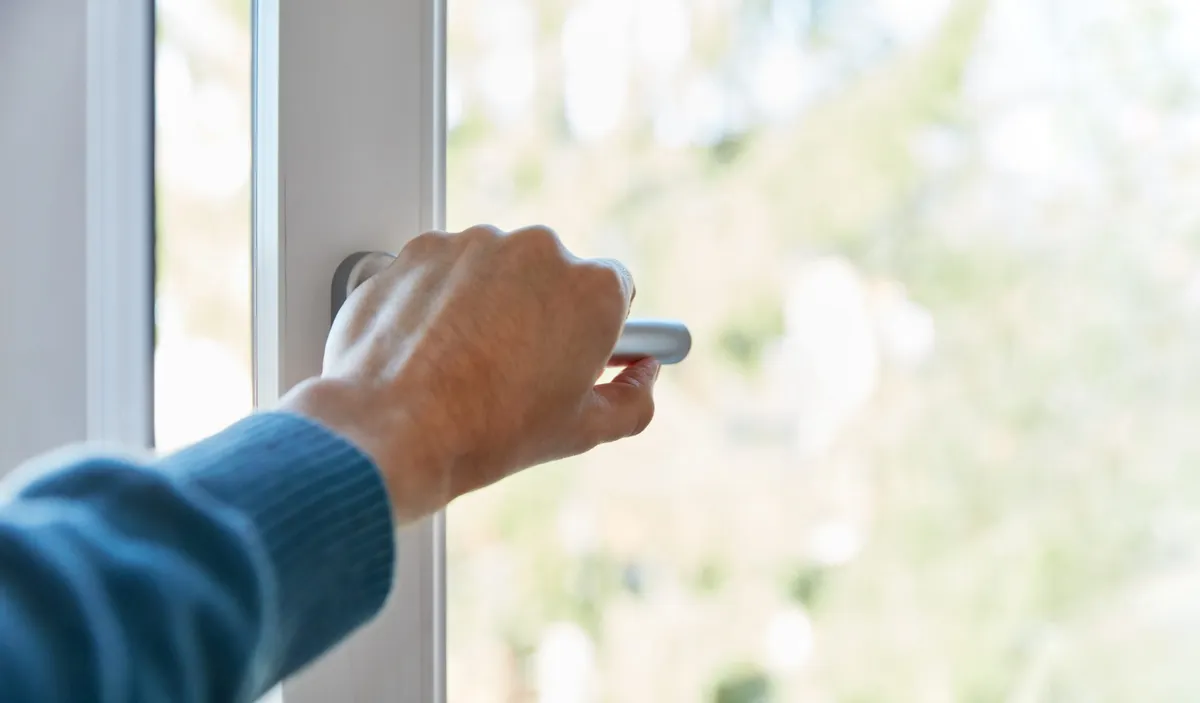
There's a German word for flinging your windows wide open: Stoßlüften. It means "shock ventilation," and it's been a daily ritual through freezing winters for generations. The practice has recently resurfaced on social media as "house burping" — and while the name is playful, the science behind it is surprisingly solid.
The idea is straightforward: push out stale indoor air, invite in fresh outdoor air. But what's actually accumulating in your home that makes this worth doing?
What's really floating around
Your indoor air is likely more polluted than you realize. Cooking steam, shower moisture, cleaning sprays, off-gassing furniture, pet dander, bacteria, viruses — they all settle into the still air of modern, well-insulated homes. Add rising carbon dioxide levels from recirculated air, and you've got an invisible buildup that quietly affects your health.
We're a new kind of news feed.
Regular news is designed to drain you. We're a non-profit built to restore you. Every story we publish is scored for impact, progress, and hope.
Start Your News DetoxVikram Niranjan, an assistant professor in public health at the University of Limerick, has researched this extensively. "Over time, these particles build up, especially in well-insulated homes," he explains. His work links indoor air pollution to respiratory irritation, COPD, and heart disease.
During the COVID-19 pandemic, researchers found that opening all windows and doors in a classroom lowered carbon dioxide by around 60% and reduced simulated viral load by over 97% in a single school day. The benefits extend beyond physical health too: poor indoor air has been linked to lower cognitive function, irritability, and anxiety. That grogginess you feel mid-afternoon might not be a caffeine deficiency.
Even your pets are telling you something. Veterinary studies show that poor air quality affects cats and dogs particularly — their noses are closer to the floor where particles settle.
The catch: timing matters
Here's where it gets practical. Fresh air isn't always fresh. If you live near busy roads or in a high-pollution area, opening windows during rush hour might swap one kind of pollution for another. Schools near highways showed significantly higher indoor levels of fine particulate matter, nitrogen dioxide, and black carbon — pollutants linked to asthma, heart problems, and developmental issues in children.
So the strategy matters as much as the action.
How to do it right
The German approach is efficient: open all windows wide for five to ten minutes. This rapid exchange is more effective — and more energy-efficient — than cracking one window for hours. Time it wisely: midday or late night typically have lower pollution levels than morning and evening rush hours. After rain is ideal; raindrops temporarily reduce airborne particles. Open windows facing away from busy roads or toward green spaces, which help filter pollution. If you can, create a cross-breeze by opening windows on opposite sides of your home — air moves faster and more evenly that way.
If outdoor pollution is a genuine concern, window filters, indoor plants, or a HEPA air purifier can complement your ventilation routine.
The math is simple
From a public health perspective, the calculation is clear. Treating COPD and other indoor air-related conditions costs thousands annually. Opening a few windows for a few minutes costs almost nothing in heat loss but delivers measurable gains in breathing, thinking, and mood. One daily five-minute burst can dramatically shift your indoor environment for both people and pets.
House burping sounds silly. The science behind it is not.