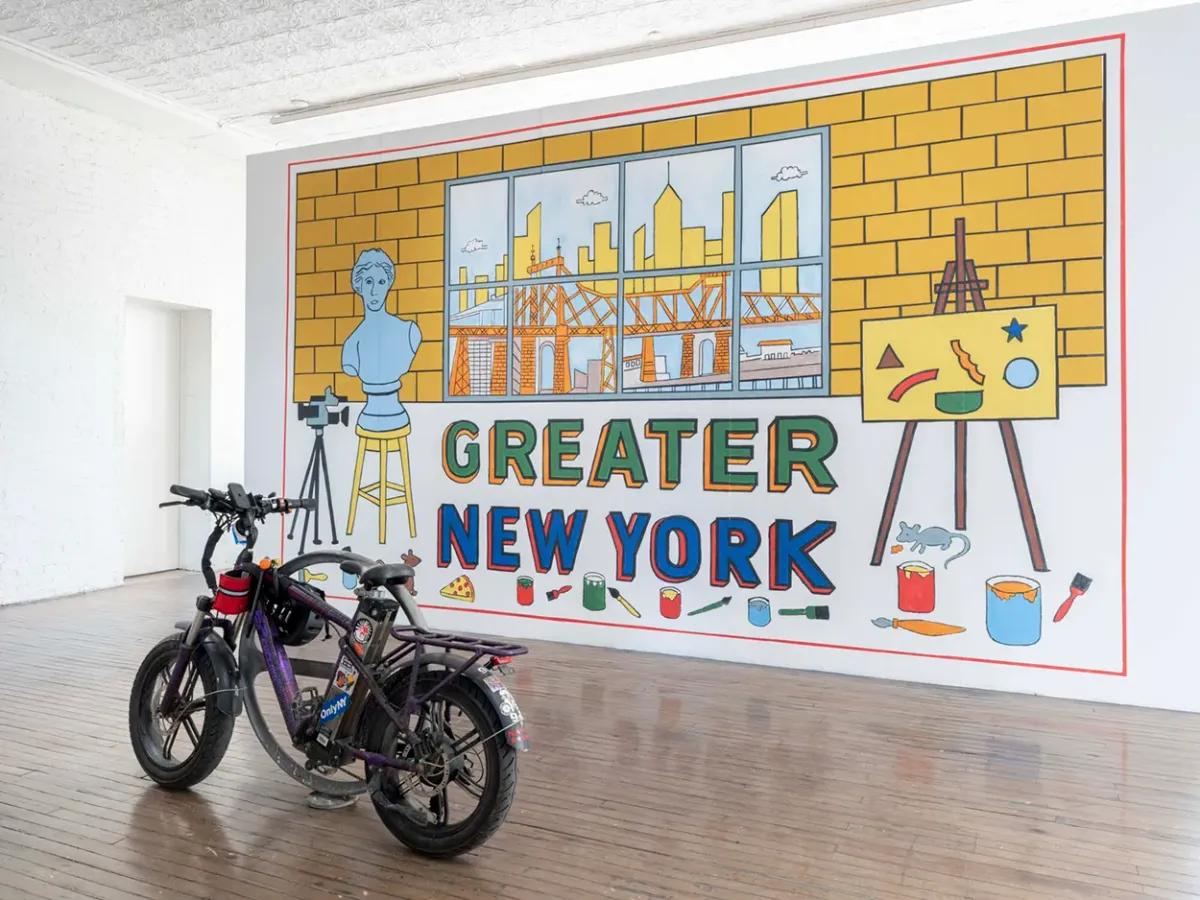
What do you get when an artist, a world-renowned museum, and a delivery worker walk into a gallery? Apparently, paid time off. Because apparently that's where we are now: it takes a full-blown art installation to secure a basic labor right in the gig economy.
Artist Fields Harrington was biking through Brooklyn when he witnessed a delivery worker get T-boned by a car, groceries scattering like confetti. He quickly realized there was no HR department to call, no manager to report to. Just an algorithm, a busted bike, and a very bad day. This, Harrington observed, made the bike lane a precarious office for countless workers.
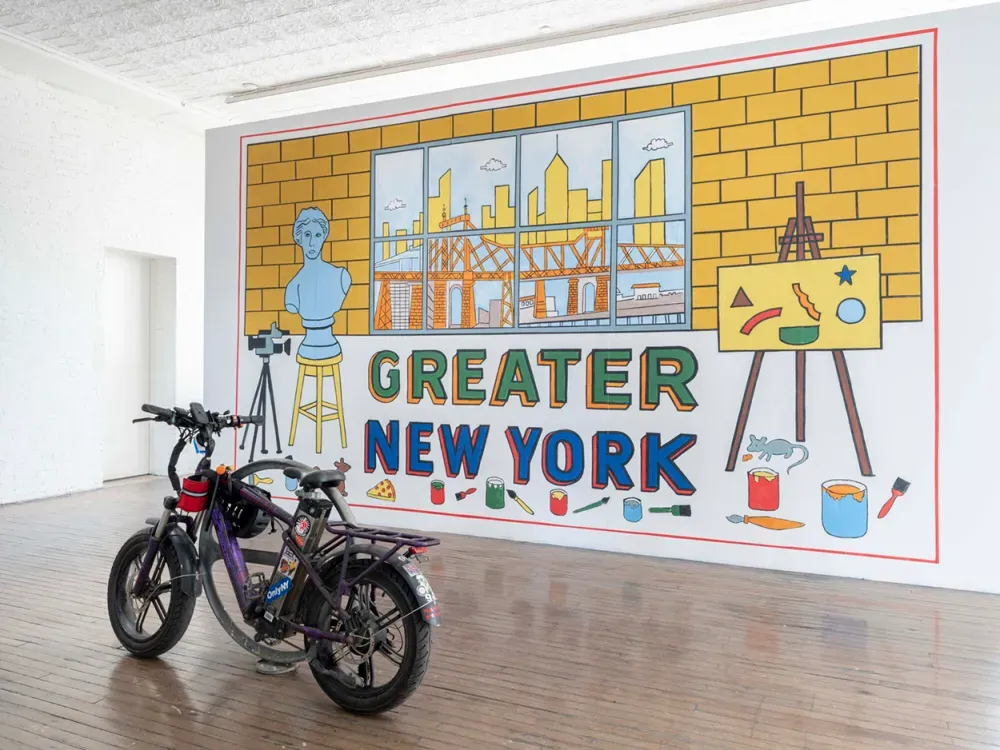
Since 2024, Harrington has been photographing the highly customized e-bikes of New York City delivery workers. These aren't just vehicles; they're canvases of identity, plastered with reflective tape, flags, and stickers that hint at community and origin. His photos are a modern take on Realist worker portraits, focusing on the bikes to avoid objectifying the humans who ride them.
We're a new kind of news feed.
Regular news is designed to drain you. We're a non-profit built to restore you. Every story we publish is scored for impact, progress, and hope.
Start Your News DetoxArt as Advocacy, Rest as Revolution
As Harrington prepped his series for MoMA PS1's "Greater New York" exhibition, he wanted to do more than just hang pictures. He wanted art to offer something tangible: rest. He'd previously explored themes of extraction and exhaustion, linking the materials of e-bike batteries to the lives of the workers who depend on them.
His solution was simple, yet radical: he asked MoMA PS1 to "rent" a delivery worker's bike. For every hour the museum is open, the bike's owner receives their standard $21.44 hourly wage. For one week each month, a bike is conspicuously absent from the gallery, meaning its owner, Gustavo Ajche, is getting paid to not work.
Ajche, a co-founder of Los Deliveristas Unidos, is a leading advocate for delivery worker rights. He knows firsthand the fight for basic amenities — things like bathrooms, rest stops, and a place to recharge both phones and batteries — which, for gig workers, often fall to the city to provide, not their "employers."
Every 21 minutes and 44 seconds, a notification ding echoes through the gallery, a subtle nod to the hourly wage Ajche and his colleagues fought so hard to win. It's a constant reminder that while the gig economy offers convenience, it rarely offers the fundamental human need for rest or a safety net. Harrington's project provides a small, but significant, space for that need, allowing Ajche to use his paid time off as he sees fit – perhaps to save for an emergency, or simply to take a breath. And if that's not a powerful use of institutional space, what is?