Satellites can tell you when ice forms on the Great Lakes. They can't tell you how thick it is. That gap is about to close, thanks to people willing to drill holes in frozen lakes and measure what they find.
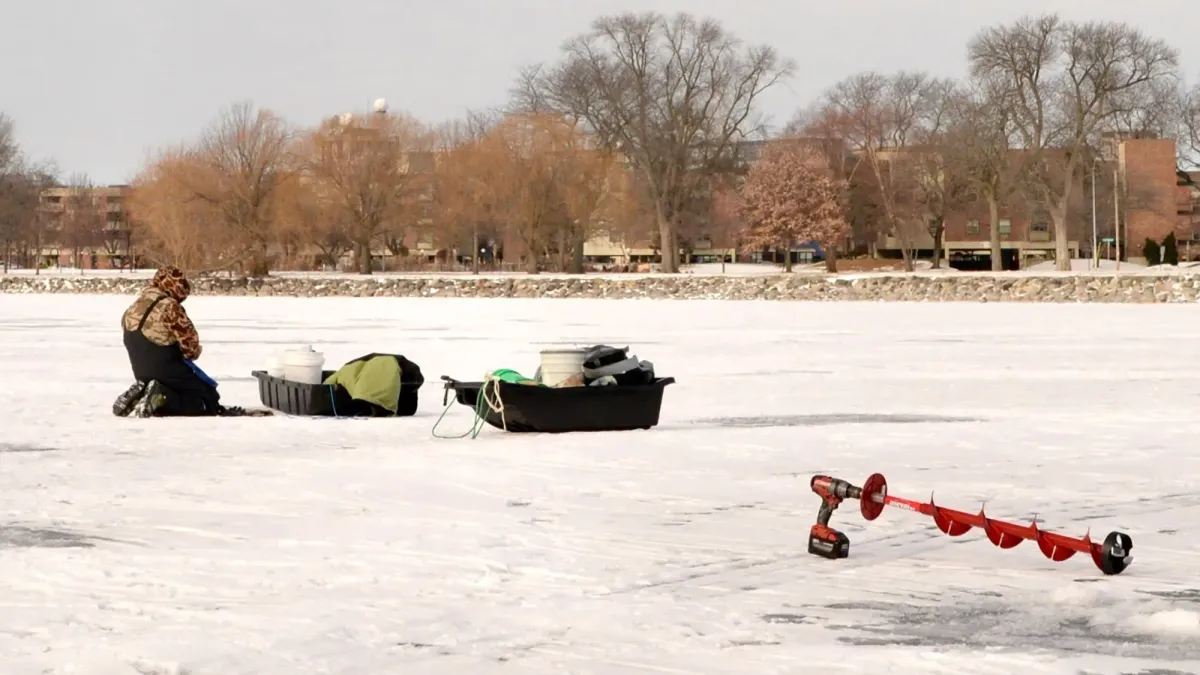
Scientists at the Great Lakes Observing System in Ann Arbor are asking the public—ice fishers, teachers, anyone with access to a frozen lake—to submit ice thickness measurements this winter. It's a simple ask with real stakes: better data means better forecasting models, which means safer conditions for the 30 million people who depend on Great Lakes water, and more reliable navigation for the ships that break ice channels through frozen waterways.
"Usually it's the scientists putting data out to the public," said Shelby Brunner, science and observations manager at GLOS. "This time, we're asking the public to give feedback to the scientists so they can improve the models."
We're a new kind of news feed.
Regular news is designed to drain you. We're a non-profit built to restore you. Every story we publish is scored for impact, progress, and hope.
Start Your News DetoxThe program is only in its second year, but it's already revealing something researchers didn't expect. Last winter, about a dozen volunteers submitted roughly 30 measurements. The data showed ice is far more variable than the models predicted—sometimes dramatically so. One volunteer even sent photos of water pooling between layers of ice, a detail satellites would never catch. These observations are rewriting what scientists thought they knew.
A Changing Baseline
Average ice cover on the Great Lakes has declined since the 1990s, though year-to-year swings are wild enough to make any trend hard to spot. That's exactly why real-time measurements matter. "We don't get to go back in time and measure the past," Brunner explained. "We have to measure it now and keep it safe so we can use it as reference for how things are looking in the future."
In Traverse City, Michigan, science teacher Mandi Young took her middle school students out to Cedar Lake last winter to drill holes and record measurements. The students weren't just collecting data—they were contributing to something bigger than a classroom assignment. "They know that their information is being saved and used by other community members," Young said. This winter, her class will return with an auger to gather more detailed readings.
The program offers stipends to participants and accepts submissions online whenever there's ice to measure. The data goes into archives for future research, building a record that will outlast any single winter or researcher. It's the kind of long-term thinking climate science demands: collecting information that matters now while laying groundwork for questions we'll be asking years from now.