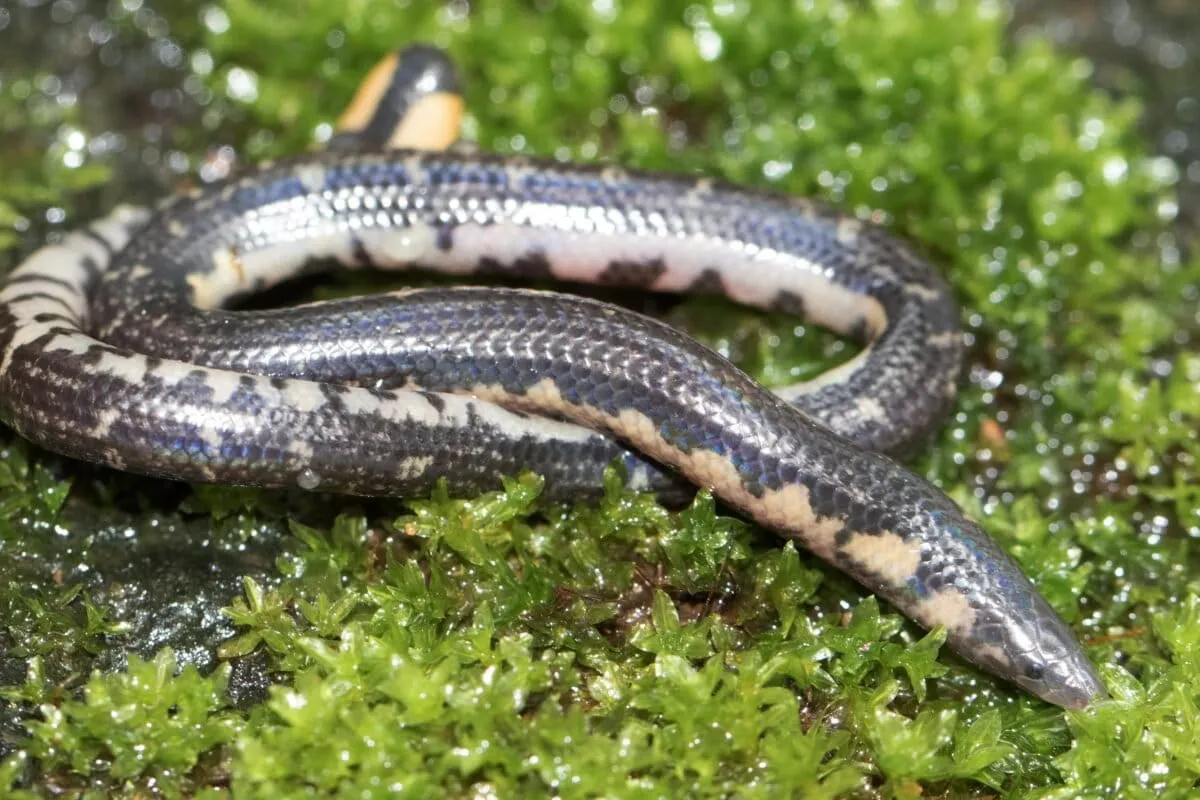
A decade ago, Basil P. Das found a small black-and-beige snake while working his coffee farm in southern India. Last week, scientists confirmed what he'd been holding in his hands: a species that had never been formally documented before.
They named it Rhinophis siruvaniensis, after the Siruvani Hills where Das made the discovery. The hills sit at the border between Kerala and Tamil Nadu, part of the Western Ghats — one of the world's most biodiverse regions and a UNESCO World Heritage Site.
"When I learnt it's a new species, I was very happy because now I am a part of its history," Das told researchers. What struck him most, though, was what came next. When he mentioned the find to his neighbors — other cardamom and coffee farmers working the same hills — they shrugged. They'd seen it many times. They knew its seasonal patterns, its behavior, the months it appeared. Local knowledge had simply never made it into scientific records.
We're a new kind of news feed.
Regular news is designed to drain you. We're a non-profit built to restore you. Every story we publish is scored for impact, progress, and hope.
Start Your News DetoxA gap in our understanding
The snake belongs to a group called shieldtail snakes, nonvenomous burrowers that spend most of their lives underground. About 20 species live in Sri Lanka, while India has six documented species — until now. Vivek Philip Cyriac, a herpetologist who has studied shieldtails for over a decade, notes that this entire group remains poorly understood compared to other snakes. They're cryptic by nature, spending their days in soil and leaf litter, which means they rarely cross paths with the people who might study them.
But they cross paths with farmers constantly. Das's discovery highlights a pattern researchers are increasingly recognizing: some of the world's most significant biodiversity goes unrecorded not because it doesn't exist, but because it exists in places where formal science hasn't looked closely enough. The Western Ghats alone harbors thousands of species found nowhere else on Earth. Many of them live on working farms, in gardens, in the margins between human land use and wilderness.
The documentation of R. siruvaniensis adds one more species to our inventory of life on this planet. But it also suggests something larger: that in regions where people have lived and worked for generations, there are still discoveries waiting — not in remote untouched forests, but in the soil beneath coffee plants, in the knowledge of people who've been paying attention all along.