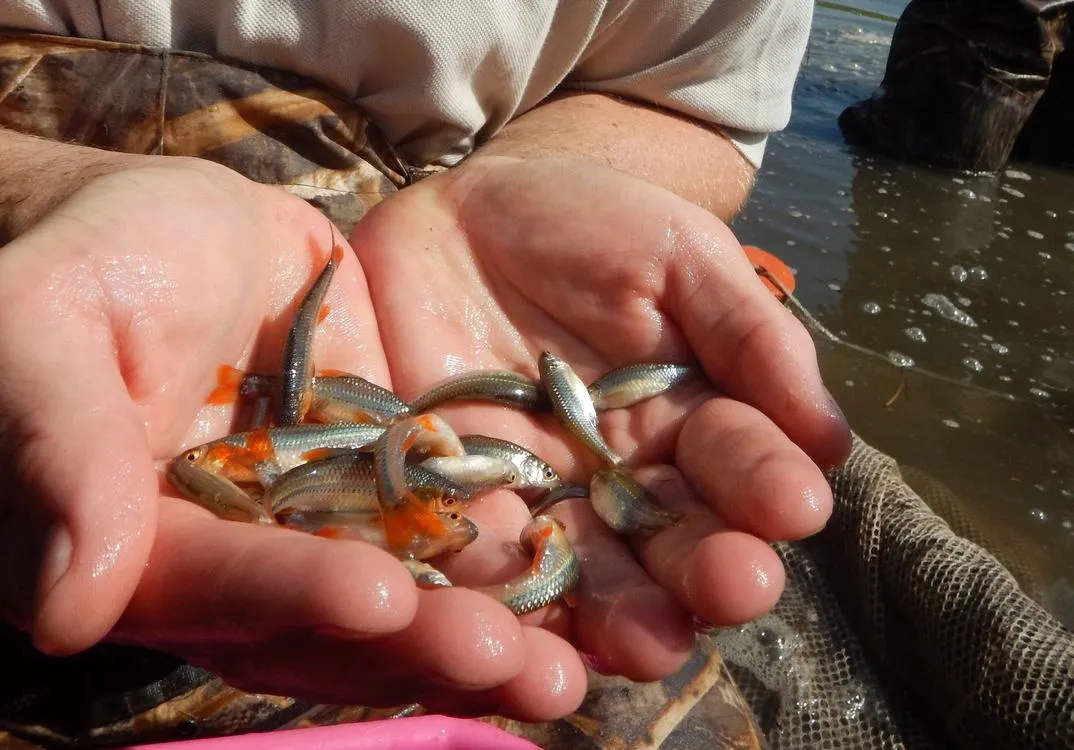
A small minnow that nearly disappeared from Iowa is making a comeback. The Topeka shiner, once common across the state's prairie wetlands, was listed as federally endangered in 1998 after agriculture drained over 10,000 oxbow lakes—the shallow, crescent-shaped ponds that were the shiner's home.
Starting in 2000, the U.S. Fish and Wildlife Service and Iowa's Nature Conservancy began restoring these lost wetlands. The goal was straightforward: save the shiner. What happened next was unexpected.
A Bonus Nobody Anticipated
After the first handful of ponds were restored, conservationists noticed something. The wetlands weren't just welcoming back fish—they were filtering out agricultural runoff that had been poisoning nearby waterways. Nitrogen and phosphorus from fertilizer, which had been a major water-quality problem across Iowa, were being trapped and cleaned by the restored ecosystems.
We're a new kind of news feed.
Regular news is designed to drain you. We're a non-profit built to restore you. Every story we publish is scored for impact, progress, and hope.
Start Your News Detox"Now we're not just doing it for Topeka shiner, but we're doing it for water quality as well," said Karen Wilke, associate director of freshwater at The Nature Conservancy in Iowa.
Over 200 oxbow lakes have now been restored across Iowa, with the work funded through a mix of private investment and state and federal grants. The incentives matter: 97% of Iowa is privately owned, so landowners needed both support and reason to participate. In 2011, the Iowa Soybean Association joined the effort, helping expand restoration in the Boone River watershed.
The shiner itself has returned to 60% of these restored ponds. But the ecosystem recovery runs far deeper. The wetlands now host 57 fish species, 81 bird species, and populations of mussels, turtles, amphibians, beavers, and river otters. A landscape that had been simplified by decades of agriculture is becoming complex again.
In 2021, a status review recommended moving the Topeka shiner from "endangered" to "threatened"—the first formal recognition that this small fish, and the wetlands it depends on, are actually recovering. It's a reminder that sometimes the best conservation stories aren't about one species saved in isolation. They're about restoring a place, and watching everything else follow.