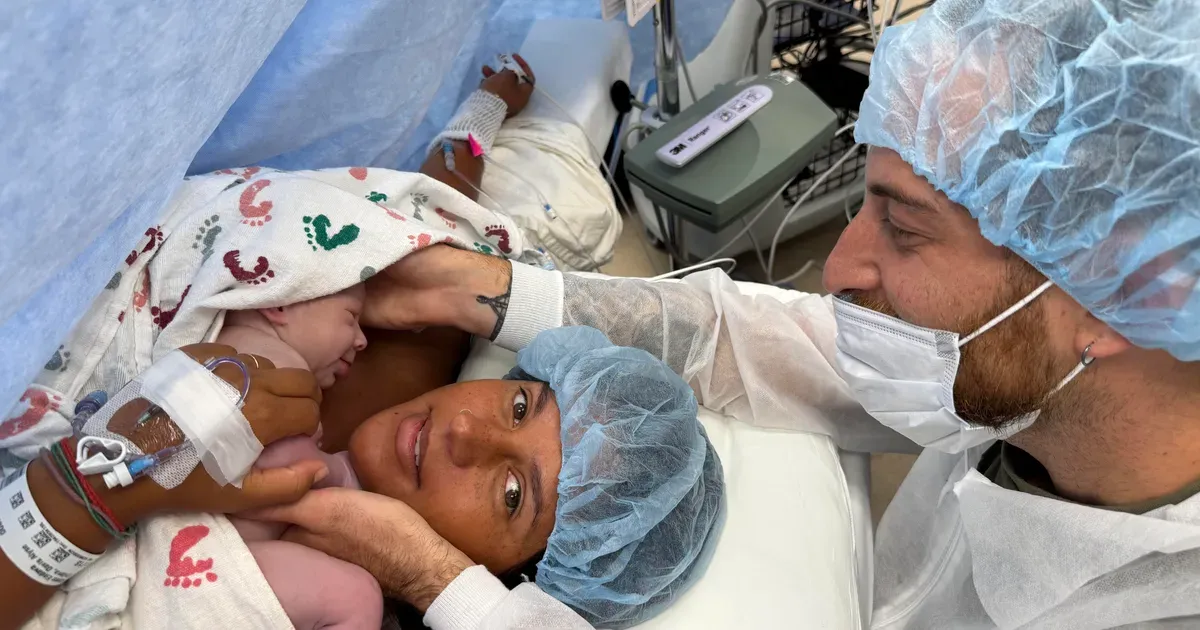
After 50 hours of labor, the author's body was reaching its limit. Her temperature climbed. The baby's heart rate dipped. The water birth she'd imagined—surrounded by cedar smoke, drumming, the steady presence of women who'd walked this path with her—wasn't going to happen. A C-section was necessary.
But as she faced the operating room, she made an unusual request of her surgeon: could she smudge before the procedure? Could she light her cedar bundle and move the smoke over the doctor's head, over her own trembling hands, over her husband and doula—a practice rooted in her Indigenous ancestry, one that most American hospitals aren't designed to accommodate?
The doctor didn't hesitate. "I would be honored," she said.
What matters here isn't just that permission was granted. It's what that permission meant: a recognition that science and ceremony don't have to be in opposition. That a hospital operating room—engineered for efficiency and sterility—could hold both a surgical intervention and a spiritual practice. That a woman's ancestral ways didn't have to be left at the hospital entrance.
We're a new kind of news feed.
Regular news is designed to drain you. We're a non-profit built to restore you. Every story we publish is scored for impact, progress, and hope.
Start Your News DetoxThe author had grown up knowing her people's traditions weren't built into these walls. She'd felt the weight of every Native woman who'd labored without consent, who'd been told her ways were backward. In that pre-op room, lighting the cedar, she wasn't just preparing for surgery. She was refusing erasure.
In the operating room, she held a spiral stone in her left hand while the surgeon narrated each step. When her son's cry came, when he was placed against her neck, something shifted. The ceremony hadn't been lost to the fluorescent lights and blue surgical sheets. It had traveled with her into the most sterile room she'd ever been in.
C-sections carry their own weight in our culture—often discussed with shame or resentment, as though a surgical birth is somehow less valid. But for this author, the moment her surgeon accepted the smudging wasn't about redemption or reframing. It was about integration. Both the medical intervention and the ceremonial practice were necessary. Both were real. Both belonged in that room.
She didn't get the birth she'd planned. But she carried her ceremony with her anyway, refusing to surrender either her ancestral knowledge or the modern medicine that kept her son alive.