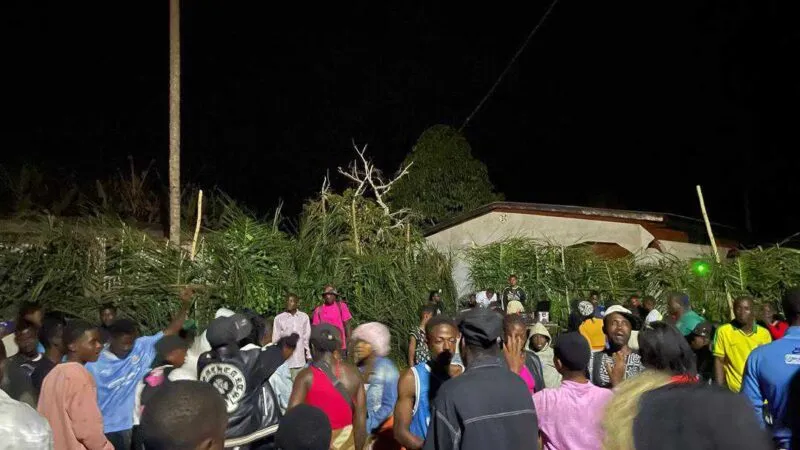
Before social media feeds, there was the village dance floor. And in southern Cameroon, during the holidays, there still is.
Every holiday season, young people from Ebolowa and surrounding villages gather for what they call "bals dansants" — community dance nights that are part party, part social network, and part pop-up economy. Think less formal festival and more organic, generational tradition. No official programs, no big-name sponsors, just a whole lot of people showing up year after year.
Dylan Akono, a 23-year-old student, makes the pilgrimage back to his village for these dances annually. He calls it a tradition, drawn by the vibrant energy and the sheer number of people to meet. Because, let's be honest, it's easier to approach someone new when you've got a whole crew of friends on the dance floor with you.
We're a new kind of news feed.
Regular news is designed to drain you. We're a non-profit built to restore you. Every story we publish is scored for impact, progress, and hope.
Start Your News DetoxThen there's Alice Ateba, 21, who lives in the capital, Yaounde. She attended a gathering in Olem for the first time on a friend's recommendation. Her verdict? "Very nice." She’s already planning her return. Which, if you think about it, is both impressive and slightly terrifying for someone who just wanted a quiet holiday.
The Pop-Up Disco
The dance floor itself is refreshingly low-tech: just a patch of green ground that transforms into a village discotheque after dark. Soft lights, four sticks marking the edges, and beyond that, a mini-economy of temporary bars and food stalls serving the thirsty, chatting masses. Everyone's welcome, though the youth predictably make up the bulk of the crowd, ensuring this informal tradition keeps rolling through the generations.
There are no invitations, no eventbrite links. The date is simply set, word spreads, and people arrive. Julius Embolo, 23, on the organizing team, says these dances have been a fixture since he was born. Each village gets its own date, with organizers informally coordinating things like location (which can change) and safety. It's spontaneous, yes, but also a testament to a small group of people working behind the scenes without a formal committee or even a fixed venue. The commitment is real.
Beyond the dancing, these gatherings are a lifeline for local businesses. Mama Jackie, for instance, sets up a drinks stand, making extra cash because, well, people get thirsty after hours of dancing and talking. And for those coming from Ebolowa, getting to these villages at night often means hopping on a motorcycle taxi, where fares can double after dark. A trip that costs about 500 CFA francs (less than a dollar) during the day might set you back 1,000 CFA francs at night. Getting there is part of the adventure, and the cost of connection.
In a country increasingly embracing digital connectivity, these dances remind us that young people still crave physical spaces to meet. A phone connects you without leaving home; a village dance demands the opposite. You show up, you see, you talk, you dance, you laugh. This physical interaction, UNESCO points out, is vital for cultural practices and identity. While the world scrolls, these village dances offer a different kind of buzz. For first-timers, it's enough to make them want to return. For regulars, it's a familiar tradition that never gets old. Maybe that's the secret to their enduring appeal: a simple beat, a temporary bar, and villages that stay awake during the holidays.